

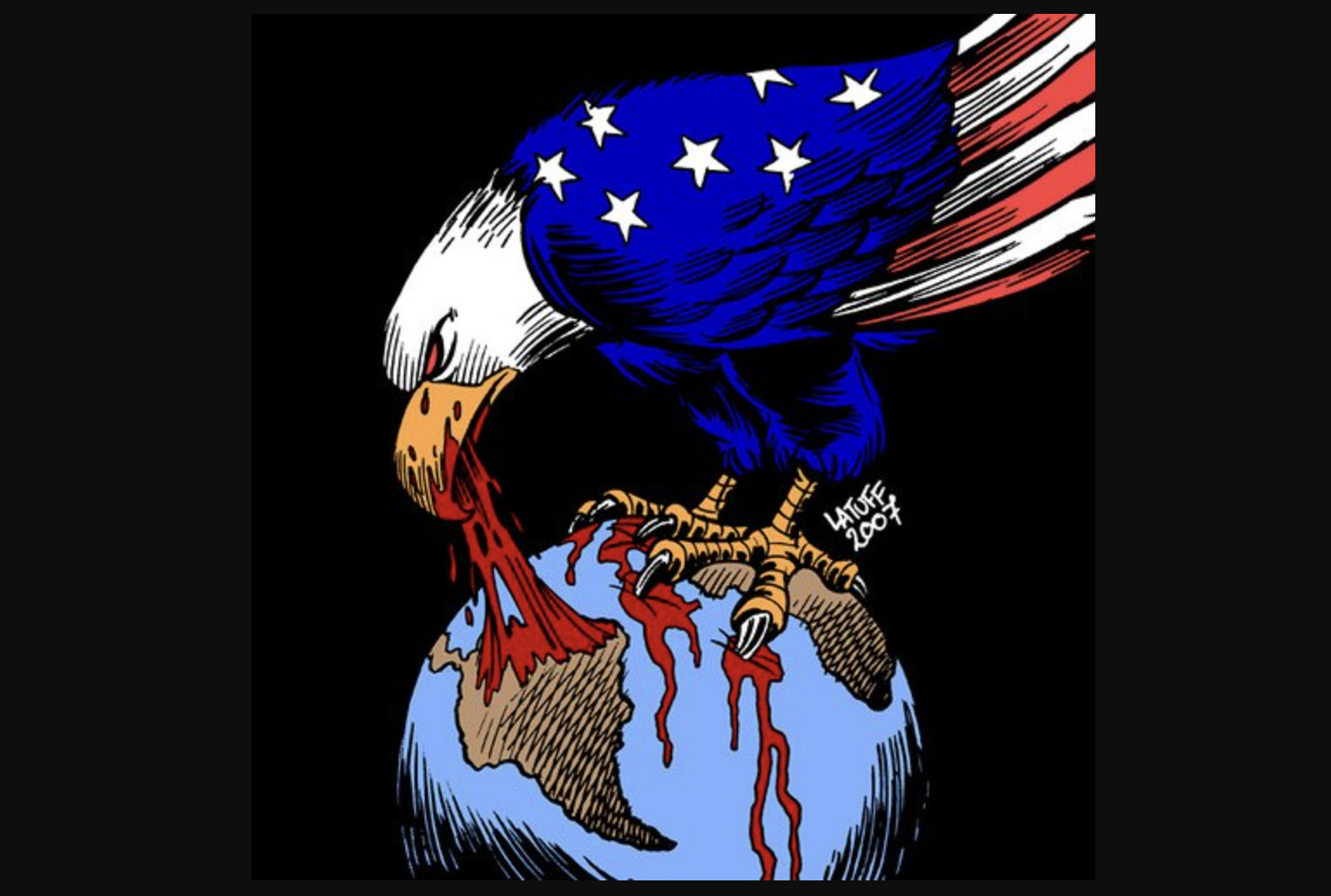
The arrest of the Venezuelan President—an act executed with the precision of a Hollywood thriller and the subtlety of a sledgehammer—marks a Rubicon moment in modern international relations. For the cheering crowds in certain Western capitals, this is framed as a triumph of justice over tyranny, a long-awaited reckoning for a controversial regime. But for those who care to look past the moralizing headlines, this event represents something far darker: the final, brazen abandonment of sovereign immunity and the transformation of international law into a weapon of hegemonic convenience.
To understand the gravity of this transgression, one must look beyond the specific grievances against the Venezuelan administration. The core issue here is not the virtue of the man in handcuffs, but the legality of the handcuffs themselves. Under the customary norms of international law, specifically the principles codified in the Vienna Convention, a sitting Head of State enjoys absolute immunity from the criminal jurisdiction of foreign courts. This principle, par in parem non habet imperium (equals have no sovereignty over equals), is not a loophole for dictators; it is the foundational bedrock of diplomatic stability. It exists to prevent the world from descending into a chaotic free-for-all where powerful nations can decapitate the leadership of weaker adversaries under the guise of domestic jurisprudence.
By shattering this norm, the United States—assuming its role as the primary architect of this operation—has declared that the sovereignty of nations is conditional, revocable entirely at the pleasure of Washington.
The Shadow of Panama
This is not an isolated aberration; it is the culmination of a historical trajectory. To understand the arrest in Caracas, we must rewind the tape to December 1989, and the invasion of Panama. Operation Just Cause saw the United States invade a sovereign nation to depose and arrest its de facto leader, Manuel Noriega, on drug trafficking charges. At the time, the act was shocking, yet the unipolar moment following the collapse of the Soviet Union allowed the US to normalize the idea of “regime change” disguised as law enforcement.
The parallels between Noriega and the Venezuelan leadership are stark. In both cases, the United States utilized its domestic legal system—specifically the concept of extraterritorial jurisdiction—to indict a foreign leader. This legalistic sleight of hand allows a district court in Florida or New York to assert authority over actions taken by a sovereign government on foreign soil. It is a terrifying expansion of judicial power that effectively universalizes American law. When the US acts as global policeman, judge, and jury, the concept of national borders evaporates.
However, the precedent extends beyond Panama. We have seen the evolution of this methodology throughout the War on Terror, where the concept of sovereignty was routinely violated via rendition programs and drone strikes in Pakistan, Yemen, and Somalia. The message has been consistent for three decades: boundaries are for the weak. If you are an adversary of the hegemon, your territory is a battlefield, and your legal status is null and void.
The Hypocrisy of “Universal” Justice
The intellectual dishonesty required to defend this arrest is staggering. Western commentators are currently extolling the virtues of accountability, yet their silence is deafening regarding the application of these same standards to their own allies.
If the principle is that “no one is above the law,” then where are the arrest warrants for Western leaders complicit in the catastrophic destruction of Iraq or Libya? The International Criminal Court (ICC)—the actual body designed to handle such matters—is routinely threatened with sanctions by Washington whenever it dares to glance at American or allied conduct in the Middle East. The United States is not a signatory to the Rome Statute, yet it happily utilizes the language of international justice to bludgeon its enemies.
This double standard exposes the “Rules-Based International Order” for what it truly is: a system where the rules are written by the West, applied to the Rest, and ignored whenever convenient. The arrest of the Venezuelan President is not an application of international law; it is the imposition of imperial will. It reinforces a tiered global system where the Global South possesses only nominal sovereignty, subject to suspension the moment their policies conflict with the economic or security interests of the Global North.
A Global Precedent for Disordered Power
The most lasting damage of the Caracas raid may not be felt in Venezuela, but in the precedent it sets for a world already teetering on the edge of fragmentation. If the United States can unilaterally decide that its domestic laws take precedence over the territorial integrity of others, it grants a perverse “license to abduct” to every other middle and great power. If Washington can seize a leader for alleged criminality, what prevents Moscow from doing the same in its “near abroad,” or Beijing from citing this precedent in its own regional disputes? The “rules-based order” that the U.S. frequently invokes to criticize its rivals has been revealed as a selective tool—one that applies to the weak but never to the architect.
Moreover, the attempt to “run” Venezuela and its vast oil resources in the aftermath of the capture exposes the true nature of the operation. It is an act of economic and political colonization disguised as a police action. By sidelining the legitimate Venezuelan opposition and replacing the state with a puppet administration, the U.S. has robbed the Venezuelan people of their agency and their right to a domestic political solution. The inevitable result is not a flourishing democracy, but a fractured state prone to civil strife and prolonged instability. As the sun sets on the era of international law, we are entering a period defined by a “Hobbesian” security culture, where the only rule is the reach of a predator drone and the only law is the will of the powerful. The abduction of Maduro is not a victory for justice; it is the funeral for a world governed by treaties rather than terror.
ZNetwork is funded solely through the generosity of its readers.
Donate
