


Yesterday morning the orgies of the lone gunman took hold in Oak Creek, Wisconsin, a town in the dragnet of Milwaukee. He targeted a Gurdwara, the religious home of the local Sikh community. The gunman entered the Gurdwara, and as if in mimicry of the school shootings, stalked the worshippers in the halls of the 17,000 square foot “Sikh Temple of Wisconsin.” Police engaged the gunman, who wounded at least one officer. The gunman killed at least seven Sikhs, wounding many more. He was then killed. A few hours after the shooting Ven Boba Ri, a committee member of the Gurdwara told the Milwaukee Journal-Sentinel, “It’s pretty much a hate crime. It’s not an insider.”
The local police smartly said that this is an act of domestic terrorism. The FBI concurred.
This is the not the first act of violence against Sikhs in the United States.
That story begins in the 19th century, when Sikhs migrated to the US, fleeing British colonialism for far-flung pastures. Many landed along the western coast of the United States, working alongside Japanese, Mexican and Filipino workers to make California into a fruit-producer and Oregon and Washington into major lumber producers. But they were not welcomed. Riots in Bellingham, Washington (1907) and Live Oak, California (1908) targeted the “rag heads,” the turban-wearing Sikhs. The mob “stormed makeshift Indian residences, stoned Indian workers and successfully orchestrated the non-involvement of local police.” TheBellingham Morning Reveille ran a drawing of a “Sikh” man with the caption, “This is the type of man driven from this city as the result of last night’s demonstration by a mob of 500 men and boys.” It was a mark of pride to have cleansed the city of the Sikhs.
The Sikhs didn’t take this lying down. A decade later, one Sikh man bragged, “I used to go to Maryville every Saturday. One day a ghora[white man] came out of a bar and motioned to me, saying, ‘Come here, slave!’ I said I was no slave man. He told me that his race ruled India and I hit him and got away fast.”
Anti-Sikh violence does not reside only in the early part of the 20thcentury. It returned a century later, when, after 9/11, Sikh men and women were targeted once more for their turban and head-scarf. Since Osama Bin Laden wore a turban, it was the turban that attracted the racist to the Sikhs. As I note in Uncle Swami, within the first week after 9/11, a disproportionately large number of the 645 bias attacks took place against Sikhs. The statement on the Oak Creek shootings that came from the activist group South Asian Americans Leading Together (SAALT) drew a straight line between the post-9/11 violence and this attack, “While the facts are still emerging, this event serves as a tragic reminder of violence in the form of hate crimes that Sikhs and many members of the South Asian community have endured since September 11th, 2001.”
Two quick reactions to the Oak Creek violence raised the hackles of some of the sharp organizers in the South Asian American community:
* This was an act of senseless violence. “No,” said Rinku Sen, publisher of Colorlines magazines. This is not “senseless,” she noted, but “racist.” This is the fifty-seventh mass shooting in the past thirty years in the United States. Each one is treated as the work of a freak. Patterns are shunned. Structural factors such as the prevalence of guns and the lack of social care for mentally disturbed people should of course be in the frame. But so too should the preponderance of socially acceptable hatred against those seen as outsiders. Intellectually respectable opinions about who is an American (produced, for example, by Sam Huntington, Who Are We? The Challenge to National Identity) comes alongside the politician’s casual racism (Romney’s recent suggestion that the US and the UK are “part of an Anglo-Saxon heritage,” erased in a whip lash the diversity of the United States and Britain). Racist attacks are authorized by a political culture that allows us to think in nativist terms, to bemoan the “browning” of America. By 2034, the Census department estimates, the non-white population of the US is going to be in the majority. With the political class unwilling to reverse the tide of jobless growth and corporate power, the politicians stigmatize the outsider as the problem of poverty and exploitation. This stigmatization, as Moishe Postone argues, obscures “the role played by capitalism in the reproduction of grief.” Far easier to let the Sikhs and the Latinos, the Muslims and the Africans bear the social cost for economic hopelessness and political powerlessness than to target the real problem: the structures that benefit the 1% and allow them to luxuriate in Richistan.
* Sikhs are not Muslims. The second argument, now clichéd, is to make the case that this is violence at the wrong address. Sikhs did nothing wrong, they are peace-loving and so on. It assumes that there are people who did do something wrong, are war-mongering and therefore deserve to be targeted. The liberal gesture of innocence has within it the sharp edge of Islamaphobia. It seems to suggest that Muslims are the ones who should bear this violence, since their ilk did the attacks on 9/11 and they are, all two billion of them, at war with the United States. The attack on Sikhs is not a mistaken attack. Sikhs are not mistaken for Muslims, but seen as part of the community of outsiders who are, as Patrick Buchanan puts it in States of Emergency: The Third World Invasion and Conquest of America, “a fifth column inside the belly of the beast…Should America lose her ethnic-cultural core and become a nation of nations, America will not survive.” Wisconsin’s Governor Scott Walker is not far from all this, being a fan of the Arizona anti-human legislation. The Sikh Coalition, an anti-bias group, is fully aware that this is not simply a situation of mistaken identity. Its 2008 report, Making Our Voices Heard, notes that although it is not the case that Sikhs are members of the Taliban or clones of Bin Laden, it is this recurrent identification that has by now “created an environment in which Sikhs are regularly singled out for abuse and mistreatment by both private and, at times, public actors.” Strikingly, forty-one percent of Sikhs in New York City reported being called derogatory names, half of the Sikh children reported being teased or harassed because of their Sikh identity and one hundred percent of Sikhs report having to endure secondary screenings at some US airports.
Sapreet Kaur of the Sikh Coalition offered her take of the situation, “There have been multiple hate crime shootings within the Sikh community in recent years and the natural impulse of our community is to unfortunately assume the same in this case.”
Vijay Prashad is the author of Uncle Swami: South Asians in America Today (New Press, 2012).

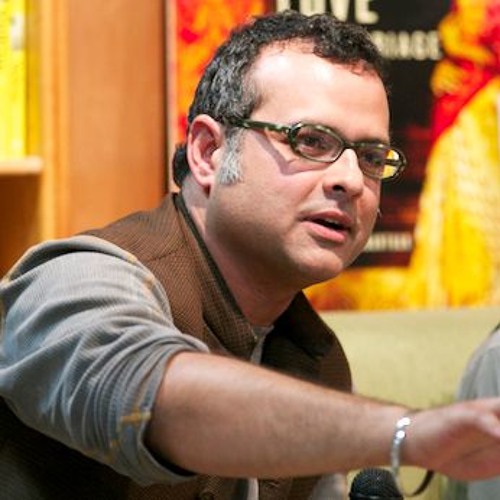
Vijay Prashad is an Indian historian, editor, and journalist. He is a writing fellow and chief correspondent at Globetrotter. He is an editor of LeftWord Books and the director of Tricontinental: Institute for Social Research. He is a senior non-resident fellow at Chongyang Institute for Financial Studies, Renmin University of China. He has written more than 20 books, including The Darker Nations and The Poorer Nations. His latest books are Struggle Makes Us Human: Learning from Movements for Socialism and (with Noam Chomsky) The Withdrawal: Iraq, Libya, Afghanistan, and the Fragility of U.S. Power. Tings Chak is the art director and a researcher at Tricontinental: Institute for Social Research and lead author of the study “Serve the People: The Eradication of Extreme Poverty in China.” She is also a member of Dongsheng, an international collective of researchers interested in Chinese politics and society.
ZNetwork is funded solely through the generosity of its readers.
Donate




