


There’s something pathetic — and dangerous — about the crush of liberal commentators now pinning their hopes on Colin Powell.
Yes, the secretary of state is a “moderate” — compared to the likes of Dick Cheney and Donald Rumsfeld. But that’s not saying much. And history tells us, even if the press won’t, that Powell does not have a record as a man of conscience.
Media coverage is portraying Powell as a steady impediment to a huge assault on Iraq. But closer scrutiny would lead us to different conclusions.
Instead of undermining prospects for a military conflagration, Powell’s outsized prestige is a very useful asset for the war planners. The retired general “is seen by many of Washington’s friends and allies abroad as essential to the credibility of Bush’s foreign policy,” the French news agency AFP noted as September began.
Avid participation in deplorable actions has been integral to Powell’s career. A few examples:
* Serving as a top deputy to Secretary of Defense Caspar Weinberger, Powell supervised the Army’s transfer of 4,508 TOW missiles to the CIA in January 1986. Nearly half of those missiles became part of the Reagan administration’s arms-for-hostages swap with Iran. Powell helped to hide that transaction from Congress and the public.
* As President Reagan’s national security adviser, Powell became a key operator in U.S. efforts to overthrow the elected government of Nicaragua. When he traveled to Central America in January 1988, Powell threatened a cutoff of U.S. aid to any country in the region that refused to go along with continued warfare by the contra guerrillas, who were in the midst of killing thousands of Nicaraguan civilians. Powell worked to prevent the success of a peace process initiated by Costa Rica’s president, Oscar Arias.
* When U.S. troops invaded Panama on Dec. 20, 1989, Powell was chairman of the Joint Chiefs of Staff. He had “emerged as the crucial figure in the decision to invade,” according to British newspaper reporter Martin Walker. Hundreds of civilians died in the first hours of the invasion. Powell declared on that day: “We have to put a shingle outside our door saying, ‘Superpower lives here.’”
* In late 2000, while Bush operatives went all-out during the Florida recount to grab the electoral votes of a state where many thousands of legally qualified African Americans had been prevented from voting due to Republican efforts, Powell went to George W. Bush’s ranch in Texas to pose for a photo-op and show support for his presidential quest.
Now, journalists tell us that the latest manifestation of Colin Powell’s “moderate” resolve is his stance on Iraq. But the Powell rhetoric about the need for allied support and U.N. Security Council backing can be understood as a fervent desire to line up as many ducks as possible before the shooting starts. Under Powell’s direction, U.S. diplomats — diligently laying down groundwork for war — are brandishing carrots and sticks at numerous countries.
“Access to Qatar’s al Udeid Air Base will be essential to an Iraq invasion,” a Wall Street Journal story reported on Sept. 3. Big deals are being cut. “Qatari officials have told U.S. officials that they want a guarantee that the U.S. military presence in Qatar would be permanent. They also want the U.S. to assume a greater portion of the $400 million cost of upgrading al Udeid air base for the U.S. Air Force.”
As for reluctant members of the U.N. Security Council, some bloody quid pro quos are on the horizon. In the Journal’s words, Moscow “is expected to seek an understanding with the U.S. that it will have a freer hand in putting down its rebellion in Chechnya and that it will get a portion of the postwar contracts for rebuilding Iraq.”
Powell’s “moderate” approach is in sync with the outlook of Fareed Zakaria, former managing editor of the elite periodical Foreign Affairs, who shares Powell’s interest in urging the return of U.N. weapons inspectors to Iraq — a good PR step in the quest for a confrontation leading to war. “Even if the inspections do not produce the perfect crisis,” Zakaria wrote in a Sept. 2 Newsweek column, “Washington will still be better off for having tried because it would be seen to have made every effort to avoid war.”
Along similar lines, CNN reports, Powell “is working to convince the president of the need to build a strong coalition, similar to the one that existed during the 1991 Gulf War, and win the support of the U.N. Security Council through a new resolution.”
Deadly hawks come in many styles. Some have polished talons.
____________________________
Norman Solomon’s latest book is “The Habits of Highly Deceptive Media.” His syndicated column focuses on media and politics.

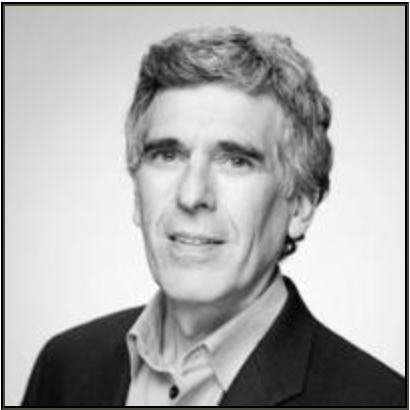
Norman Solomon is the national director of RootsAction.org and executive director of the Institute for Public Accuracy. The paperback edition of his latest book, War Made Invisible: How America Hides the Human Toll of Its Military Machine, includes an afterword about the Gaza war.
ZNetwork is funded solely through the generosity of its readers.
Donate




