Emboldened by an electoral victory secured with three million fewer votes than his competitor, President Trump chose Saudi Arabia as the venue to lecture Iran for its lack of democracy. Then, speaking to an adoring audience, some of whom had taken part in a failed CIA-run military venture intended to bring down Fidel Castro’s government in 1961, he cited ‘the freedom of the Cuban people’ as his reason for re-imposing sanctions against Cuba’s population.

France’s current electoral cycle may not have seemed as bizarre as these dubious celebrations of democracy, but it was close. The two main parties chose their candidates in widely debated primaries only to have them knocked out in the first round by Emmanuel Macron, who pieced together some empty phrases, pretty images and solid media support. The electorate having chosen Marine Le Pen, a far-right candidate loathed by two-thirds of the French people as Macron’s only opponent in the second round, his victory was assured. At this point, all the new president needed to ‘enable him to govern’ was a parliamentary majority — most of them unknowns from the upper echelons of society (no one working-class, 46 business leaders), who owe everything to him. Through a miracle of the voting system, Macron’s neoliberal politics were backed by just 44.02% of voters in the first round of the presidential election (1) but in the French parliament they will be supported by nearly 90% of deputies (2).

Never in the history of French universal suffrage has so small a percentage of the electorate voted in a legislative election (over 57% abstained, compared to 16% in 1978). This pitiful US-style turnout concluded an almost non-existent national campaign punctuated by often incidental ‘scandals’, low-grade Watergates that the media covered interminably as if to compensate for having given Macron a leg-up. When politics is reduced to comparative lists of politicians’ minor sins, is it surprising there are so many fresh faces among elected parliamentarians? They may be a useful way to buff up the system’s less-than-brilliant appearance, but are unlikely to challenge strategic economic decisions (3), which have been ceded to the executive and the European Commission.

The story of a candidate who got knocked unconscious while campaigning filled the media for three days, competing with a criminal case from over 30 years ago that had resurfaced. At the same time, EU politics, the Greek debt crisis, the French state of emergency, and France’s military engagement in Africa and the Middle East were scarcely mentioned. What Pierre Bourdieu called ‘a politics of depoliticisation and demobilisation’ has thus scored a notable victory, but the battle has only just begun.

Serge Halimi is president and director of Le Monde diplomatique.

Translated by George Miller

(1) The total of votes cast for Macron and François Fillon. The other candidates had all condemned neoliberalism.

(2) Some Socialists also intend to be ‘constructive’ in this regard.

(3) See Razmig Keucheyan and Pierre Rimbert, ‘Le carnaval de l’investigation’, Le Monde diplomatique, May 2013.

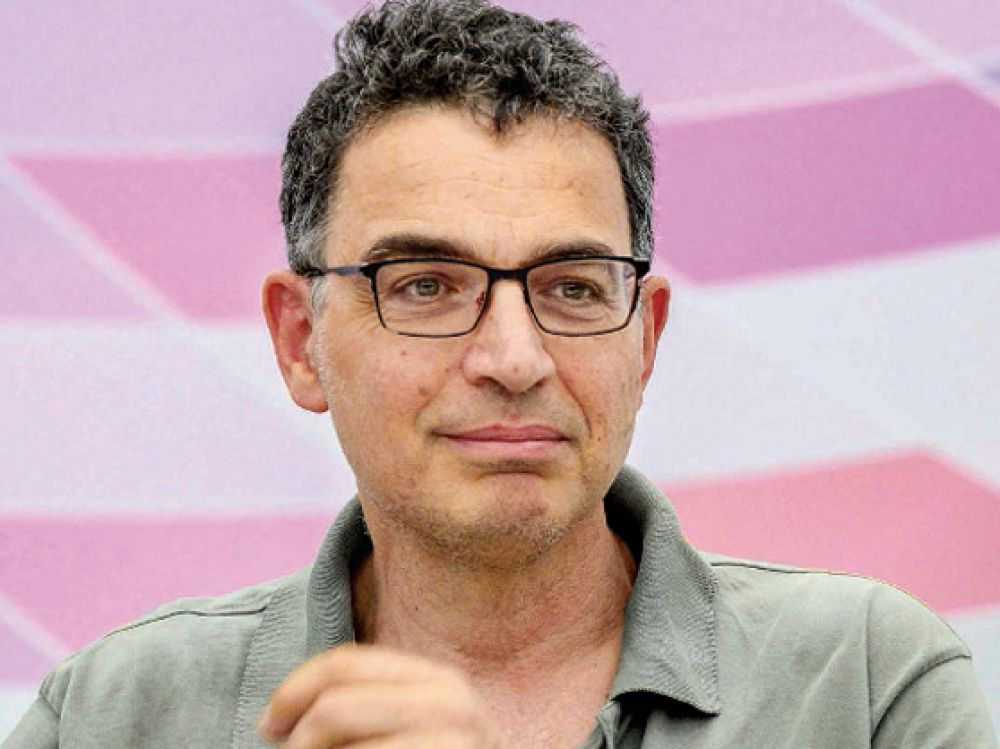
Serge Halimi writes for le Monde diplomatique (www.mondediplo.com) and is the author of Le Grand Bond en Arrière: Comment l'ordre libéral s'est imposé au monde (The Great Leap Backward: How the liberal order was imposed on the world)


ZNetwork is funded solely through the generosity of its readers.

Donate
Donate
Leave A Reply

Subscribe

All the latest from Z, directly to your inbox.

Institute for Social and Cultural Communications, Inc. is a 501(c)3 non-profit.

Our EIN# is #22-2959506. Your donation is tax-deductible to the extent allowable by law.

We do not accept funding from advertising or corporate sponsors.  We rely on donors like you to do our work.

ZNetwork: Left News, Analysis, Vision & Strategy

Subscribe

All the latest from Z, directly to your inbox.

THE WIND CRIES FREEDOM

The Wind Cries Freedom, the new book from Z co-founder Michael Albert, is a sweeping oral history of a future American revolution.

Through thirty interconnected chapters, it draws out the strategies, failures, turning points, and hard-won wisdom of a movement that called itself the Revolutionary Participatory Society. These are not the polished memoirs of politicians: they are the unfiltered accounts of people who organized in neighborhoods, hospitals, universities, stadiums, courthouses, and places of worship, and kept a shared vision alive through cynicism and exhaustion.

The result is speculative political fiction that reads like history: messy, human, and quietly hopeful in the way that only real experience and long thought can produce.

Get your copy and peruse more features on the book’s website below.

“Read it, argue with it, but don’t look away. The future it recalls is one we must still fight to deserve.”

Yanis Varoufakis

“The most unusual and intriguing combination of prophecy, manifesto, and movement building manual that I have ever encountered.”

Bill Fletcher Junior

“This work fills a huge gap in our social movement literature.”

Cynthia Peters

You've just read your article on Z this month.

DOES Z'S SURVIVAL MATTER?

You keep coming back for a reason: serious political analysis, movement reporting, and debate beyond the priorities of corporate media. Today, Z is in a precarious financial position. If Z is part of how you understand the world, help keep it going. The readers who give monthly are the reason this work survives between fundraisers.

Z is in a precarious financial position. If it’s part of how you understand the world, help keep it going.

Number of donors711
Our goal1,000

Sustainers at $9/month or more receive the digital Z Magazine.

Already a sustainer? Click here and we won’t ask again. Thank you!

Your reading count is stored only in your browser and is never sent to us.

Sound is muted by default.  Tap 🔊 for the full experience

CRITICAL ACTION

Critical Action is a longtime friend of Z and a music and storytelling project grounded in liberation, solidarity, and resistance to authoritarian power. Through music, narrative, and multimedia, the project engages the same political realities and movement traditions that guide and motivate Z’s work.

If this project resonates with you, you can learn more about it and find ways to support the work using the link below.

Z is in the most precarious financial position in its history.

Z is a place to think beyond the limits of the present.

For decades, Z has brought together political analysis, movement reporting, debate, and visions of a different future from writers and activists around the world. That work is more than journalism. It is movement infrastructure: movements need places to develop ideas, test arguments, learn from experience, and imagine what comes next.

In the first two days of this fundraiser, 19 donors and 8 new monthly sustainers stepped up. Help us reach 1,000 donors who keep Z independent, for everyone.

For decades, Z has published the analysis, debate, and visions movements need, free of paywalls, ads, and billionaire owners. If that work should continue, Z needs your support now.

Number of donors711
Our goal1,000

Sustainers at $9/month or more receive the digital Z Magazine.

Subscribe

Join the Z Community – receive event invites, announcements, a Weekly Digest, and opportunities to engage.

Exit mobile version

