


Despite the raving reviews for the new, and apparently monumental, film The Odyssey, there is something that much of the mainstream media appears to overlook: it was partially filmed in the illegally occupied sections of Western Sahara near the city of Dakhla.
For those not up on their current events, Western Sahara is a former Spanish colony that was never formally de-colonized. In 1975 it was invaded by Morocco and Mauritania in an effort to crush the indigenous independence forces led by the Popular Front for the Liberation of el-Hamra and Rio de Oro (Frente Polisario). Mauritania was defeated, withdrew and abandoned efforts at annexation. Morocco moved in thousands of settlers and ultimately seized approximately two-thirds of the territory. Though agreeing to a ceasefire in 1991 with a pledge to permit a referendum on independence, the Moroccan government stalled and has now gone full speed ahead to ignore the possibility of independence, replacing it with a fraudulent scheme at alleged autonomy, a scheme that Donald Trump approved in 2020.
The problem is that all of this violates international law. Morocco has no legal claim to Western Sahara. Thus, it is occupied territory. And this is where Christopher Nolan’s new film, The Odyssey, enters the picture. Filmed in multiple locations, including Greece, Iceland, and Sicily, there was the additional location of Western Sahara near the city of Dakhla. This is where things become complicated.
International law is not favorable towards the idea of economic activities taking place in occupied territories. In fact, since the end of World War II, the basic idea—at least theoretically—is that occupied territories are supposed to be temporarily occupied. Economic activity conducted in occupied territory is, at least legally and theoretically, supposed to be done with the permission of those who are occupied. While, in the case of Western Sahara, the matter of economic activity has largely focused on the exploitation of natural resources, including fishing, by multinational corporations, it also applies to filmmaking.
Morocco has worked incessantly at offering itself as a location for all films that are set in North Africa and Western Asia. One can remember films such as The Bourne Ultimatum (with its magnificent chase scene through the streets of Tangiers) or Mosul (about the war against Daesh/ISIS in Iraq). Thus enters Nolan.
The filming which took place near Dakhla raised several flags that resulted in pro-Sahrawi activists attempting to reach out to the filmmakers. This failed. The film was produced and has received substantial international attention. What controversy exists around the film revolves largely around rightwing attacks on the choice of characters, including the usage of characters of African descent. But little mainstream attention has been given to the matter of the snubbing of international law.
A loose network of pro-Sahrawi activist organizations around the world recently began a global boycott campaign. Among the leading forces has been Fisahara, the Western Sahara International Film Festival, led by Maria Carrion. The effectiveness of this boycott is too early to tell, but the need for it is immeasurable. Western Sahara remains off the radar, so to speak, for much of the world. Various governments have, opportunistically, chosen to cut deals with the Moroccans and support the annexation. And within the United States, anti-Palestinian forces frequently line up with the Moroccan government to support the occupation.
Nolan’s choice of Western Sahara either represented grave ignorance of the background regarding the country whose land he was using, or it represented blatant disrespect of international law and Sahrawi sovereignty. I ask you not to wait for further answers: boycott the damn film!

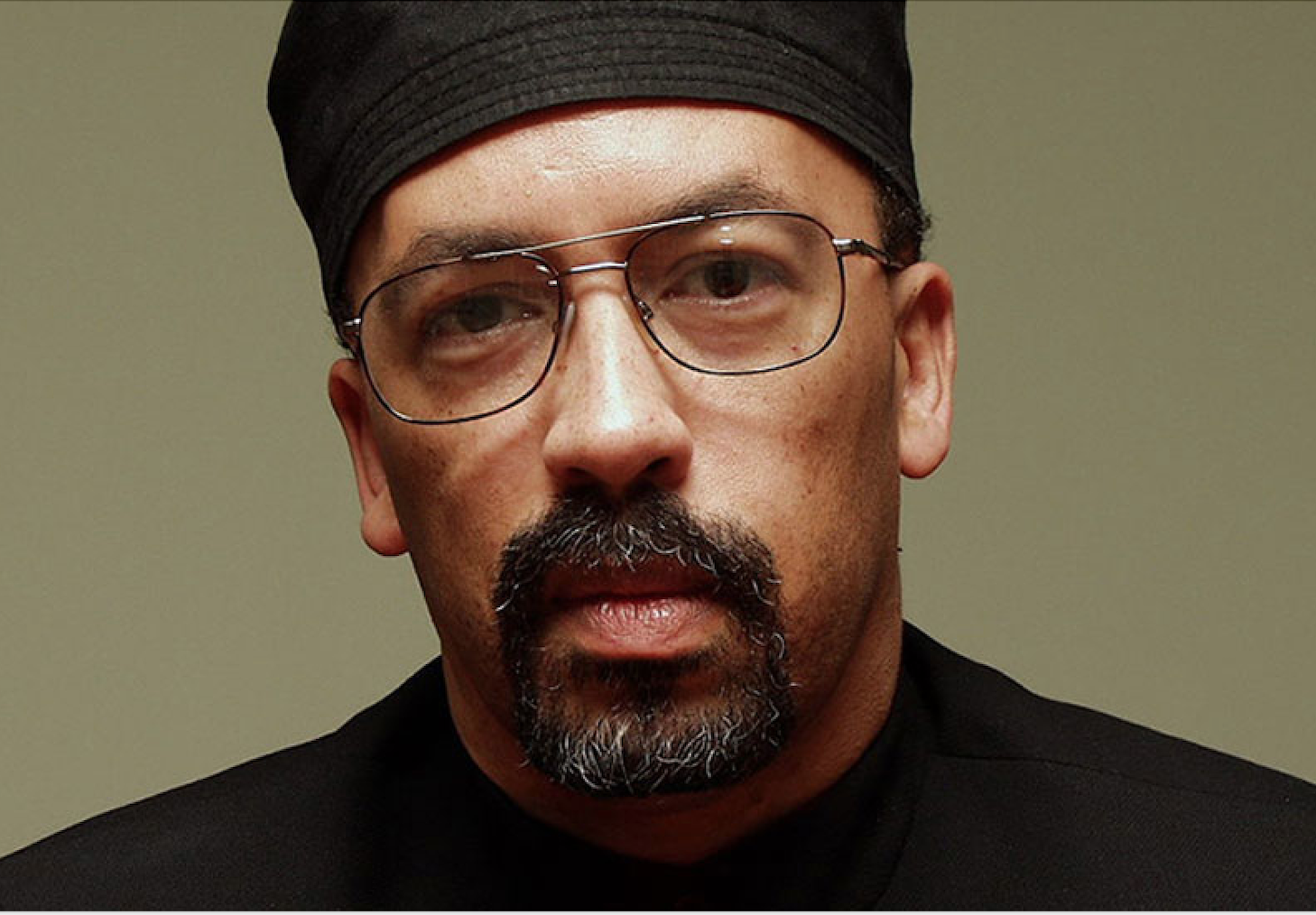
Bill Fletcher Jr (born 1954) has been an activist since his teen years. Upon graduating from college he went to work as a welder in a shipyard, thereby entering the labor movement. Over the years he has been active in workplace and community struggles as well as electoral campaigns. He has worked for several labor unions in addition to serving as a senior staffperson in the national AFL-CIO. Fletcher is the former president of TransAfrica Forum; a Senior Scholar with the Institute for Policy Studies; and in the leadership of several other projects. Fletcher is the co-author (with Peter Agard) of “The Indispensable Ally: Black Workers and the Formation of the Congress of Industrial Organizations, 1934-1941”; the co-author (with Dr. Fernando Gapasin) of “Solidarity Divided: The crisis in organized labor and a new path toward social justice“; and the author of “‘They’re Bankrupting Us’ – And Twenty other myths about unions.” Fletcher is a syndicated columnist and a regular media commentator on television, radio and the Web.
ZNetwork is funded solely through the generosity of its readers.
Donate




