


TEL AVIV-Israel’s contact with the next generation of Palestinians-those who grew up under the occupation-and its attempts to achieve peace with them, will be far more problematic than with the generation that preceded it. This is something we need to be aware of and take into account. No past generation grew up in conditions as severe as those that afflicted the members of the current generation in the territories. Indeed, there is no place in the Western world where children live in comparable conditions. A year ago, a report by USAID, the U.S. Agency for International Development, found that about a quarter of the children in the territories suffer from malnutrition, either prolonged or passing. A United Nations agency found at the time that 62 percent of the Palestinians did not have sufficient access to food. Since then, the situation has only been aggravated.
A similar state of affairs exists in the health system, in which all medical treatment, including vaccinations and first aid, is a complicated, and at times impossible, bureaucratic process. One need only participate in one of the events held by Physicians for Human Rights to see the health conditions in which children are growing up in Israel‘s backyard.
It is not only food and physical health that these children lack. From Jenin to Rafah, hundreds of thousands of children are suffering from psychological traumas whose impact is difficult to gauge. These are children who, in the past three years, have been exposed to death in truly frightening dosages, to destruction, shooting, tanks in the streets, soldiers invading their homes in the middle of the night, arrests, beatings and multiple forms of humiliation. Some of them lost their friends, in some cases before their eyes: 230 Palestinian children under the age of 15 and another 208 aged 15-18 have been killed since September 2000. Many others have been rendered paralyzed or disabled, and their friends have been exposed to horrors. One doesn’t have to be a psychologist to understand that children who live with deep anxiety for such a lengthy period will suffer mental problems. And, of course, hardly any of them are getting professional assistance.
These children are growing up with deprivations that are hard for an Israeli parent or child to imagine. They have never seen a beach, have never been in an air conditioned room, have never splashed around in a swimming pool, have never been on a bus, have never gone on a trip anywhere-they can only dream of being on a train or a plane. Some of them were unable to leave their homes for months on end, or leave their villages for years.
Day and night in the same village, without a community center, without a sports field, without books, toys or games. They have never been to an amusement park, they have no idea what a computer is, they have never been to a movie theater, seen a play, visited a museum, attended a concert or taken part in extracurricular activities. For months they couldn’t even get to school. Their cultural and social world was formed by the conditions of their lives under the closures and sieges imposed by Israel. Some of them have never seen their grandparents, even though they live in a nearby town; others have never seen their imprisoned brothers or fathers (in some cases, both parents are in Israeli detention) since visits to prisons became impossible. Many children, too, have been arrested and given severe
punishments without any consideration for their age, and have been jailed together with adults.
However, it is not only the living conditions of the Palestinian children that should be causing Israelis sleepless nights. Because in addition to their distress, for most of which Israel is responsible, this is a generation that “did not know Joseph.” Their fathers worked in Israel, in some cases from a very early age, working its fields,
building its houses, cleaning its streets or doing commerce with Israel. From childhood they were exposed to Israelis, becoming familiar with both their ugly and their good sides and even learning their language. Consequently, the attitude of that generation toward Israel is more complex: the great majority of that generation still
believes in peace and some of it aspires to emulate Israel in certain spheres.
In contrast, the children of the present generation are totally cut off from us. Their only exposure to Israel is through two figures: the soldier who bursts violently into their home in the dead of night, smashes a hole in their living room wall and humiliates their parents; or the settler, who has plundered their land and sometimes
also abuses them.
This is a generation that has never heard of nonviolent, unarmed Israelis. The only Israelis today’s Palestinian children-tomorrow’s generation of adults-have seen are those who imprison them in their homes, shoot them, beat them and humiliate them. They don’t need the incitement doses in day camps or Palestinian television to mold their worldview. All they have to do is look around at what is happening close to home.
When they come of age they will carry these memories with them. They will not be able to forget the spectacles of horror they were exposed to, or those they hold responsible for them. Thus before our eyes a generation is growing that is not only hungry, psychologically traumatized, unhealthy and without proper education-but is also thirsty for revenge and consumed by hatred. This is a message that should be of deep concern, not only to the parents of these wretched children, but to us all.

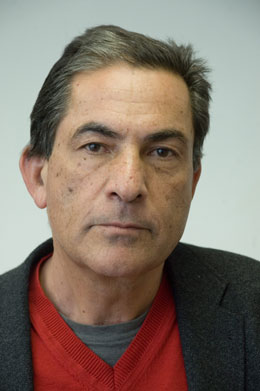
Gideon Levy is a Haaretz columnist and a member of the newspaper's editorial board. Levy joined Haaretz in 1982, and spent four years as the newspaper's deputy editor. He is the author of the weekly Twilight Zone feature, which covers the Israeli occupation in the West Bank and Gaza over the last 25 years, as well as the writer of political editorials for the newspaper. Levy was the recipient of the Euro-Med Journalist Prize for 2008; the Leipzig Freedom Prize in 2001; the Israeli Journalists’ Union Prize in 1997; and The Association of Human Rights in Israel Award for 1996. His new book, The Punishment of Gaza, has just been published by Verso Publishing House in London and New York.
ZNetwork is funded solely through the generosity of its readers.
Donate
