


In January 2025, Indonesia – the world’s fourth-largest country by population (282 million) with the seventh-largest Gross Domestic Product by purchasing power parity – joined the BRICS+ bloc. Eleven countries are now in this expanded grouping. The original members – Brazil, China, India, Russia, and South Africa – came together in 2009 in response to the US housing market’s subprime crisis that signalled to them the end of the United States as the buyer of last resort for their goods and services.
Talk of South-South cooperation in the decades before 2009 had not been taken too seriously; but after the financial crisis morphed into a long period of low growth rates, impacted deeply by the COVID-19 pandemic and the war in Ukraine, it became clear that South-South trade might be the way out for the large economies of the Global South. It made sense to expand the BRICS with the addition of the major energy-producing countries (Iran, Saudi Arabia, and the United Arab Emirates) as well as large economies in their regions (Egypt, Ethiopia, and now Indonesia).
Indonesia’s entry into the BRICS+ comes during the 70th anniversary year of the Asian-African Conference held in Bandung, Indonesia in 1955. That conference generated what was then called the ‘Bandung Spirit’, a sensibility for the need of the newly freed countries from colonialism to set their own path for development. The communiqué that was published on the last day of the 1955 conference called for the ‘promotion of mutual interests and cooperation’, which would later be known as South-South Cooperation. The Bandung process created two institutions to carry forward this principle: the Non-Aligned Movement (NAM), formed in 1961, and the United Nations Conference on Trade and Development (UNCTAD), formed in 1964. While the NAM pushed for an agenda of peace against the Cold War, UNCTAD tried to forge an agenda for development. These two terms – peace and development – framed the Bandung Spirit. Whereas the advancement of both had been curtailed for the poorer countries of the world over the past seven decades, the emergence of the BRICS+ revives some of that hope from 1955.
Canary in the Nickel Mine
Nickel is a metal that is found in two types of ores – sulphides and laterites. It became a key part of the world’s industries with the growth of the stainless-steel industry (about two-thirds of global nickel production is still used to make stainless-steel that is used in everything from building construction to medical equipment). With the pressure to decarbonise, there has been greater interest in the role of nickel in producing lithium-ion batteries for high-performance electric vehicles. The best quality nickel – Class 1 – is found in Russia, Canada, and Australia, where the nickel comes from sulphide ores. Indonesia is the world’s largest nickel producer, but it produces Class 2 nickel from laterite ores (and so sells mainly into the stainless steel market). Chinese private companies such as Zhejiang Huayou Cobalt have built large High-Pressure Acid Leach (HPAL) facilities in Indonesia to convert laterite into battery-grade nickel. If the process of HPAL scales up, it would make Indonesia the largest producer of Class 1 nickel by 2030.
As interest in nickel increased, Indonesia’s government banned the export of raw nickel ore and insisted that it be processed within the country. This was to prevent the loss of value from the nickel as it gets more and more important for the electric industry. But Indonesia did not take the next step, which would have entailed an insistence that all processing of the ore take place through Indonesian firms (whether a government firm or in the private sector). Indonesian officials from the Ministry of Energy and Mineral Resources (ESDM) explained to me that the reason why they did not effectively nationalise the sector is that they neither have the financial resources nor the technological resources to build HPAL facilities. That is why they have opened this to foreign companies. Russia’s Nornickel, the largest nickel producer in the world, has the financial resources but not the expertise since it works in Russia, where ores are mainly from sulphides. China’s private firms, on the other hand, have both the financial resources and the technical expertise to extract Class 1 nickel from Class 2 ore. That is why China’s firms, for now, dominate the production of nickel within Indonesia.
However, in conversation with ESDM officials, it was made clear that the Chinese firms are ‘actively transferring technology to the Indonesian state-owned company’. Most of the nickel smelting is being done in joint-ventures between Chinese firms and two Indonesian companies, PT Vale Indonesia and PT Aneka Tambang (PT Antam). PT Vale Indonesia is owned by the state-owned mining firm PT Mineral Industri Indonesia (PT MIND ID), Vale Canada, and Sumitomo Metal Mining. The Canadian and Japanese firms are minority shareholders in this company. PT MIND ID is the dominant shareholder of PT Antam.
In October 2024, PT Antam bought a large share of PT Jiu Long Metal Industry (owned by Tsingshan Holding of Wenzhou, China), one of the large smelting firms operating in Indonesia. Gradually, the Indonesian state-owned mining company plans to absorb the processing plants within the country and displace the Chinese firms once technology has been transferred.
Industrial development has its own problems. HPAL technology creates significant environmental and social problems, raised by communities that live beside the smelters. Part of the development process will have to include improvements in the HPAL technology, and it will have to require that part of the benefits from the nickel sales go to the people who live above the mines and beside the factories.
In 2019, the European Union, which only buys two percent of the unprocessed ore from Indonesia, filed a lawsuit in the World Trade Organisation against Indonesia’s nickel ore export ban. The Europeans said that the ban was ‘against WTO rules’. In November 2022, the WTO agreed with the European Union, and the following month, Indonesia appealed against this decision. In the absence of a proper appellate body, the case lies in limbo. But it is characteristic of the dilemma: Indonesia attempts to peacefully develop its economy by exerting its sovereignty over its own raw materials – as per the Bandung Spirit – and the European Union – which includes The Netherlands, Indonesia’s former colonial ruler – decides to prevent such development.
Contradictions of Bandung
Indonesia will host a low-profile event to celebrate the 70th anniversary of the Bandung Conference in June. The ‘Bandung Spirit’ is not being widely advertised these days, partly because of the lingering internal problems among Global South states. It seems far more logical to simply allow the contradictions of the present to generate their own new spirit, with the fight to establish sovereignty over a nation’s resources at the centre of this new mood.
This article was produced by Globetrotter and No Cold War.

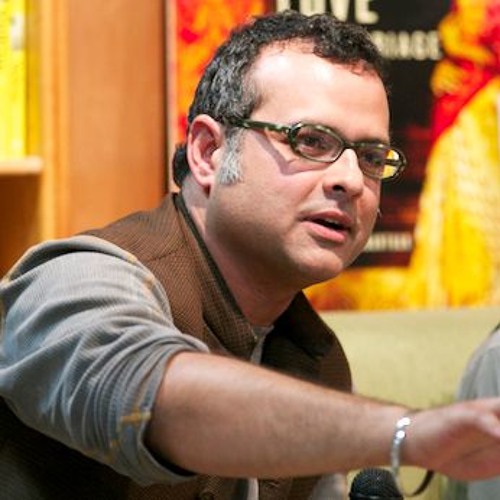
Vijay Prashad is an Indian historian, editor, and journalist. He is a writing fellow and chief correspondent at Globetrotter. He is an editor of LeftWord Books and the director of Tricontinental: Institute for Social Research. He is a senior non-resident fellow at Chongyang Institute for Financial Studies, Renmin University of China. He has written more than 20 books, including The Darker Nations and The Poorer Nations. His latest books are Struggle Makes Us Human: Learning from Movements for Socialism and (with Noam Chomsky) The Withdrawal: Iraq, Libya, Afghanistan, and the Fragility of U.S. Power. Tings Chak is the art director and a researcher at Tricontinental: Institute for Social Research and lead author of the study “Serve the People: The Eradication of Extreme Poverty in China.” She is also a member of Dongsheng, an international collective of researchers interested in Chinese politics and society.
ZNetwork is funded solely through the generosity of its readers.
Donate




