


At the United Nations General Assembly on 24 September 2022, Haiti’s Foreign Minister Jean Victor Geneus admitted that his country faces a serious crisis, which he said ‘can only be solved with the effective support of our partners’. To many close observers of the situation unfolding in Haiti, the phrase ‘effective support’ sounded like Geneus was signalling that another military intervention by Western powers was imminent. Indeed, two days prior to Geneus’s comments, The Washington Post published an editorial on the situation in Haiti in which it called for ‘muscular action by outside actors’. On 15 October, the United States and Canada issued a joint statement announcing that they had sent military aircraft to Haiti to deliver weapons to Haitian security services. That same day, the United States submitted a draft resolution to the UN Security Council calling for the ‘immediate deployment of a multinational rapid action force’ into Haiti.
Ever since the Haitian Revolution won independence from France in 1804, Haiti has faced successive waves of invasions, including a two-decade-long US occupation from 1915 to 1934, a US-backed dictatorship from 1957 to 1986, two Western-backed coups against the progressive former President Jean-Bertrand Aristide in 1991 and 2004, and a UN military intervention from 2004 to 2017. These invasions have prevented Haiti from securing its sovereignty and have prevented its people from building dignified lives. Another invasion, whether by US and Canadian troops or by UN peacekeeping forces, will only deepen the crisis. Tricontinental: Institute for Social Research, the International Peoples’ Assembly, ALBA Movements, and the Plateforme Haïtienne de Plaidoyer pour un Développement Alternatif (‘Haitian Advocacy Platform for Alternative Development’ or PAPDA) have produced a red alert on the current situation in Haiti, which can be found below and downloaded as a PDF.
What is happening in Haiti?
A popular insurrection has unfolded in Haiti throughout 2022. These protests are the continuation of a cycle of resistance that began in 2016 in response to a social crisis developed by the coups in 1991 and 2004, the earthquake in 2010, and Hurricane Matthew in 2016. For more than a century, any attempt by the Haitian people to exit the neocolonial system imposed by the US military occupation (1915–34) has been met with military and economic interventions to preserve it. The structures of domination and exploitation established by that system have impoverished the Haitian people, with most of the population having no access to drinking water, health care, education, or decent housing. Of Haiti’s 11.4 million people, 4.6 million are food insecure and 70% are unemployed.
The Haitian Creole word dechoukaj or ‘uprooting’ – which was first used in the pro-democracy movements of 1986 that fought against the US-backed dictatorship – has come to define the current protests. The government of Haiti, led by acting Prime Minister and President Ariel Henry, raised fuel prices during this crisis, which provoked a protest from the trade unions and deepened the movement. Henry was installed to his post in 2021 by the ‘Core Group’ (made up of six countries and led by the US, the European Union, the UN, and the Organisation of American States) after the murder of the unpopular president Jovenel Moïse. Although still unsolved, it is clear that Moïse was killed by a conspiracy that included the ruling party, drug trafficking gangs, Colombian mercenaries, and US intelligence services. The UN’s Helen La Lime told the Security Council in February that the national investigation into Moïse’s murder had stalled, a situation that has fuelled rumours and exacerbated both suspicion and mistrust within the country.
How have the forces of neocolonialism reacted?
The United States and Canada are now arming Henry’s illegitimate government and planning military intervention in Haiti. On 15 October, the US submitted a draft resolution to the United Nations Security Council calling for the ‘immediate deployment of a multinational rapid action force’ in the country. This would be the latest chapter in over two centuries of destructive intervention by Western countries in Haiti. Since the 1804 Haitian Revolution, the forces of imperialism (including slave owners) have intervened militarily and economically against people’s movements seeking to end the neocolonial system. Most recently, these forces entered the country under the auspices of the United Nations via the UN Stabilisation Mission in Haiti (MINUSTAH), which was active from 2004 to 2017. A further such intervention in the name of ‘human rights’ would only affirm the neocolonial system now managed by Ariel Henry and would be catastrophic for the Haitian people, whose movement forward is being blocked by gangs created and promoted behind the scenes by the Haitian oligarchy, supported by the Core Group, and armed by weapons from the United States.
How can the world stand in solidarity with Haiti?
Haiti’s crisis can only be solved by the Haitian people, but they must be accompanied by the immense force of international solidarity. The world can look to the examples demonstrated by the Cuban Medical Brigade, which first went to Haiti in 1998; by the Via Campesina/ALBA Movimientos brigade, which has worked with popular movements on reforestation and popular education since 2009; and by the assistance provided by the Venezuelan government, which includes discounted oil. It is imperative for those standing in solidarity with Haiti to demand, at a minimum:
- that France and the United States provide reparations for the theft of Haitian wealth since 1804, including the return of the gold stolen by the US in 1914. France alone owes Haiti at least $28 billion.
- that the United States return Navassa Island to Haiti.
- that the United Nations pay for the crimes committed by MINUSTAH, whose forces killed tens of thousands of Haitians, raped untold numbers of women, and introduced cholera into the country.
- that the Haitian people be permitted to build their own sovereign, dignified, and just political and economic framework and to create education and health systems that can meet the people’s real needs.
- that all progressive forces oppose the military invasion of Haiti.
The common sense demands in this red alert do not require much elaboration, but they do need to be amplified.
Western countries will talk about this new military intervention with phrases such as ‘restoring democracy’ and ‘defending human rights’. The terms ‘democracy’ and ‘human rights’ are demeaned in these instances. This was on display at the UN General Assembly in September, when US President Joe Biden said that his government continues ‘to stand with our neighbour in Haiti’. The emptiness of these words is revealed in a new Amnesty International report that documents the racist abuse faced by Haitian asylum seekers in the United States. The US and the Core Group might stand with people like Ariel Henry and the Haitian oligarchy, but they do not stand with the Haitian people, including those who have fled to the United States.
In 1957, the Haitian communist novelist Jacques-Stéphen Alexis published a letter to his country titled La belle amour humaine (‘Beautiful Human Love’). ‘I don’t think that the triumph of morality can happen by itself without the actions of humans’, Alexis wrote. A descendent of Jean-Jacques Dessalines, one of the revolutionaries that overthrew French rule in 1804, Alexis wrote novels to uplift the human spirit, a profound contribution to the Battle of Emotions in his country. In 1959, Alexis founded the Parti pour l’Entente Nationale (‘People’s Consensus Party’). On 2 June 1960, Alexis wrote to the US-backed dictator François ‘Papa Doc’ Duvalier to inform him that both he and his country would overcome the violence of the dictatorship. ‘As a man and as a citizen’, Alexis wrote, ‘it is inescapable to feel the inexorable march of the terrible disease, this slow death, which each day leads our people to the cemetery of nations like wounded pachyderms to the necropolis of elephants’. This march can only be halted by the people. Alexis was forced into exile in Moscow, where he participated in a meeting of international communist parties. When he arrived back in Haiti in April 1961, he was abducted in Môle-Saint-Nicolas and killed by the dictatorship shortly thereafter. In his letter to Duvalier, Alexis echoed, ‘we are the children of the future’.

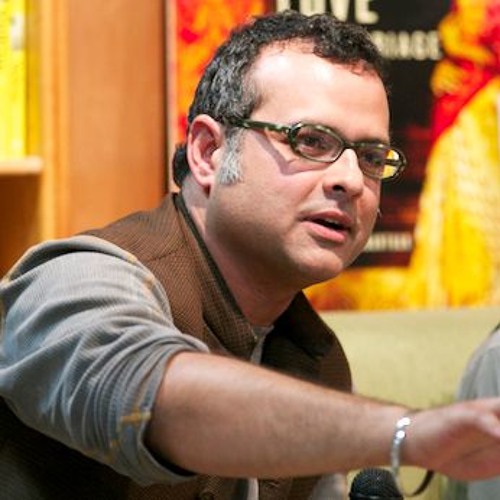
Vijay Prashad is an Indian historian, editor, and journalist. He is a writing fellow and chief correspondent at Globetrotter. He is an editor of LeftWord Books and the director of Tricontinental: Institute for Social Research. He is a senior non-resident fellow at Chongyang Institute for Financial Studies, Renmin University of China. He has written more than 20 books, including The Darker Nations and The Poorer Nations. His latest books are Struggle Makes Us Human: Learning from Movements for Socialism and (with Noam Chomsky) The Withdrawal: Iraq, Libya, Afghanistan, and the Fragility of U.S. Power. Tings Chak is the art director and a researcher at Tricontinental: Institute for Social Research and lead author of the study “Serve the People: The Eradication of Extreme Poverty in China.” She is also a member of Dongsheng, an international collective of researchers interested in Chinese politics and society.
ZNetwork is funded solely through the generosity of its readers.
Donate




