

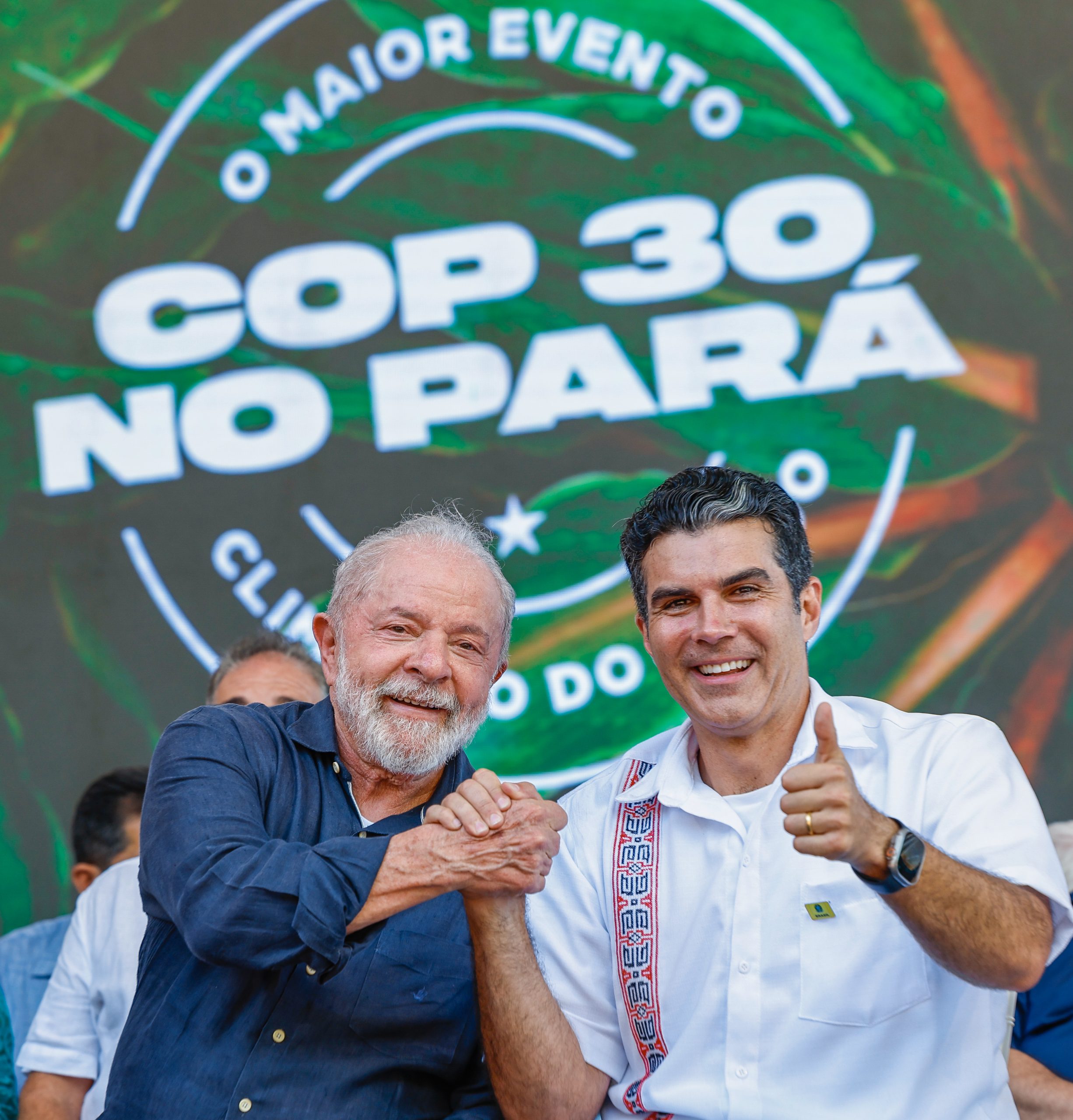
Thirty years have passed since the first Conference of the Parties (COP) of the United Nations Framework Convention on Climate Change (UNFCCC) was held in Berlin (Germany). Since then, successive agreements, targets, and definitions have been ineffective in addressing the two main issues that have lingered at the COP since 1995: first, the responsibility of the rich countries for the climate catastrophe, and second, the need to reduce greenhouse gas emissions. At the COP-30 in Belém do Pará (Brazil), the world will once more have to see if these questions are addressed or ignored.
The thirty-year failure to address the question of responsibility and of emissions are interlinked. Gas emissions were 1.3% higher in 2023 than in 2022, with a growth rate higher than the rate over the decade from 2010 to 2019 when the annual emissions rose by an average of 0.8%. But it is important to recognise that only fifty-seven oil, gas, coal, and cement producers are directly linked to 80% of the world’s global fossil carbon dioxide emissions. Of these few companies, the largest emitter was ExxonMobil (United States), which was linked to 3.6 gigatonnes of carbon dioxide over seven years, or 1.4% of the global total. The list says a lot about the geography of emissions, with four companies following ExxonMobil: Shell (United Kingdom), BP (United Kingdom), Chevron (United States), and TotalEnergies (France). Each of these companies is associated with at least 1% of global emissions. In addition, the richest section of the US population (the top 10% of the income pyramid) was responsible for 40% of total US emissions.
Multilateral agreements are very fragile. They have targets set by states and these targets are often voluntary. There is no enforcement or penalty mechanism. The COP-16 in Cancún (Mexico) in 2010 and the COP-21 meeting in Paris in 2015 resulted in an agreement for the rich countries to create a $100 billion climate finance fund. There is nothing like that amount in any fund. In 2024, at COP-29 in Baku (Azerbaijan), the figure was raised to $300 billion. There is no guarantee that it will be met. The new target is bold. But it is also modest, since it is not even near what the countries of the Global South would require. One calculation – the New Collective Quantified Goal (NCQG) – is for the fund to disburse $1.3 trillion; the High Level Expert Group on Climate Finance (IHLEG), meanwhile, estimates that the number should be $2.7 trillion annually by 2030.
The Road to Brazil
COP-30 in Belém do Pará will face three important challenges.
First, the failure of COP-29 in Baku to advance the agenda leaves open only two paths for the COP process: to lose all relevance and to sink definitively into oblivion, or to become a turning point with a more rigorous and realistic agreement that has enforcement mechanisms and timelines.
Second, COP-30 takes place in the first year of Donald Trump’s return to office in the United States. The US government’s measures, once more, to withdraw from the Paris Agreement sets the terms for Trump’s engagement with COP-30. He is simply not interested in the issue of climate change. The persecution of climate scientists in the United States is illustrative of this attitude of climate denial. Trump will want to render the agreement innocuous so as not to damage the carbon emitting practices of his friends in the oil and gas companies. If the United Nations fails in the COP-30 negotiations, it will once more show its absolute inability to move a humane agenda – the pain of the genocide in Gaza, the war in Ukraine, and the attack on Iran being only the most powerful assaults on the UN system.
Third, Brazil’s current government under Luis Inácio Lula da Silva has a keen interest in repositioning itself after four years of climate denial by the Jair Bolsonaro government. But Lula’s government faces its own challenges in tackling climate change. Brazil’s agribusiness industry is primarily responsible for the increase in deforestation in the Amazon region, paving the way for soybean production and cattle ranching for export, driven by massive state subsidies. This sector, more than the fossil fuel industry, is the largest generator of greenhouse gas emissions in the country. Despite the efforts of President Lula’s government to reduce deforestation in the Amazon, agribusiness has shifted its deforestation and commodity production expansion to other biomes, such as the Cerrado, generating impacts on water resources, as well as social conflicts with the expulsion of peasants and indigenous peoples. Brazil has been a laboratory for carbon market practices that have proven not only their inefficiency, but also that this purely financial mechanism merely covers up other injustices. Gigantic commercial monoculture tree plantations have been used both to expel peasants and indigenous peoples and to clean up the mess of global polluters in the financial markets, offering only new speculative securities.
Petrobras is the most important state-owned company in Brazil and the largest Brazilian company. In Lula’s previous terms, it played an important role in the revival of national industry, and it was hoped that the exploitation of oil wells in the region known as the Pre-Salt would boost the country’s development. This process was interrupted by the coup that overthrew Dilma Rousseff in 2016 and then by the government of Jair Bolsonaro. Since its creation, the resources of the Pre-Salt Social Fund have been used only to pay off public debt, and only now have regulations been created for their use in education and health. Lula’s government expects that the exploration of a new region, precisely on the coast of the northern part of the country, will finance the energy transition. The proposal has been rejected by environmentalists and even within the government itself.
For all these reasons, COP30 could be the last conference if it does not advance robust and urgent measures for an energy transition and to tackle global warming. Its failure will not only deepen the climate crisis and the global governance crisis but will certainly continue to penalise the biggest victims of climate change, the peoples of the global South.
This article was produced by Globetrotter.
ZNetwork is funded solely through the generosity of its readers.
Donate




