


South of Kobane, Syria, on March 21, the Islamic State (IS) confronted the Kurdish People’s Protection Units (YPG) and the Iraqi Kurdish peshmerga. Western bombers continued to hit IS targets, although these raids did not seem to stop the ferocious attacks from IS against the Kurdish positions. Both sides claim small victories, but these are minor skirmishes. Last year, rapid IS advances drew their fighters deep into Syrian Kurdish territory, with the virtual seizure of Kobane by September. Kurdish fighters, with Western air support, pushed IS out of Kobane by the end of January — but they could not remove IS from the Kurdish regions that border Turkey.
The presence of Iraqi Kurdish fighters in Syrian Kurdistan (Rojava) is remarkable. Turkey’s government, long an adversary of Kurdish self-determination, allowed the Iraqi Kurds to transit through their country. The peshmerga brought much-needed logistical support for the beleaguered Syrian fighters. Their new allies, the YPG, are members of a political front with close ties to the Kurdistan Workers’ Party (PKK), denoted as a terrorist group both by Turkey and the United States. Iraq’s peshmerga is allied with the U.S. That the peshmerga are now fighting alongside the YPG — a creation of the PKK for Syria — suggests the shifting of allegiances in the region. The threat of the IS is sufficient for geopolitical animosities to be held in check.
The Kurdish people are spread out over four countries — Iran, Iraq, Syria and Turkey. Syria has the smallest number of Kurds; Turkey the largest. The territory of the Kurdish people is not entirely contiguous. Syria’s Kurds live in three discontinuous pockets in the north, along the border with Turkey. Culture and language unite the Kurds, but politics divides them. Iraqi Kurdish leader Massoud Barzani’s Kurdistan Democratic Party and the PKK have vied for leadership over the Kurdish struggle. Mr. Barzani told al-Hayat recently that the emergence of the IS poses an “existential threat” to Kurdish aspirations. No wonder that he and imprisoned PKK leader Abdullah Öcalan have begun to negotiate once more for a stronger Kurdish National Congress, an umbrella group of Kurdish organisations. Unity in action against the IS is the spur, not irredentism.
Mr. Öcalan’s olive branch to Mr. Barzani comes alongside a renewed call by him for a new agreement with the Turkish state. The PKK has conducted a 30-year bloody, and largely futile, armed struggle against the Turkish state. The “Solution Process” between the government of Recep Tayyip Erdog˘an and the PKK took place under the shadow of the civil war in Syria. Turkey anticipated being drawn into the post-Assad order in Syria, and so Mr. Erdog˘an wanted an entente with the PKK within Turkey. At the Nowruz celebrations of 2013, Mr. Öcalan announced a ceasefire. Matters seemed to favour the peace process until the Syrian war went against Mr. Erdog˘an’s hopes, and the Syrian Kurds took advantage of the chaos to declare the formation of the province of Rojava. Mr. Erdog˘an backed off from the peace process, shelling PKK camps rather than aiding their struggle against the IS. Mr. Öcalan this year has called for a ceasefire again, but it is unlikely to be taken seriously by Mr. Erdog˘an.
The Turkish President is faced with a dilemma. Turkish chauvinist sentiment favours his party. This is why he recently said that Turkey has no Kurdish problem. Meanwhile, discontent against Mr. Erdog˘an suggests that his AK Party will not do as well as forecast in the June parliamentary elections. The pro-Kurdish and leftist People’s Democratic Party (HDP) will go to the polls led by Figen Yüksekdað. Mr. Öcalan’s plea for a ceasefire would bring the PKK to work openly for Ms. Yüksekdað’s party — and would likely allow the HDP to break the 10 per cent threshold, denying Mr. Erdog˘an his parliamentary super-majority. If Mr. Erdog˘an accepts the ceasefire, he provides the advantage to the HDP; if he rejects it, he emboldens his chauvinist allies but weakens his control over Turkey’s institutions.
Turkey’s stubborn view that the primary problem in Syria is the Assad government has prevented its entry into the fight against the IS. At most, Ankara has hardened the official border posts to Syria, although wounded IS fighters seem to find their way into Turkish hospitals, and resupply from Turkey to the IS continues. Turkey’s reticence to come out openly against the IS brought the Iraqi Kurds into alliance with the Syrian Kurds. When the Iraqi Kurds came under threat from the IS last year, the Iranian government came immediately to their aid. “Turkey wants influence in Iraq,” said Mr. Barzani, “but Iran acted more accurately and faster.” The distance from Turkey indicated by Mr. Barzani allows the Syrian and Iraqi Kurds space for closeness.
While the Iraqi Kurdish peshmerga receives aid from the U.S. and Iran, the resource-strapped YPG-PKK fighters have taken significant casualties because of the two-faced Turkish policy and the reticence of the U.S. to aid a group that they deem to be a terrorist force. The YPG’s political leadership has appealed to the West for military supplies, but to no avail.
Mr. Barzani recently disparaged the colonial Sykes-Picot borders as “always artificial.” Yet, Mr. Barzani is committed to some version of Iraq, although accusations that the peshmerga have been denying Sunni Arabs the right to return to their homes suggests otherwise. Pressure on Mr. Barzani to remain within Iraq will come not only from the West but also from Iran. Iran has its own Kurdish population. It is unwilling to countenance talk of Kurdistan.
Vijay Prashad is the Chief Editor at LeftWord Books, New Delhi.

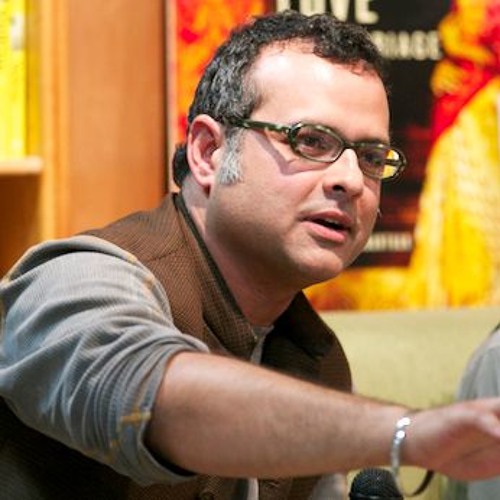
Vijay Prashad is an Indian historian, editor, and journalist. He is a writing fellow and chief correspondent at Globetrotter. He is an editor of LeftWord Books and the director of Tricontinental: Institute for Social Research. He is a senior non-resident fellow at Chongyang Institute for Financial Studies, Renmin University of China. He has written more than 20 books, including The Darker Nations and The Poorer Nations. His latest books are Struggle Makes Us Human: Learning from Movements for Socialism and (with Noam Chomsky) The Withdrawal: Iraq, Libya, Afghanistan, and the Fragility of U.S. Power. Tings Chak is the art director and a researcher at Tricontinental: Institute for Social Research and lead author of the study “Serve the People: The Eradication of Extreme Poverty in China.” She is also a member of Dongsheng, an international collective of researchers interested in Chinese politics and society.
ZNetwork is funded solely through the generosity of its readers.
Donate




