


In an unsurprisingly puerile Ramnath Goenka Lecture, Narendra Modi has re-invoked the favourite cultural hobby-horse of the “indigenous,” upper caste, North-Indian elite.
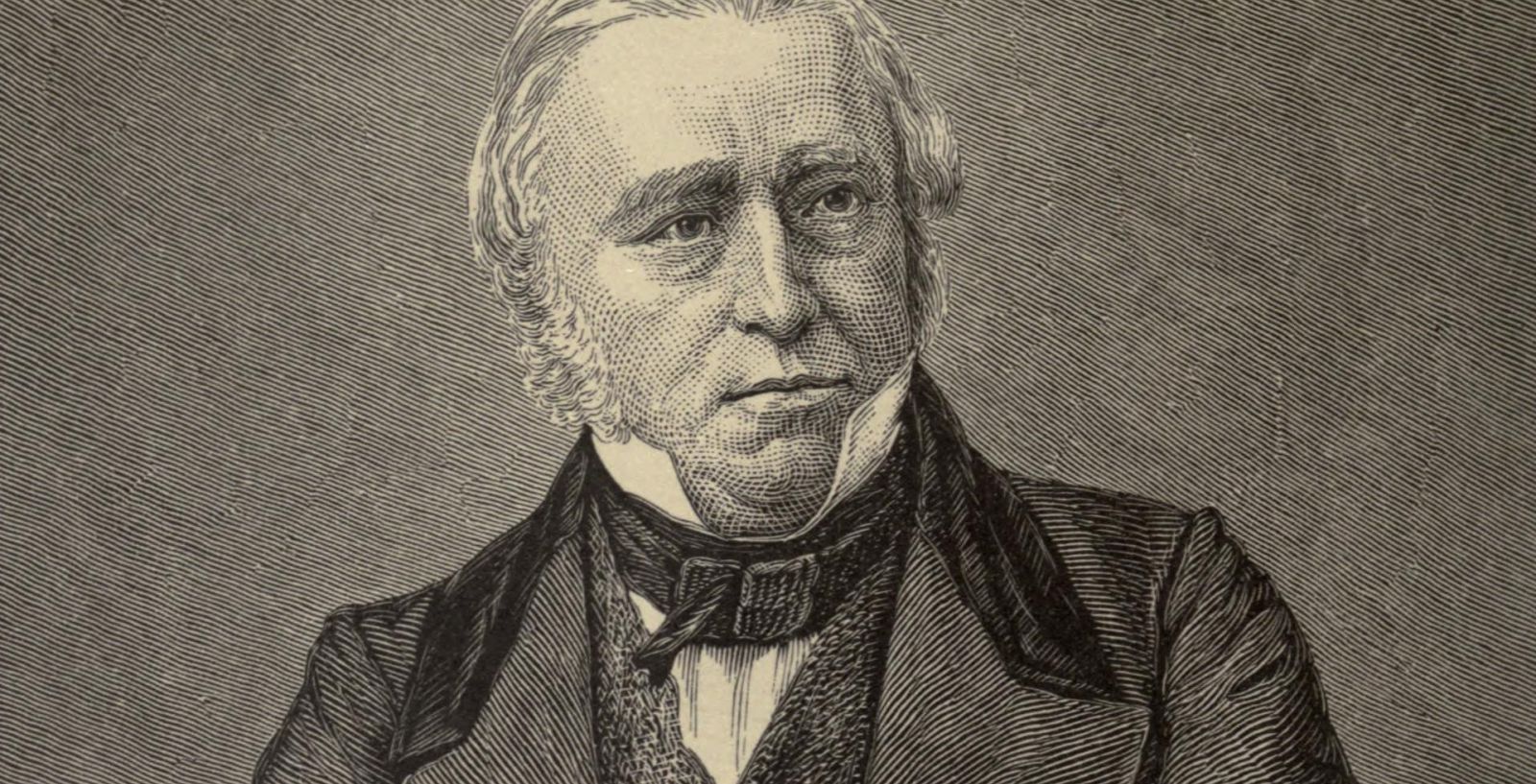
By introducing English language and education to India in 1835, Macaulay was instrumental in successfully enslaving the Indian psyche, and forging a class of Indians fit only to serve British colonial purposes.
That British colonial rule caused a brutal drain of wealth from India is a fact far too well established to be stupidly contested.
But, that the fruits of English education were wholly deleterious may not be quite so incontestable a fact either.
After all, the India that Modi inherited in 2014 with all its many achievements in economic development, science and technology, global reach and influence did not have exactly little to do with an unforeseen fall-out of Macaulay’s ill intent.
And going back to the struggle for freedom from British colonial rule, English liberal ideas cannot be said to have played a scant role either.
Indeed, it must remain a trenchant irony of the issue that those whom Macaulay succeeded in educating became the leading vanguards of the freedom struggle, while those that now do dirt on Macaulay remained conspicuously collaborative with the British during that struggle.
But, here is the larger point:
Is colonialism unambiguously always only a phenomenon in which an external power enslaves a foreign territory for economic/ cultural/ militarist exploitation?
In fairness to Modi, let it be noted that this view has indeed been fashionable among notable sections of scholars who have worked on colonialism.
But there are others who contend that colonial dominance and exploitation has routinely happened indigenously as well, within one and the same geographical space, and that “nationalism” as an ideology has more often than not been deployed to whitewash precisely that unlovely reality.
Do remember that when the “anti-colonial” American revolutionaries were framing such admirable declarations as that “we hold these truths to be self-evident that all men are created equal, that they are endowed …with certain unalienable rights” etc. this did not apply to women or to slaves, Indeed, many of those who were authors of that ringing declaration were uncomplicated slave owners, unwilling to part with their enslaved human properties.
And, one may ask, barring institutionalised slavery, how may it be argued that the historical situation of the Shudras and Dalits has been any the better than those of the formally enslaved black peoples in the colonising Western world?
Or that women all across the nations of the globe have suffered a fate indistinguishable from colonial subjugation?
As to the imposition of the English language: why, it may be asked, is the constant impulse to impose Hindi on all regions of such a diverse linguistic space as Bharat so very different from the old colonial project?
Why, for example, is the ejection of the Urdu language and the cultural output and inclusive richness associated with its use not a colonial project?
Why is it not a colonial putsch to require that all Indians must regard themselves as Hindus, whatever be the religious faith they follow?
Or that only certain habits of food intake may be regarded as properly native, and the rest dubbed foreign impositions, when, for example, even among Brahmins, Kashmiri Brahmins – most of them – and those in Bengal not only consume non-vegetarian food but are required to offer oblations with such food on some religious occasions?
And why is all this not an indigenous replication of formations in other countries that we often castigate as tyrannical: example, the exclusionary predilections of theocratic states.
If these observations in passing have merit, must we not reach conclusions rather different from those proffered by Modi in his lecture?
That in order not to copy Macaulay and his project, we – the unquestionably most diverse of countries in the globe – must defeat colonialism by embracing the multi-cultural plurality of our peoples from the Himalayas to the Arabian Sea, from the coast of Gujarat to the Bay of Bengal.
Clearly, this anti-colonial vision has no chance of being realised unless we first hold democracy not to be just a legitimising ladder to state power, but the founding philosophical principle of an all-embracing humanism, not vassal to any single dominant social/ cultural/ religious faction that seeks to represent itself as the totality.
It is the Macaulay at home that must be ejected if the laudable goal that Modi has outlined has any prospect of being attained.


Badri Raina is a well-known commentator on politics, culture and society. His columns on the Znet have a global following. Raina taught English literature at the University of Delhi for over four decades and is the author of the much acclaimed Dickens and the Dialectic of Growth. He has several collections of poems and translations. His writings have appeared in nearly all major English dailies and journals in India.
ZNetwork is funded solely through the generosity of its readers.
Donate




