


A war in Iraq will soon break out, and with it a great darkness will descend on events in the territories. As long as what goes on there doesn’t affect the war’s execution, no one in the world will take an interest, no one will so much as cast a glance, at the West Bank and the Gaza Strip. This is the time to caution us all that under the cover of that darkness, grave things may come to pass.
Not that there is much light there now, either: for some time, it has seemed that anything goes in the war against the Palestinians. The fact is that there are no longer any voices of outrage over the situation in the territories. Not about flechette shells fired at a soccer field, not about innocent farmers who are shot to death, not about the demolition of homes at an appalling rate – 22 in one day – not about the destruction of an entire outdoor market, or about the razing of the home of a wanted individual who has not yet been apprehended, burying his tenant, Kamala Abu-Said, 65, under the ruins. All these events took place in the course of last week.
Each passing day in the territories seems to bring with it increasingly harsh acts that are intended to break the Palestinians, and also are shattering what remains of our moral posture. Events that two years ago would have caused an international furor are now part of the accepted routine. Who would have believed that the Israel Defense Forces would fire flechette shells at a soccer field where children were playing, wounding nine people, including two children, without anyone protesting? In fact, the story was barely reported.
Only those who saw the hundreds of small black metal spurs scattered over a wide area from the shell – as was the case in an incident half-a-year ago in which four members of the Abu al-Hajin family were killed in the Gaza Strip – or saw the results of the post mortem of three Palestinian youths whose bodies were split apart by such shells a few months ago, can understand what a truly horrific weapon this is. The use of the type of weapons to which the flechette belongs has been banned by international law. In Israel, this weapon, which is no different from the appalling devices used by terrorists who pack nails into their explosives, is legal. Israel says it uses the flechette only in the Gaza Strip, explaining – no less appallingly – that in Gaza, there is a clear division between Jewish settlements and Palestinian locales. Israel also admits that there are killing fields in the Gaza Strip: anyone who enters these zones, armed or not, is fair game, because the rules of engagement (the guidelines for opening fire) there are “permissive.” This is what can be gleaned from the state’s response to a petition submitted to the Supreme Court by Physicians for Human Rights against the use of flechette shells. The court, which obviously has time on its hands, deferred the hearing on the case until May. In the meantime, though, the IDF again shelled children with flechettes.
The Supreme Court is in no hurry, not even when it deals with petitions against the use of the “neighbor procedure” (in which neighbors of wanted individuals are sent to inform them that they are surrounded and must come out unarmed) or “human shields” – petitions that human rights groups submitted last May. The discussion goes on and on, and in the meantime, the petitioners’ counsel, attorney Marwan Dalal from Adalah, the Legal Center for Arab Minority Rights in Israel, continues supplying the court with further testimony that the IDF still uses the abhorrent procedure despite a High Court of Justice interim order barring it.
According to a letter sent by Physicians for Human Rights to the military advocate-general, soldiers in Nablus ordered the crews of five ambulances to act as shields between the troops and a group of stone throwers two weeks ago. The soldiers applauded whenever stones struck one of the ambulances, according to the testimony. The military advocate-general has yet to respond to the complaint.
The IDF’s “permissiveness” is all-pervasive in the territories: shooting at stone throwers is now almost taken for granted. At the end of last week, two young hospital workers in Gaza were shot; the IDF admitted immediately that the victims had not been involved in terrorism. They were killed as a result of “deterrent fire” – another newly invented term that is intended to serve as an excuse for the unnecessary killing – in the form of rockets from helicopters. In the first intifada, soldiers needed authorization from an officer with the rank of major general to enter a mosque, whereas now they hurl smoke grenades into mosques as a matter of course.
All these developments are occuring even before the world’s attention shifts to other killing fields. Under cover of the war with Iraq, some in Israel will seek to exacerbate the current measures. That must not be allowed to happen. In its war on terrorism, Israel has long since exhausted its arsenal of brute force and brutality against innocent civilians. After the war, it will quickly become clear that the result is nothing but the heightening of hatred and terrorism.

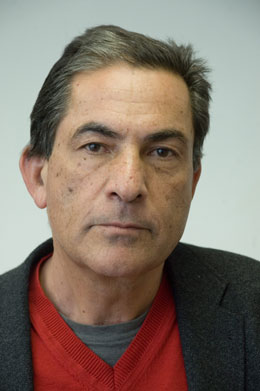
Gideon Levy is a Haaretz columnist and a member of the newspaper's editorial board. Levy joined Haaretz in 1982, and spent four years as the newspaper's deputy editor. He is the author of the weekly Twilight Zone feature, which covers the Israeli occupation in the West Bank and Gaza over the last 25 years, as well as the writer of political editorials for the newspaper. Levy was the recipient of the Euro-Med Journalist Prize for 2008; the Leipzig Freedom Prize in 2001; the Israeli Journalists’ Union Prize in 1997; and The Association of Human Rights in Israel Award for 1996. His new book, The Punishment of Gaza, has just been published by Verso Publishing House in London and New York.
ZNetwork is funded solely through the generosity of its readers.
Donate




