


An institution called the G-7 held its annual meeting on June 12-13, 2018 in Charlevoix, Quebec, Canada. President Trump attended in the beginning but left early. Because the views on both sides were so incompatible, the group of Six members negotiated with Trump the issuance of a quite anodyne statement as the usual joint declaration.
Trump changed his mind and refused to sign any statement. The Six then drafted a statement that reflected their views. Trump was angry and insulted the protagonists of signing the statement.
This was interpreted by the world press as a reciprocal political snub by Trump and the six other heads of state and government that attended. Most commentators also argued that this political battle signaled the end of the G-7 as a significant player in world politics.
But what is the G-7? Who invented the idea? And for what purpose? Nothing is less clear. The name of the institution itself has constantly changed, as have the number of members. And many argue that there have emerged more important meetings, such as that of the G-20 or the G-2. There is also the Shanghai Cooperation Organization that was founded in opposition to the G-7, and which excludes both the United States and west European countries.
The first clue to the origins of the G-7 as concept is the dating of the birth of the G-7 idea. It was early in the 1970s. Before that time, there was no institution in which the United States played a role as an equal participant with other nations.
Remember that after the end of the Second World War and up to the 1960s the United States had been the hegemonic power of the modern world-system. It invited to international meetings whom it wished for reasons of its own. The purpose of such meetings was primarily in order to implement policies the United States thought wise or useful – for itself.
By the 1960s the United States could no longer act in such an arbitrary way. There had begun to be resistance to unilateral arrangements. This resistance was the evidence that the decline of the U.S. as a hegemonic power had begun.
To retain its central role, the United States therefore changed its strategy. It sought ways in which it could at least slow down this decline. One of the ways was to offer certain major industrialized powers the status of “partner” in world decision-making. This was to be a trade-off. In return for promotion to the status of partners, the partners would agree to limit the degree to which they would stray from policies the United States preferred.
One could argue therefore that the G-7 idea was something invented by the United States as part of this new partnership arrangement. On the other hand, a key moment in the historical development of the G-7 idea was the moment of the first annual summit of the top leaders, as opposed to meetings of lower ranking figures like ministers of finance. The initiative for this came not from the United States but from France.
It was Valéry Giscard d’Estaing, then France’s President, who convened the first annual meeting of the top leaders at Rambouillet in France in 1975. Why did he think it so important that there be a meeting of the top leaders? One possible explanation was that he saw it as a way of further limiting U.S. power. Faced with negotiating with the set of other leaders, each of which had different priorities, the United States would be constrained to bargain. And since it was the top leaders who signed off on the bargain, it would be harder for any of them to repudiate it later.
Rambouillet began a struggle between the United States and various European powers (but especially France) over all the major world issues. It was a struggle in which the United States did less and less well. It was seriously rebuffed in 2003 when it found itself unable, for the first time in history, to gain even a majority of votes in the U.N. Security Council when they were to vote on the invasion of Iraq by the United States. And this year, in Charlevoix, it found itself unable even to agree to a banal joint statement with the other six members of the G-7.
The G-7 is for all intents and purposes finished. But should we mourn this? The struggle for power between the United States and the others was basically a struggle for primacy in oppressing the rest of the world’s nations. Would these smaller powers be better off if the European mode of doing this won out? Does a small animal care which elephant tramples on it? I think not.
All hail Charlevoix! Trump may have done us all the favor of destroying this last major remnant of the era of Western domination of the world-system. Of course, the demise of the G-7 will not mean that the struggle for a better world is over. Not at all. Those who back a system of exploitation and hierarchy will simply look for other ways of doing it.
This brings me back to what is now my central theme. We are in a structural crisis of the modern world-system. A battle is going on as to which version of a successor system we shall see. Everything is very volatile at the moment. Each side is up one day, down the next. We’re in a sense lucky that Donald Trump is so foolish as to hurt his own side with a massive blow. But let us not cheer therefore Pierre Trudeau or Emmanuel Macron, whose more intelligent version of oppression is fighting Trump.

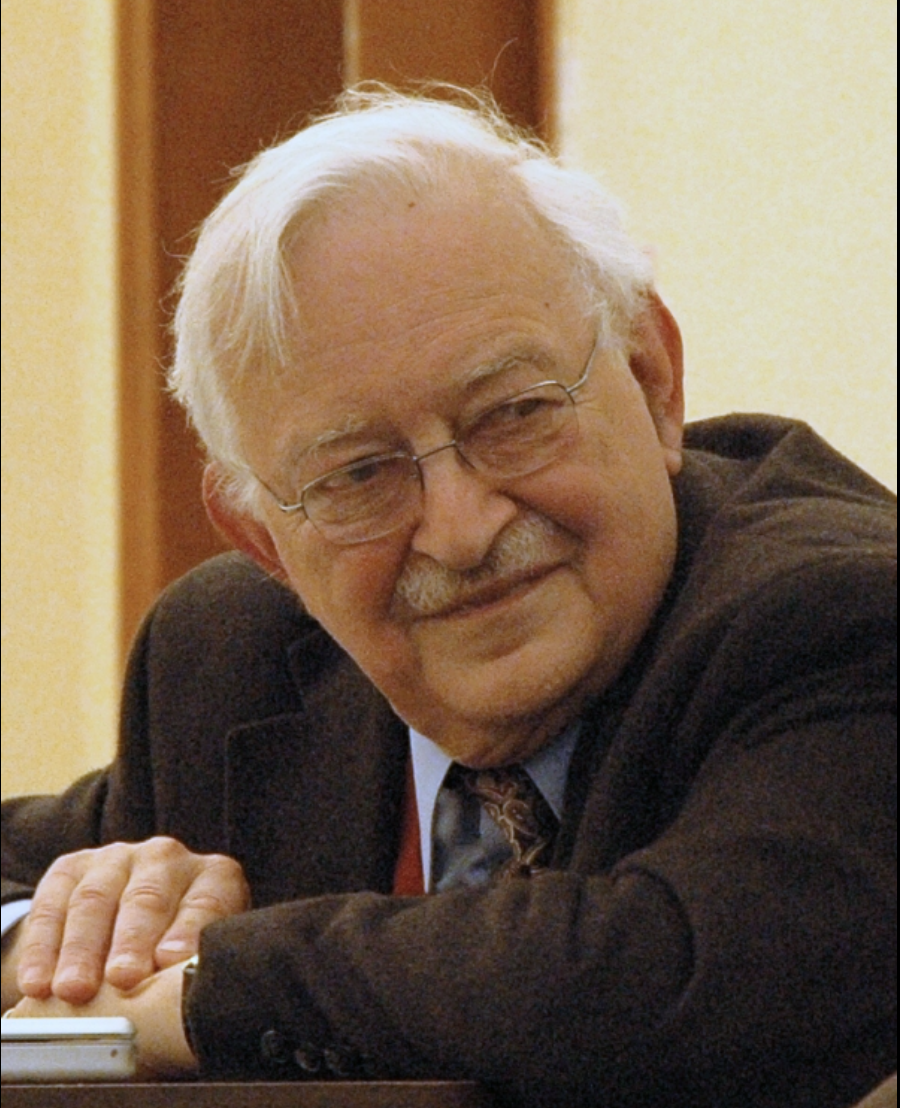
Immanuel Wallerstein (September 28, 1930 – August 31, 2019) was an American sociologist and economic historian. He is perhaps best known for his development of the general approach in sociology which led to the emergence of his world-systems approach. He was a Senior Research Scholar at Yale University from 2000 until his death in 2019, and published bimonthly syndicated commentaries through Agence Global on world affairs from October 1998 to July 2019. He was the 13th president of International Sociological Association (1994–1998). Politically, he considered himself on the "independent left" and was active in a variety of organizations. He argued that we are in the transition from our existing capitalist world-economy to some new system, and that the great political struggle of our time is about which new kind of systemic order will replace our existing one. A new systemic order could be better or worse, depending on our collective ability to push the worldwide decision in one direction or another. He believed that a crucial element in this is a vast debate about the kind of better system we wish to build, and saw the Reimagining Society Project as one of the ways to further this collective debate.
ZNetwork is funded solely through the generosity of its readers.
Donate




