


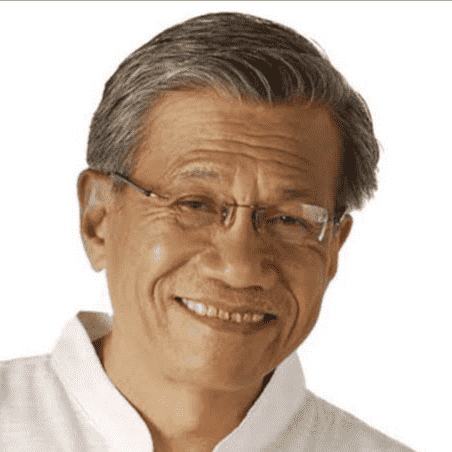
The developing world’s stance towards the question of the environment has often been equated with the pugnacious comments of former Malaysian Prime Minister Mohamad Mahathir, such as his famous lines at the Rio Conference on the Environment and Development in June 1992:
When the rich chopped down their own forests, built their poison-belching factories and scoured the world for cheap resources, the poor said nothing. Indeed they paid for the development of the rich. Now the rich claim a right to regulate the development of the poor countries…As colonies we were exploited. Now as independent nations we are to be equally exploited 1.
Mahathir has been interpreted in the North as speaking for a South that seeks to catch up whatever the cost and where the environmental movement is weak or non-existent. Today, China is seen as the prime exemplar of this Mahathirian obsession with rapid industrialization with minimal regard for the environment.
This view of the South’s perspective on the environment is a caricature. In fact, the environmental costs of rapid industrialization are of major concern to significant sectors of the population of developing countries and, in many of them, the environmental movement has been a significant actor. Moreover, there is currently an active discussion in many countries of alternatives to the destabilizing high-growth model.
Emergence of the Environmental Movement in the NICs
Among the most advanced environmental movements are those in Korea and Taiwan, which were once known as “Newly Industrializing Countries” (NICs). This should not be surprising since the process of rapid industrialization in these two societies from 1965 to 1990 took place with few environmental controls, if any. In Korea, the Han River that flows through Seoul and the Nakdong River flowing through Pusan were so polluted by unchecked dumping of industrial waste that they were close to being classified as biologically dead. Toxic waste dumping reached critical proportions. Seoul achieved the distinction in 1978 of being the city with the highest content of sulphuric dioxide in the air, with high levels being registered as well in Inchon, Pusan, Ulsan, Masan, Anyang, and Changweon2.
In Taiwan, high-speed industrialization had its own particular hellish contours. Taiwan‘s formula for balanced growth was to prevent industrial concentration and encourage manufacturers to set up shop in the countryside. The result was a substantial number of the island’s 90,000 hectares locating on rice fields, along waterways, and beside residences. With three factories per square mile, Taiwan‘s rate of industrial density was 75 times that of the US. One result was that 20 per cent of farm land was polluted by industrial waste water and 30 per cent of rice grown on the island was contaminated with heavy metals, including mercury, arsenic, and cadmium3.
In both societies, farmers, workers, and the environment bore the costs of high-speed industrialization. Both societies, it is not surprising, saw the emergence of an environmental movement that was spontaneous, that drew participants from different classes, that saw environmental demands linked with issues of employment, occupational health, and agricultural crisis, and that was quite militant. Direct action became a weapon of choice because, as Michael Hsiao pointed out:
People have learned that protesting can bring results; most of the actions for which we could find out the results had achieved their objectives. The polluting factories were either forced to make immediate improvement of the conditions or pay compensation to the victims. Some factories were even forced to shut down or move to another location. A few preventive actions have even succeeded in forcing prospective plants to withdraw from their planned construction4.
The environmental movements in both societies were able to force government to come out with restrictive new rules on toxics, industrial waste, and air pollution. Ironically, however,
ZNetwork is funded solely through the generosity of its readers.
Donate

