


Congressman Michael McCaul of Texas sponsored a bill (HR4038) to block Iraqi and Syrian refugees from entering into the United States. The bill is known as the American Security Against Foreign Enemies Act, which passed overwhelmingly in the House of Representatives. “We are a nation at war,” said Congressman McCaul. Given the name of the bill and the bellicose attitude of the Republicans and Democrats who voted for it, the enemies in that war are the refugees.
Who are these refugees, these families who have been uprooted from their homes in Iraq and Syria? They are victims of war and chaos. They are regime change refugees. It is this that pushes them out of their homes, makes them risk the turbulent Mediterranean Sea and the barbed wire borders. Refugees flee – they do not have a destination in mind. Their objective is to be out of the line of fire. Where they go is immaterial. Most want a piece of land where they can reconstruct the elements of normality. Camps in Jordan, Lebanon and Turkey bristle with such desires. Flowers are planted outside the UNHCR tents; cinder blocks become the desks for impromptu classrooms; amongst the slush, fires burn for warmth and for food. Wretchedness is intolerable. It is ameliorated by small gestures and great hopes.
UNHCR – the UN Refugees agency – is conservative with its figures. But even from the UN numbers, the scale of the crisis is remarkable. Iraq’s collapse began with Gulf War 1 in 1990-91 and continues unabated till today. Four million Iraqis have been displaced with about half a million additional Iraqis as registered refugees. Before the Syrian crisis, the Iraqis could flee to Iran, Jordan and Syria. Now the road to Syria is blocked and Jordan is saturated with Iraqi and Syrian refugees.
Syria’s own crisis is gargantuan. Half the population is displaced, with the refugees numbering at least five million people. Eighty percent of the Syrian people now live in poverty, and life expectancy has fallen by twenty years. The human cost of this war has been astounding. What are the Syrians to do but to try and flee circumstances that are without parallel?
Neither Iraq nor Syria seems near peace. Flight is the best option for people who have lost the ability to imagine their homelands in a state of stability. But where should they fly?
Lebanon, Iran, Jordan and Turkey have taken in large numbers of refugees. Lebanon – a country with merely four million residents – has well over one million refugees. The financial situation in the country is in tatters. It has relied upon foreign aid and charity to help manage the refugee influx. At the major donor’s conferences, the Rich Powers arrive with smug looks of Benevolence on their faces. They pledge a great deal of money to the UN agencies. When it comes to fulfilling these pledges, their ink runs dry. The UN estimates that only about a quarter of the pledges for refugee relief are fulfilled.
Why are these funds essential? The UN’s last report on Syrian refugees showed that 86% of refugees in Jordan live below the poverty line, while almost half of those in Lebanon live in sub-standard shelters. Almost two million refugees will face this coming winter without fuel, shelter, insulation, blankets or warm clothes. “Refugees’ resources are depleted,” says the UNHCR, “They are becoming more impoverished and their vulnerabilities are on the rise.” Out of sheer desperation they seek something better – which is why they become vulnerable to the siren song of “Europe” sold to them by smugglers.
Reading the June report from the UNHCR is sobering. There are now almost sixty million refugees in the world – that is one out of every 122 humans on the planet. Each day, last year, 42,500 people became refugees. Half of these refugees are children.
Where are these refugees being made? The top three countries, which account for half of the world’s refugees, reveal a trend – Syria, Afghanistan and Somalia. Each of these countries has been ruined by war, often wars initiated and fueled by the West. Like an angry dragon, the United States breathed fire from Afghanistan to Somalia in search of al-Qaeda. Already weakened, both these countries saw their politics dispensed for a US project. In Afghanistan, the US transformed one band of warlords into the national government. In Somalia, the US refashioned local militias into the Alliance for the Restoration of Peace and Counter-Terrorism. In both cases, US power enhanced the authority of brutal gunmen, which pushed sections of the population into the arms of their adversaries – the Taliban in Afghanistan and the Islamic Courts Union in Somalia. Proxy wars and drone strikes ended the possibility for a stable life in these places. Refugees were born in the maw of these conflicts.
***
US complicity in the production of the regime change refugees means little to those American politicians who hate immigrants and refugees. The word “refugee” has now come to stand in for “immigrant.”
These politicians do not see refugees as people who flee war. Their bibles are not books on US foreign policy and wars. They have read deeply into that seam of American letters that fulminates against immigration of any kind – from Samuel Huntington’s Who Are We? The Challenges to America’s National Identity to Tom Tancredo’s In Mortal Danger to Ann Coulter’s Adios, America. Hatred of immigrants has a long history in the US, as early as the movements of the 19th century against European Catholics and Jews in the Know Nothing Party of the 1850s and the Immigration Restriction League of the 1890s. Anti-immigration was always closely linked to anti-Black racism. Fredrick Douglass saw this in 1869 in his speech to defend Chinese and Japanese immigration. “I know of no rights of race superior to the rights of humanity,” said Douglass, “and when there is a supposed conflict between human and national rights, it is safe to go to the side of humanity.” Douglass spoke for the soul. He was not heeded. He would be little heeded today.
The Right’s anti-immigrant rhetoric has alienated Latino and Asian voters. It has made the Right’s electoral calculus shudder. There is no turning away from the hideous rhetoric, rooted deeply in the sensibility of white privilege. The refugee has given the Right an opportunity. The Syrian refugee debate has allowed the Right to properly turn what is a human story into a one about security. Not the security of the people who are migrating from dangerous zones, but the security of the United States – which lives in a fantasy of insecurity. This is the doctrine of 9/11 anti-immigration. There is no point discussing the technicalities of refugee transfer, the way in which the ten thousand refugees slated for entry into the US have gone through two years of screening by the UN and the US. This does not matter to the xenophobe. Their coin is not reason. It is fear.
Ann Coulter, who is part of Donald Trump’s campaign for President writes in her book, “Sending undesirable immigrants to an enemy nation is a war tactic.” What are the refugees in this addled imagination? Not human beings fleeing wars set in motion by the West, but ISIS agents ready to strike inside the United States. No such thing. The Paris attackers were not refugees. The 9/11 attackers did not come to the US as refugees. Refugees have not been the author of these attacks.
Countries are being wiped off the map by wars initiated by the West and driven by its allies. Passports wither, hopes die. Adults sit in refugee camps as the cold winds blow and their children watch the days go by, little hope of learning to read and write. They don’t know Congressman McCaul or HR4038. They do, however, know that the United States has taken in less than two thousand Syrian refugees over the past four years. That’s less than the daily number that flees from Syria. America is far from the dreams of the refugees. They would like the war to end. They would like shelter. They would like to be treated as human beings.

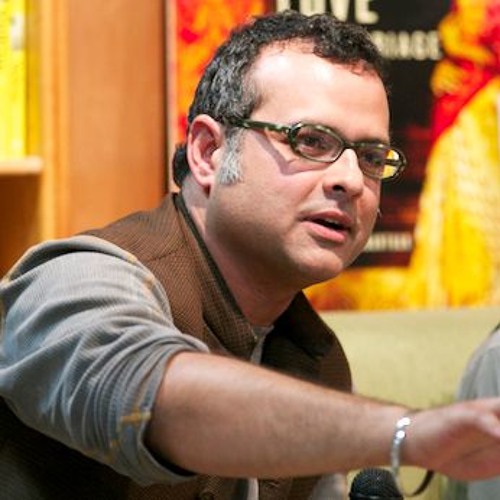
Vijay Prashad is an Indian historian, editor, and journalist. He is a writing fellow and chief correspondent at Globetrotter. He is an editor of LeftWord Books and the director of Tricontinental: Institute for Social Research. He is a senior non-resident fellow at Chongyang Institute for Financial Studies, Renmin University of China. He has written more than 20 books, including The Darker Nations and The Poorer Nations. His latest books are Struggle Makes Us Human: Learning from Movements for Socialism and (with Noam Chomsky) The Withdrawal: Iraq, Libya, Afghanistan, and the Fragility of U.S. Power. Tings Chak is the art director and a researcher at Tricontinental: Institute for Social Research and lead author of the study “Serve the People: The Eradication of Extreme Poverty in China.” She is also a member of Dongsheng, an international collective of researchers interested in Chinese politics and society.
ZNetwork is funded solely through the generosity of its readers.
Donate




