


After a seemingly never-ending will-they-won’t-they on the US-Iranian revival of the Iran nuclear deal, we seem to have an answer: they won’t.
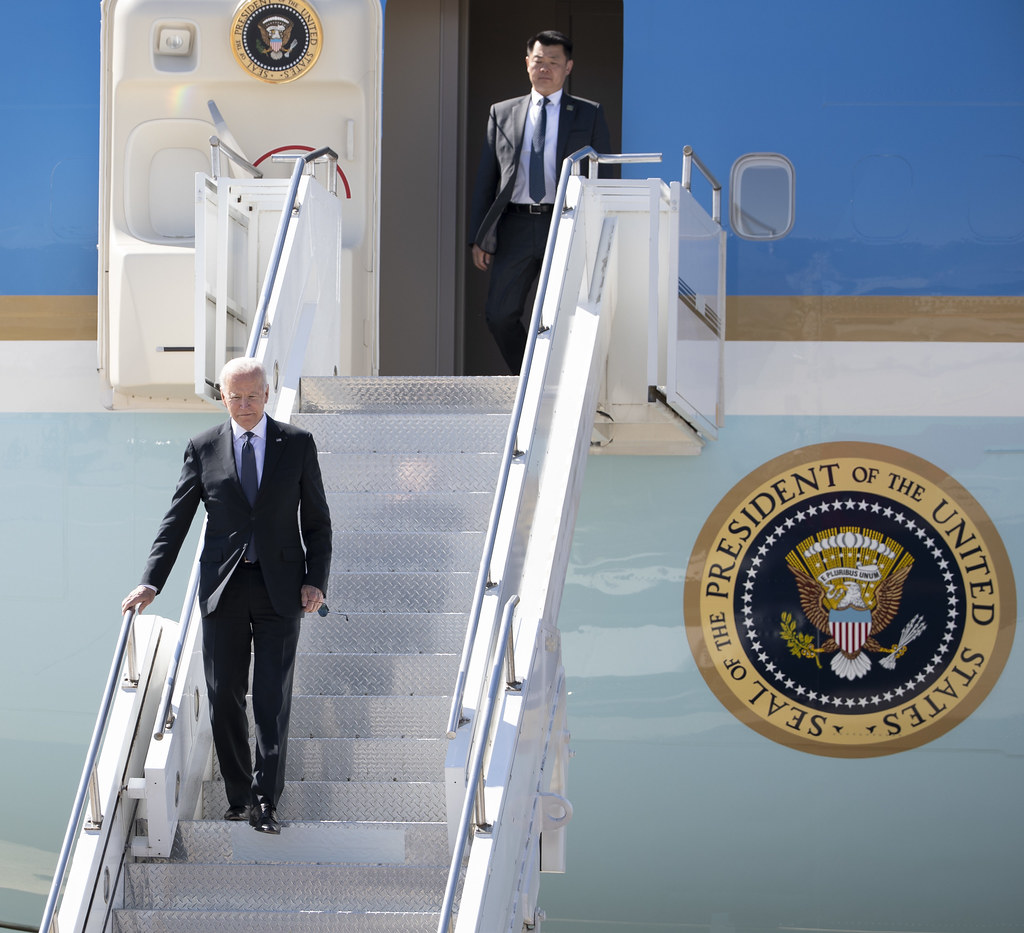
As of today, officials from the United States, Europe, and Israel all say that the deal, also known as the Joint Comprehensive Plan of Action (JCPOA), is dead, at least for the foreseeable future. Reentering the deal was a major campaign promise of Joe Biden’s, it was something he didn’t need Congress to do, and it would have meant restoring one of the signature achievements of his Democratic predecessor, whose accomplishments Biden virtually treated as his own on the campaign trail. So how did it fail?
Hopes for renewing the agreement were, at first, raised after Tehran in August dropped its opposition to what seemed like the last sticking point in US-Iranian talks, namely the Iranian Revolutionary Guard Corps’s (IRGC) terrorist designation. That had been a poison pill deliberately issued by Donald Trump to complicate the deal’s revival, making Iran’s compromise on the matter significant.
But since then, new roadblocks arose. On the Iranian side, its hard-line government demanded extra guarantees to minimize the effects of a future US administration violating and pulling out of the agreement, which Trump had done in 2018.
It also made ending the International Atomic Energy Agency’s (IAEA) probe into old nuclear traces found at undeclared Iran sites a precondition of reentry, evidence that could embarrass Tehran by indicating its nuclear ambitions weren’t purely for civilian energy needs as it claimed for decades. For their part, Washington and EU governments have squarely blamed Iran, calling its last negotiation response “not at all encouraging” and a step “backwards” and charging they have “serious doubts” about its sincerity in rejoining.
But the other side of this story is an Israeli campaign to sabotage the deal. Both the hard-right former prime minister Naftali Bennett and current, more centrist prime minister Yair Lapid have privately and publicly urged Biden and other US officials to scrap the deal all of this year. Lapid, who is up for reelection in November, has been particularly strident, lobbying European governments and demanding a “credible military threat” against Iran, most recently claiming credit for swaying Washington on the matter. He’s been joined in his efforts by David Barnea, the head of the Mossad, Israel’s spy agency.
These efforts at persuasion have been paired with military threats and outright violence. Under Bennett, Israel assassinated a series of Iranian scientists and military officials as the negotiations went on. Lapid, meanwhile, recently publicly threatened Iran while standing in front of a fighter jet and has insisted Israel “would not be obligated” by any renewed deal and would “continue to do everything to prevent Iran from attaining a nuclear capability.” Barnea has similarly said that “Mossad operations” would continue against Iran even if the deal comes back.
More alarming still are the signs that the Biden administration is tacitly backing Israel’s military threats and even seems to be preparing possible military action of its own. Back in July, Biden signed a joint pledge with Lapid stating that Washington “is prepared to use all elements of its national power to ensure” Iran doesn’t get a nuke, one day after Biden told reporters he would “not allow Iran” to do so.
Since then, Israeli officials have claimed the administration gave them “good hints” it was preparing joint military action against Iran, and the administration inked a nearly $1-billion deal to supply Israel with refueling planes that it would need to attack Iran. Just last week, Biden’s national security spokesman warned that the president’s patience was “not eternal” and that he’s preparing “other available options” to prevent a nuclear-armed Iran.
Perhaps this is all saber-rattling from two leaders trying to get reelected. But the Israeli government has shown it’s more than willing to violate another country’s borders and carry out strikes — as its killing of Iranian officials, last month’s preemptive attack on Gaza, and its regular bombing of Syria have shown — suggesting that, campaign posturing or not, idle threats can quickly become very real. The Biden administration’s lack of pushback to these Israeli actions meanwhile suggests it’s fine with giving Israel its quiet assent. As Lapid told the press in front of that fighter jet, “As President Biden and I agreed, Israel has full freedom to act as we see fit to prevent the possibility of Iran becoming a nuclear threat.”
The Biden administration and its supporters will naturally point to Iran’s behavior as the cause of the breakdown, but that is far from the whole story. The deal for Iran was not just to get a respite from US sanctions but to forestall a long-threatened military attack from both countries or either one. Yet as the negotiations were reaching their climax, Iranians were being told in no uncertain terms that not only would they still be targeted for attack by a regional US proxy, with Washington’s consent, but that Washington itself was also reserving the right to launch a war against it.
But well beyond these recent developments, at the root of the failure to revive the deal are a series of political choices by the Biden administration and US policy toward Iran more generally. First was Trump’s flagrant violation of and pullout from the deal and his campaign of “maximum pressure” to inflict as much suffering on ordinary Iranians as possible throughout his term, damaging what little trust and goodwill existed between the two states.
But arguably just as culpable is the current US president. Rather than reenter the deal immediately with the stroke of a pen, Biden treated Iran as if it, and not the United States, had violated the deal. He then chose to use US sanctions to extract more concessions from Tehran, dragging out what could have been a quick and uncontroversial restoration of the pre-Trump status quo into endless negotiations, with all the raised prospects for new sticking points and disagreements that come with it. Both Trump’s and, especially, Biden’s actions had the added consequence of undermining Iran’s reformists and putting into power its JCPOA-skeptical hard-liners, whose claims that Washington couldn’t be trusted regardless of who was in power seemed to have been proven correct.
Yet despite bending over backward to please Israel, the Biden administration isn’t necessarily winning its loyalty. The Lapid government looks as if it’s about to sign a free-trade deal with the country Washington views as its chief geopolitical rival, China, which has tried for years to escalate its economic involvement in the Middle East.
If one day the United States ends up in a war with Iran over its nuclear program, you’ll hear a familiar story: that peace-loving Biden administration officials did everything to resurrect the deal, but, alas, the obstinacy of Iran’s imperialist and authoritarian government made that impossible. In reality, Washington’s policy choices will have played a central role — and a different set of choices could have prevented it.


Branko Marcetic is a staff writer at Jacobin magazine and a 2019-2020 Leonard C. Goodman Institute for Investigative Reporting fellow. He is the author of Yesterday’s Man: The Case Against Joe Biden.
ZNetwork is funded solely through the generosity of its readers.
Donate




