


There has been something almost surreal in President Donald Trump’s efforts to both whitewash US history as well as make 4 July a celebration of his own delusional greatness. There is little that can be done about the latter, but for all progressive forces, there is certainly something that must be done regarding the efforts towards the former.
For the purposes of this essay, we shall leave aside Trump’s 3 July speech about the alleged threat of “communism.” Instead, we shall focus on the problem of history.
The challenge in the United States is that we are taught to be suspicious of history, if not hate it. Instead, we are encouraged to embrace myth. Though this may sound strange, if not implausible, it makes perfect sense when one understands the USA as having resulted from a settler-colony. Think about it for a moment. A factually accurate history of the origins of the United States would read something like this:
In 1607, a group of English colonists invaded a territory in what is now known as ‘Virginia,’ a territory occupied for thousands of years by an indigenous population, and began a process of seizing land and people, spreading disease and introducing slavery.
There is nothing in that statement that can be challenged. The problem, of course, is that such a telling is not a wonderful way to start a narrative about the greatness of one’s country. More importantly, the actual history of a settler-colony is one that always questions the moral legitimacy of the state established as a result of the colonization process. This challenge or question acts as a perpetual nightmare for the resulting state and those who support it, whether such support is passive or active.
Thus, “July 4th” is complicated by both the contradictory nature of the 1775-1783 war of independence, as well as due to being a part and parcel of a longer and equally contradictory history of what came to be the United States. It is this that Trump and his MAGA minions wish to suppress and, both literally and figuratively, whitewash.
The reality of US history is the actuality of contradiction. There are really two histories of the United States, each having its own respective subsets. And it is these two histories that are irreconcilable, even when they may agree on certain specific facts. There is the history of the United States from the standpoint of those who have sought to construct a capitalist state, in effect a white supremacist, male supremacist imperial state. Separately, there is the history of the USA from the standpoint of the subaltern classes and groups, a history of class struggle; a history of the struggles against white supremacist national oppression; a history of the struggles against patriarchy/male supremacy; a history of the struggles against the capitalist degradation of the environment; a history of solidarity with oppressed populations in other parts of the planet.
These irreconcilable histories—that of the ruling groups vs those of the subaltern classes—are what we find at stake when we are asked to celebrate 4 July. Do we uphold the rhetoric of the signatories of the Declaration of Independence regarding life, liberty and the pursuit of happiness, or do we dig deeper and unpack their attack on Native Americans and their fury with King George III for the Proclamation of 1763, halting colonial expansion beyond the Appalachian Mountain range? Do we turn a blind eye to the signatories’ repudiation of the British King for attempting to turn the settlers into “slaves,” when the settlers overwhelmingly embraced slavery? Can we, in other words, remove myth, and grasp the facts and currents of history in order to understand the circumstances and actions that have led us to where we find ourselves today, both domestically and internationally? Can we utilize history, to be blunt, in order to grasp the roots of rightwing populism and neofascism in the USA and, perhaps, get a sense how to utilize the history produced by the subaltern classes against the tyrants?
Those are the questions with which I leave the reader on this, the 250th anniversary of the signing of the Declaration of Independence.
Bill Fletcher, Jr. is a longtime socialist, trade unionist and international solidarity activist in the USA. He is a cofounder of standing4democracy.org and can be followed @BillFletcherJr; billfletcherjr.com.

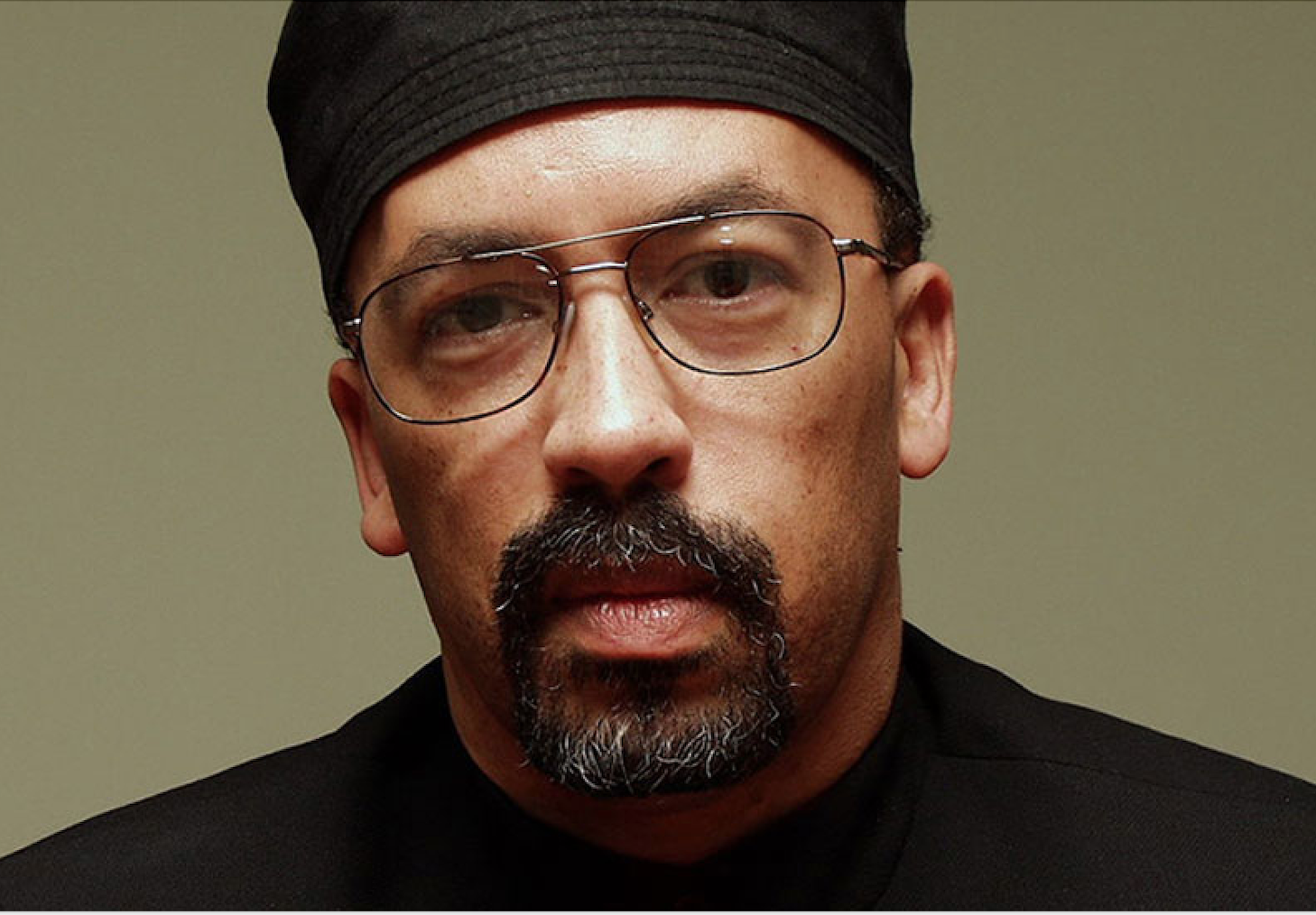
Bill Fletcher Jr (born 1954) has been an activist since his teen years. Upon graduating from college he went to work as a welder in a shipyard, thereby entering the labor movement. Over the years he has been active in workplace and community struggles as well as electoral campaigns. He has worked for several labor unions in addition to serving as a senior staffperson in the national AFL-CIO. Fletcher is the former president of TransAfrica Forum; a Senior Scholar with the Institute for Policy Studies; and in the leadership of several other projects. Fletcher is the co-author (with Peter Agard) of “The Indispensable Ally: Black Workers and the Formation of the Congress of Industrial Organizations, 1934-1941”; the co-author (with Dr. Fernando Gapasin) of “Solidarity Divided: The crisis in organized labor and a new path toward social justice“; and the author of “‘They’re Bankrupting Us’ – And Twenty other myths about unions.” Fletcher is a syndicated columnist and a regular media commentator on television, radio and the Web.
ZNetwork is funded solely through the generosity of its readers.
Donate




