

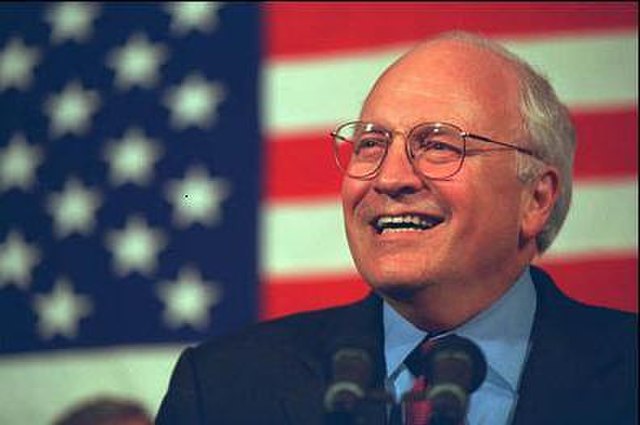
My 91-year-old grandmother has a litany of wise sayings, but one in particular always stayed with me. A few times after we attended a funeral, she would comment on the eulogies with a matter-of-fact clarity, saying, “People get up there with the lying and the carrying on, acting like the person was a saint when in life they weren’t.” In other words, death does not magically transform the flawed into the flawless.
Last week, as the nation mourned former Vice President Dick Cheney, her words echoed loudly. The narrative that emerged felt strangely predetermined. Tributes poured in describing him as a patriot, a strategic mind, a man of unshakable conviction. Even former President George W. Bush framed him in soft focus, calling him a “good man who loved his country.” His coffin was greeted by a host of leaders across the political aisle, each offering solemn nods and polished praise as though bipartisan ceremony could smooth over the jagged edges of his legacy. Others followed the same script. Republican leaders hailed his “steadfast leadership.” Cable news tributes emphasized his “unwavering commitment to American security,” and commentators portrayed him as a statesman whose judgment shaped a generation. But that carefully curated remembrance, respectful as it may be, was incomplete. It was sanitized. It skipped the chapters that defined millions of other people’s lives far more than his virtues ever did.
Because the truth is this: Dick Cheney was not merely a controversial figure. He was the chief architect of a catastrophic war in Iraq, a war built on manipulated intelligence, packaged in false certainty, and sold to the American public with a confidence that has since unraveled into one of the greatest foreign policy failures of the modern era. And while we can say no historical figure is pure, that line too often becomes a shield, a way to downplay, dilute, or deflect from the scale of the harms done.
The human toll of that decision is staggering. Estimates vary, but none of them are small. More than 200,000 Iraqi civilians were killed by documented violence, according to the Iraq Body Count Project. When factoring in broader war-related deaths, the Brown University Costs of War Project places the number between 280,000 and 315,000. Higher mortality studies, including The Lancet’s 2006 analysis and the ORB International mortality survey, place the toll closer to one million. Even the lowest numbers are devastating. The highest are almost unfathomable. That war destabilized an entire region, and it maimed and killed thousands of United States service members, leaving countless others with invisible wounds. The Costs of War Project, also estimates that more than 30,177 post-9/11 service members and veterans have died by suicide, far exceeding the number killed in combat. Many were driven to despair by the trauma of a war justified by distortions.
Beyond Iraq, Cheney was among the most vocal and unapologetic defenders of the interrogation practices that emerged in the post 9/11 era. He repeatedly defended techniques such as waterboarding in interviews, including with The Guardian. He endorsed the CIA’s “enhanced interrogation” program, as documented by Human Rights Watch. The ACLU noted that Cheney never expressed remorse, and a detailed review by FactCheck.org highlighted how many of his claims contradicted official findings. Waterboarding, black sites, and extraordinary rendition were all justified in the name of counterterrorism. They were carried out under a framework of legal gymnastics designed to sidestep international law and basic human morality. These were not accidents. These were choices, deliberate and calculated decisions that reshaped the nation’s posture toward human rights and left a stain on America’s global reputation that has never fully washed out.
So while I understand that funerals highlight the noblest parts of a life, journalism should not behave like a eulogy. History should not operate as public relations. When mainstream coverage reduces Cheney’s legacy to “complicated,” it trivializes the human cost of his decisions. There was nothing complicated about violating international law. There was nothing complicated about allowing torture. There was nothing complicated about sending young men and women to fight and die in a war justified by distortions.
There are costs when we distort someone’s legacy. The chief cost is that the blight of their decisions gets ignored. Their actions become recast as mundane misjudgments when, in reality, they reshaped the world in violent and irreversible ways. When we call Cheney a good man who loved his country, we are also failing to mention how he championed warrantless NSA surveillance programs that violated Americans’ privacy rights, pushed expansive theories of executive power that weakened constitutional oversight, and presided over an era when Halliburton and its subsidiary KBR, companies he once led, secured billions in no bid contracts and profited from the very war he helped engineer.
While I may oppose much of what he stood for, I do not believe we should stop memorializing Cheney. Memorials are not always about celebrating the good, and ignoring history does not help. We cannot learn from what we refuse to confront. But we can condemn what his actions stood for and the damage they inflicted. Without doing so, we risk ignoring the horrors of what happened after 9/11 and the victims whose lives were shattered by decisions made in the name of patriotism but carried out through violence, secrecy, and impunity.
A country that canonizes its war makers without confronting their wreckage is a country that chooses amnesia over accountability, and history has never been kind to nations that forget what they survived.
Jared O. Bell, syndicated with PeaceVoice, is a former U.S. diplomat and scholar of human rights and transitional justice, dedicated to advancing global equity and systemic reform.
ZNetwork is funded solely through the generosity of its readers.
Donate




