


Nablus, West Bank – The knafeh here is still the best in the world, living up to its reputation. In the early evening, Abu Salha’s pastry shop, by the side of the road that climbs to the Refidiya neighborhood, is deserted, the shelves almost empty. A salesperson wearing transparent gloves slices the traditional sweet oriental hot cheese delicacy, the taste of which is the only thing that remains unchanged in this beaten and battered city.
>From one visit to the next, one sees Nablus declining relentlessly into its death throes. This is not a village that’s dying behind the concrete obstacles and earth ramparts that cut it off from the world; this is a city with an ancient history, which until just recently was a vibrant, bustling metropolis that boasted an intense commercial life, a large major university, hospitals, a captivating urban landscape and age-old objects of beauty.
An hour’s drive from Tel Aviv, a great Palestinian city is dying, and another of the occupation’s goals is being realized. It’s not only that the splendid ancient homes have been laid waste, not only that such a large number of the city’s residents, many of them innocent, have been killed; the entire society is flickering and will soon be extinguished. A similar fate has visited Jenin, Qalqilyah, Tul Karm and Bethlehem, but in Nablus the impact of the death throes is more powerful because of the city’s importance as a district capital and because of its beauty. A cloud of dust and sand envelops the city, which gives the impression of being a combat zone during a cease-fire; its roads are scarred, its electricity poles and telephone booths are shattered, government buildings have been reduced to heaps of rubble. But the true wound lies far deeper than the physical destruction: an economic, cultural and social fabric that is disintegrating and a generation that has known only a life of emptiness and despair. More than any other place in the territories, a state of anarchy is palpably close here.
There is no city as blocked and sealed as Nablus. For the past three and a half years it has been impossible to maintain even a semblance of ordinary day-to-day life here. It is impossible to leave or enter. Some 200,000 people are prisoners in their city. The checkpoints at Beit Iba, Azmurt and Hawara, which cut off the city from all directions, are the strictest roadblocks in the West Bank. Even women in labor and elderly people have a hard time crossing, and most of the city’s residents no longer even try.
Nablus also suffers from a very large number of casualties. In the latest Israel Defense Forces operation in the city, which was given the devilish name of “Still Waters,” no fewer than 19 civilians were killed, six of them children, and 200 were wounded, according to a report of the Palestinian Human Rights Monitoring Group. These are the dimensions of a large-scale terrorist attack, only without the public attention, and it’s all happening in a period of significant respite in Palestinian terrorism. Who is going to investigate this wholesale killing and the killing of children, including Mohammed Aarj, 6, who was shot while standing in his yard, eating a sandwich? Afterward, the IDF refused to allow an ambulance to evacuate him, according to the Palestinians.
Atrocities have been perpetrated here under cover of the total media disregard of the events, residents of Nablus claim. Neighbors saw Abud Kassim being held by soldiers, and then a gunshot was suddenly heard: he was killed in his yard; Ala Dawiya was found dead with nine bullets in his chest; Fadi Hanani, Jibril Awad and Majdi al-Bash were shot to death at short range, according to the testimonies; the civilian Muain al-Hadi and his cousin Basel were ordered to escort Israeli soldiers as a “human shield,” contrary to the explicit ban on the use of this procedure. No one in Israel heard about any of these events and no one will investigate them.
Within this reality live tens of thousands of people who have done no wrong. What’s being inflicted on them is known as collective punishment and it is considered a war crime. They get up in the morning without knowing what the IDF has wrought in their city during the night and what it will do during the day. Most residents have long since lost their livelihood. Of course, it’s possible to argue that they brought it all on themselves because of the terrorist attacks that originated in the city, but that argument cannot justify all the killing and wrongdoing. In the meantime, despite everything, some people are still buying delightful knafeh from Abu Salha.

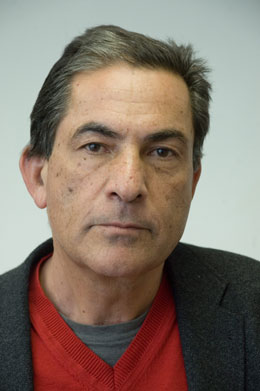
Gideon Levy is a Haaretz columnist and a member of the newspaper's editorial board. Levy joined Haaretz in 1982, and spent four years as the newspaper's deputy editor. He is the author of the weekly Twilight Zone feature, which covers the Israeli occupation in the West Bank and Gaza over the last 25 years, as well as the writer of political editorials for the newspaper. Levy was the recipient of the Euro-Med Journalist Prize for 2008; the Leipzig Freedom Prize in 2001; the Israeli Journalists’ Union Prize in 1997; and The Association of Human Rights in Israel Award for 1996. His new book, The Punishment of Gaza, has just been published by Verso Publishing House in London and New York.
ZNetwork is funded solely through the generosity of its readers.
Donate




