


The US government has persistently claimed that its decision to bankroll the overthrow of Afghanistan‘s government in the final days of the 1970s was a response to the invasion of Soviet troops. But Zbigniew Brzezinski, who was President Carter’s National Security Advisor at the time and now advises Barack Obama, finally admitted the truth in 1998: covert US intervention began months before the USSR sent in troops. "That secret operation was an excellent idea," he crowed. "The effect was to draw the Russians into the Afghan trap."
During an interview with the French publication Le Nouvel Observateur, Brzezinski was grilled about the role he played in aiding the Mujahadeen. Former CIA Director Robert Gates had recently claimed in his memoir, From the Shadows, that US intelligence operations began six months before the Soviet intervention. "According to the official version of history, CIA aid to the Mujahadeen began during 1980," Brzezinski noted, "that is to say, after the Soviet army invaded Afghanistan, 24 Dec 1979. But the reality, secretly guarded for years, is completely otherwise: Indeed, it was July 3, 1979 that President Carter signed the first directive for secret aid to the opponents of the pro-Soviet regime in Kabul. And that very day, I wrote a note to the president in which I explained to him that in my opinion this aid was going to induce a Soviet military intervention."
Seizing that opening, the interviewer suggested that perhaps Brzezinski intended to provoke the Soviets into war. "It isn’t quite that," the former National Security Advisor replied cagily. "We didn’t push the Russians to intervene, but we knowingly increased the probability that they would." Nevertheless, when the Soviets tried to justify their invasion with the claim that they were responding to a secret war bankrolled by the US, few people believed them.
Did he regret anything? "Regret what?" Brzezinski shot back. "That secret operation was an excellent idea. It had the effect of drawing the Russians into the Afghan trap and you want me to regret it? The day that the Soviets officially crossed the border, I wrote to President Carter: We now have the opportunity of giving to the USSR its Vietnam War. Indeed, for almost 10 years, Moscow had to carry on a war unsupportable by the government, a conflict that brought about the demoralization and finally the breakup of the Soviet Empire."
But what about backing (and arming) Islamic fundamentalists who might become future terrorists? A prescient question, as it turned out. Brzezinski’s reply was brazen. "What is most important to the history of the world? The Taliban or the collapse of the Soviet empire? Some stirred-up Moslems or the liberation of Central Europe and the end of the cold war?" The jury is still out on those questions.
Br zezinski’s callous strategy did net some obvious results. The 1980s conflict in Afghanistan, provoked by US leaders in order to use it as a geopolitical pawn, led to almost two million deaths and the rise of the Taliban. Afghanistan also became open territory for drug traffickers and energy companies eager to build oil and gas pipelines. Meanwhile, Afghanis, including many who had worked with the CIA, paid a very high price.
Events now unfolding in Georgia look eerily similar. According to the mainstream media, Russian-backed “separatists” in South Ossetia are resisting the Georgian government, which the US charges Russia with attempting to overthrow. The current conflict began on August 7 when Georgian forces bombarded South Ossetia, where a majority of people hold Russian passports. Russia responded, bombing targets in Georgia and sending troops into South Ossetia. Zalmay Khalilzad, US ambassador to the UN, immediately called the actions of Russian forces a "campaign of terror" and accused Russia of seeking “regime change.”
In the 1980s, Kh alilzad led the charge in the Reagan administration to back the Mujahadeen in Afghanistan. Later, while working for the RAND Corporation, he worked on a gas pipeline in the region. And, as a member of the Project for a New American Century, he called for the removal of Saddam Hussein – in other words, regime change – using “a full complement of diplomatic, political and military efforts.”
Russia has insisted that it is protecting peacekeeping forces and civilians, and Russian Ambassador Vitaly Churkin has called it a “humanitarian” campaign to block "ethnic cleansing” in South Ossetia, which declared its independence from Georgia in the 1990s and held a referendum in 2006. Vladimir Vasilyev, Chair of Russia’s parliamentary Security Committee, went farther, accusing the US of orchestrating the current conflict. In remarks that have yet to be reported by US mainstream media, he noted, "The further the situation unfolds, the more the world will understand that Georgia would never be able to do all this without America.”
Thus far, any evidence of and possible motives for US involvement have gone unnoticed. But reports have circulated that mercenaries from other countries, including some Black fighters, are involved. The question, of course, is why. On that topic, CNN did provide some hint. The struggle in Georgia is important, the news outlet acknowledged, “for its importance in the oil trade.” Specifically, Georgia provides a transportation route “that avoids Russia and Iran.” A British-operated pipeline through the region normally carries one million barrels a day from Azerbaijan to the Mediterranean. Georgian President Mikheil Saakashvili has strong US backing and has contributed troops to the US-led war in Iraq.
As Georgetown professor Charles King sees it, “the war began as an ill-considered move by Georgia to retake South Ossetia by force. Saakashvili’s larger goal was to lead his country into war as a form of calculated self-sacrifice, hoping that Russia’s predictable overreaction would convince the West of exactly the narrative that many commentators have now taken up.”
Michael Klare, author of Rising Powers, Shrinking Planet: The New Geopolitics of Energy, says the US is trying to use Georgia as an “energy corridor” to transport Caspian energy to the West without going through Iran or Russia. “Russia seeks to frustrate America‘s use of Georgia for this purpose, and uses Abkhazia and South Ossetia as daggers pointed at the jugular of the BTC pipeline,” he told the Institute for Public Accuracy. “When Saakashvili sought to drive the Russians out of these enclaves, the Russians struck back."
In a sense, history has come full circle. Thirty years after the US created a “trap” for the Soviet Union in Afghanistan a similar dynamic seems to have emerged. The Georgian army is US-trained and increasingly US-equipped; according to the Associated Press, thousands of its troops in Iraq are being flown back to Georgia at US expense. Yet any accu sations that the US administration played a provocative role or has oil on its mind no doubt will be vigorously denied. Again the truth about any covert US activities is likely to remain buried for years.
This article is an abbreviated version of “Tales from the Covert Crypt,” a three-part series on Greg Guma’s website, Maverick Media (http://muckraker-gg.blogspot.com/).

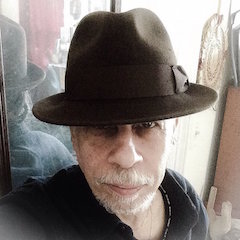
Greg Guma is a writer, editor, historian and progressive manager, leading progressive organizations in Vermont, New Mexico and California for more than 45 years. His tenure as CEO of Pacifica Radio highlights an organizational career that began with his work as a daily newspaper reporter in the late 1960s and as activist editor of The Vermont Vanguard Press from 1978-83. He worked with Bernie Sanders in Burlington and wrote The People's Republic: Vermont and the Sanders Revolution, a classic 1989 study of progressive politics. His latest novel, Dons of Time was released in 2013 by Fomite Press.
ZNetwork is funded solely through the generosity of its readers.
Donate




