

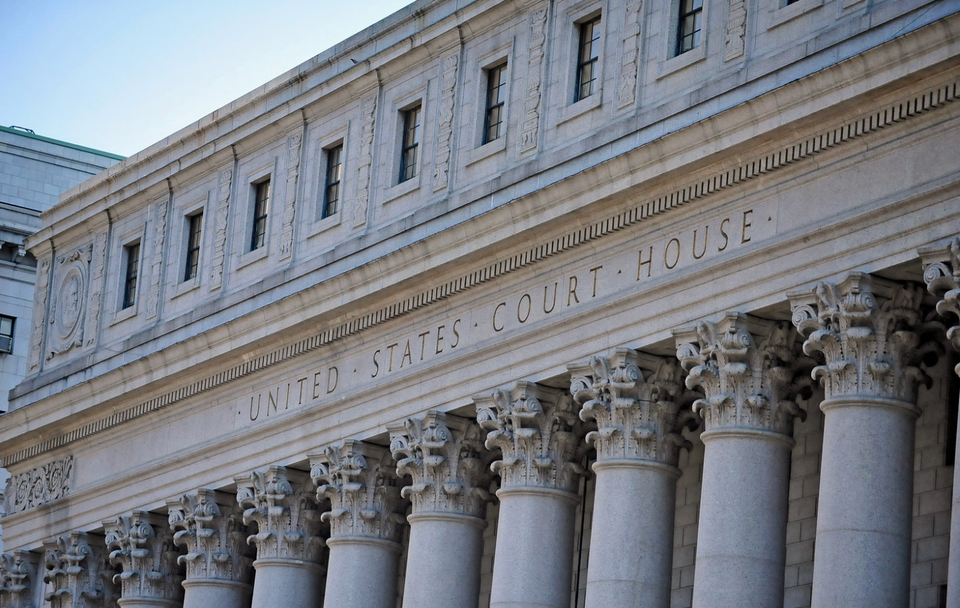
A United States judge applied a “terrorism enhancement” when sentencing former CIA programmer Joshua Schulte, who was convicted of disclosing “Vault 7” materials to WikiLeaks.
On February 1, a United States judge took the extraordinary step of applying a “terrorism enhancement” when sentencing former CIA programmer Joshua Schulte to 40 years in prison.
The application of a terrorism enhancement represents a stark development in leak prosecutions that may carry profound implications for whistleblowing and freedom of the press.
Schulte was accused of disclosing CIA hacking materials (“Vault 7”) to WikiLeaks, and a jury found him guilty of several Espionage Act-related offenses in July 2022.
Thirty-three years and four months of the sentence stemmed from the Espionage Act-related offenses. (The remainder came from “child sexual abuse material” that was found in Schulte’s possession, a serious matter which was handled at a separate trial in 2023.)
An estimate from Schulte’s defense indicated that the enhancement added anywhere from 10 to 12 years to his prison sentence.
The enhancement adopted by Judge Jesse Furman was applied to one of the computer crimes that Schulte was convicted of committing under the Computer Fraud and Abuse Act (CFAA)—the single count of “unauthorized access to a computer to obtain national defense information.”
With the passage of the 2001 USA Patriot Act following the September 11th attacks, this particular crime was added to a list of offenses designated as “federal crimes of terrorism.”
The Espionage Act was not added and is not part of the list of U.S. crimes where terrorism enhancements may be applied. But the section of the CFAA involving “national defense information” contains language that also appears in a provision of the Espionage Act.
Prosecutors argued that Schulte had been convicted of an offense that was “calculated to influence or affect the conduct of government intimidation or coercion, or to retaliate against government conduct.” Therefore, a terrorism enhancement lengthening his prison sentence was necessary.
Schulte’s defense objected on the grounds that the Antiterrorism and Effective Death Penalty Act (AEDPA), which expanded penalties for terrorism-related offenses, was a response to the Oklahoma City bombing attack by Timothy McVeigh. He believed that the “government was attacking Americans’ personal rights and freedoms.”
Osama bin Laden, as CBS News acknowledged, was opposed to U.S. military bases in the Middle East and U.S. support for the Israeli occupation of Palestinian territories. Thus, the September 11th attacks were carried out by hijackers who retaliated against conduct by the U.S. government.
In contrast, the government never asserted that Schulte had an ideological motive for downloading CIA files and transferring them to WikiLeaks. Schulte was “angry” about “personnel issues” that led to his reassignment from the CIA’s Operations Support Branch (OSB), where “cyber tools” were developed for “counterterrorism operations.”
The government responded, “The fact that Schulte committed his crimes with a keyboard and mouse rather than with explosives or firearms does not alter the catastrophic consequences that they had for national security.”
“The commission of those crimes,” according to the government, “demonstrates the particular ‘difficulty of deterring and rehabilitating’ him—precisely the type of concern that animates the inclusion of the enhancement in the first place.”
However, Schulte’s defense never argued that the government could not apply a terrorism enhancement to someone engaged in criminal cyber activities. They merely asserted that the intent or motivations of Schulte were relevant.
The U.S. government’s timeline shows that Schulte did not pledge to pursue an “information war” against the government until December 2017—after his bail was revoked and he was jailed at the Metropolitan Correctional Center (MCC) in New York. Attorney General Bill Barr subsequently imposed special administrative measures, or SAMs, which resulted in treatment that a complaint from his defense described as “truly abhorrent, unconscionable, cruel, and unusual punishment.”
As reported by Matthew Russell Lee, Judge Furman did not think it mattered if Schulte “differed” from McVeigh or bin Laden. The judge found that Schulte’s conduct was designed to retaliate against the U.S. government.
In the judge’s view, the biggest leak of sensitive CIA information in the agency’s history was not merely the byproduct of a workplace dispute.
Recalling How Chelsea Manning Was Accused Of ‘Aiding The Enemy’
Few indictments of government employees or contractors under the Espionage Act have also included the computer crime charge, which has an available terrorism enhancement.
Under President Donald Trump, NSA whistleblower Reality Winner, FBI whistleblower Terry Albury, and drone whistleblower Daniel Hale could have been charged with exceeding authorized access to obtain “national defense information.” Yet the Justice Department (DOJ) did not charge them with such an offense.
NSA whistleblower Edward Snowden was also not charged with violating this part of the CFAA when he was indicted in 2013.
But both U.S. Army whistleblower Chelsea Manning, who provided over 700,00 documents to WikiLeaks, and WikiLeaks founder Julian Assange, who published the material, were charged with violating this provision.
Manning was prosecuted by the U.S. military in a separate legal system, and military prosecutors did not attempt to apply a terrorism enhancement at sentencing after she was convicted of violating the CFAA. Nevertheless, prosecutors did charge Manning with “aiding the enemy.”
Military prosecutors asserted that Manning had knowingly given “intelligence” to “the enemy, through indirect means.” At a hearing in 2011, an al-Qaida propaganda video was played that featured Adam Gadahn, who was a spokesperson for the terrorist group. He mentioned the U.S. State Department cables that Manning disclosed and urged jihadists to take advantage of a “wide range of resources on the internet.”
Later, the U.S. military claimed that “digital media” was uncovered when SEAL Team 6 raided bin Laden’s compound in Abottabad, Pakistan, in May 2011. The media allegedly contained a letter from bin Laden to al-Qaida that requested a member gather Defense Department information. A response came back that had military incident reports from Iraq and Afghanistan and diplomatic cables attached.
The judge, Army Colonel Denise Lind, asked prosecutors if Manning would have been charged with “aiding the enemy” if she had transferred the material to the New York Times. Prosecutors indicated that would have made no difference.
After Lind acquitted Manning of this offense, press freedom and First Amendment advocates were somewhat relieved. For example, Floyd Abrams, who represented the Times in the Pentagon Papers case, wrote, “This breathtakingly expansive view of what it takes to aid an enemy would have imperiled a good deal of invaluable journalism.”
What Schulte’s Sentencing Means For Assange
Unfortunately, this “breathtakingly expansive view” surfaced in the case against Schulte. The opening section of the government’s sentencing memo accused WikiLeaks of “publicizing” the “intelligence-gathering cyber tools” to “America’s adversaries,” and later repeated the CIA’s claim that the publication amounted to a “digital Pearl Harbor.”
During Schulte’s trial in 2022, Paul Rosenzweig, a former visiting fellow of the Heritage Foundation and staunch opponent of Assange and WikiLeaks, testified as the government’s “WikiLeaks expert.” Rosenzweig was asked by the government if WikiLeaks had focused on “any particular target.”
“Well, it is statistically true that the overwhelming majority of the information that they’ve published is about the United States. There are other countries, which have had a number of leaks, but the overwhelming majority is American,” Rosenzweig replied.
Although the argument for a terrorism enhancement did not explicitly accuse Schulte of indirectly aiding terrorist groups, WikiLeaks was clearly presented to the court as an organization that someone would provide information to if they wanted to retaliate against the U.S. government.
Proving that Schulte was determined to retaliate was central to prosecutors securing a terrorism enhancement. Furthermore, it is reasonable to suggest that prosecutors believed that Schulte’s actions aided terrorists because he knew WikiLeaks would publish information about the cyber tools.
In the case against Assange, the DOJ is even more explicit. Prosecutors have recycled supposed evidence that failed to convince a military judge that Manning “aided the enemy.”
As FBI Special Agent Megan Brown wrote in an affidavit in support of the Assange indictment, SEAL Team 6 collected “a number of items of digital media” during their raid against bin Laden’s compound. The team uncovered “(1) a letter from bin Laden to another member of the terrorist organization al-Qaida in which bin Laden requested that the member gather the DoD material posted to WikiLeaks, and (2) a letter from that member of al-Qaida to bin Laden with information from the Afghanistan War reports released by WikiLeaks.”
Government prosecutors could easily use the digital media as part of a narrative to secure a terrorism enhancement if Assange is convicted of committing a computer crime. A terrorism enhancement would allow the Bureau of Prisons to subject Assange to extremely harsh confinement conditions.
More significantly, there is nothing after Schulte’s sentencing to stop the U.S. government from routinely prosecuting leaks by charging someone accused of an unauthorized disclosure with violating the Espionage Act and the CFAA. That way a terrorism enhancement is available at sentencing.
Doing so would enable the government to clamp down even harder on those who disclose information to the press—including independent media organizations, which like WikiLeaks have been openly critical of U.S. military or national security operations.
Or as the Freedom of the Press Foundation concisely put it, “When government officials found a defendant as unsympathetic as ex-CIA employee Joshua Schulte, they jumped at the opportunity to escalate their war on leakers in ways they could later use to punish real whistleblowers.”
ZNetwork is funded solely through the generosity of its readers.
Donate




