


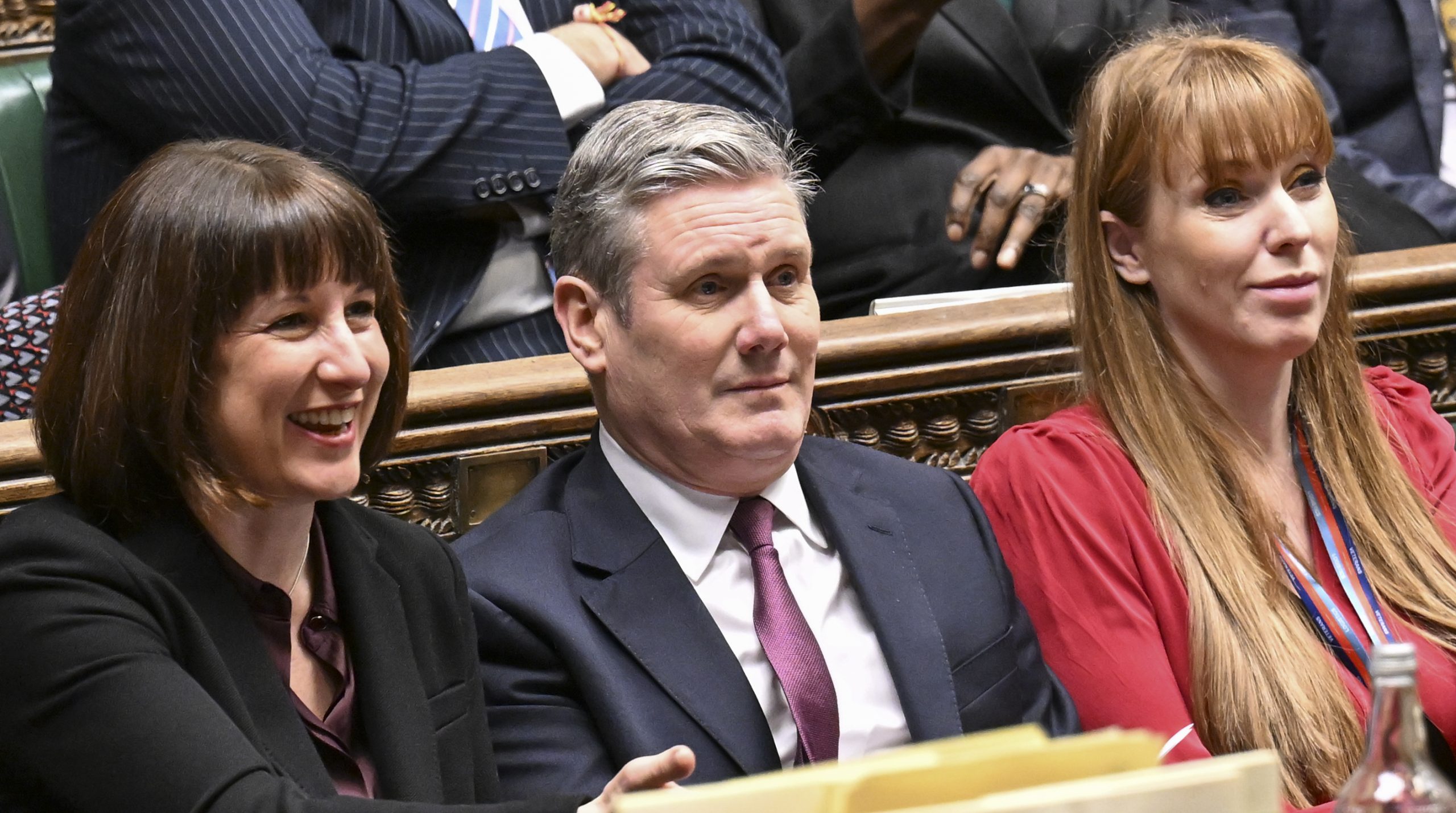
There was nothing to commend Starmer. A political dud, he was put in place following Corbyn’s 2019 defeat after a legal career – in Northern Ireland and at the Crown Prosecution Service – of kowtowing to those in power. The sordid story was told in an effective broadside by Oliver Eagleton in The Starmer Project (2022) and later in forensic detail by Gabriel Pogrund and Patrick Maguire in Get In (2025) and Paul Holden in The Fraud (2025). In the July 2024 election, a divided right – Tories: 24 per cent; Reform: 14 per cent – handed Starmer a majority with 34 per cent. His advisers, led by Mandelson protégé Morgan McSweeney, counselled the new leader to suck up to Farage in public and compete with his policies. This was done via a photo-op in the House of Commons when the Prime Minister walked up to Farage and shook hands with him, thus becoming a stranger to many in his own party.
There followed expulsions of the Labour left, attacks on child benefits and pensioners’ fuel allowance and Farage-style rhetoric about immigrants (‘Island of Strangers’), wrapped up in austerity budgets. In line with the preceding Tory government, a woman of colour, Shabana Mahmood, was appointed Home Secretary to push through deeply reactionary policies on race and civil liberties.
The liberal press, thrilled by the purge of the left, eagerly supported Starmer. And Starmer eagerly supported the Israeli genocide unleashed in Gaza. The Labour Prime Minister gave his backing to Israeli measures like cutting off water, electricity, food and medicines to the Palestinian people. If Starmer opposed the targeting of women and children, he kept it to himself. The state apparatuses and RAF surveillance were employed to actively assist in the genocide. Starmer’s abject servility to the ultra-conservative Board of Jewish Deputies was loyally mimicked by cabinet members Cooper, Lammy, Streeting and the 100-plus Labour MPs imposed on local parties by Mandelson’s gang.
To take the measure of the Mandelson implants: even Labour loyalists Robin Cook and Clare Short resigned from the Blair cabinet when he took the country to war in Iraq against the will of a majority of his citizens, backed by the endless lies of his media manager, Alastair Campbell (and the barking of dogs of war like Burnham). Not a single Labour MP resigned from Starmer’s government on Palestine or the use of US military bases in the UK to attack Iran. On the contrary: the expelled Corbynites – John McDonnell and Co. – disgraced themselves by crawling back into the Parliamentary Labour Party.
Starmer made sure that there was nothing to choose from at any level between the extreme centre parties in parliament – Labour, Tories and Lib Dems. As the British economy stagnated and Labour’s ratings plunged to their current 18 per cent, the Greens took off from July 2025 to reach 16 per cent this spring. Coupled with the short-lived hopes in a new Corbynite vehicle, they revealed a substantial constituency to Labour’s left. After reading the focus-group runes, McSweeney’s men steered Starmer into a series of semi u-turns from the second half of 2025: fuel allowance, child benefits, anti-migrant digital IDs. None of it helped. In combination with his wooden appearance and inability to defend himself in Parliament, his flip-flops only increased the contempt for Starmer in the country at large. He will go. There are rumours that Burnham might offer him a cabinet job. Can I recommend the Ministry of Untruth.


Writer, journalist and film-maker Tariq Ali was born in Lahore in 1943. He owned his own independent television production company, Bandung, which produced programmes for Channel 4 in the UK during the 1980s. He is a regular broadcaster on BBC Radio and contributes articles and journalism to magazines and newspapers including The Guardian and the London Review of Books. He is editorial director of London publishers Verso and is on the board of the New Left Review, for whom he is also an editor. He writes fiction and non-fiction and his non-fiction includes 1968: Marching in the Streets (1998), a social history of the 1960s; Conversations with Edward Said (2005); Rough Music: Blair, Bombs, Baghdad, London, Terror (2005); and Speaking of Empire and Resistance (2005), which takes the form of a series of conversations with the author.
ZNetwork is funded solely through the generosity of its readers.
Donate




