


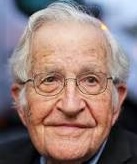
Noam Chomsky is a political activist, self-described anarchist, cognitive scientist, historian and linguistics expert. He’s also one of the biggest intellectual powerhouses of the last 60 years, having qualified as one of the most widely quoted scholars of the 20th century.
Invited to Tucson to speak about issues in the American education system, linguistics and the divestment campaign against Caterpillar and Motorola, Chomsky gave the Daily Wildcat the opportunity to ask some questions after the No Más Muertes press conference at the Arizona Inn.
Daily Wildcat: How should students approach the issue of bills like House Bill 2675, that mandate minimum out-of-pocket tuition payments?
Noam Chomsky: My feeling is that student fees are instituted, basically as a technique of indoctrination and control. I don’t think there’s an economic basis for them. And it’s interesting that, you look at the timing — like when I went to college, I went to an Ivy League university, The University of Pennsylvania. Tuition was only $100 and you could easily get a scholarship.
Students today are over $1 trillion in debt. That’s more than credit card debt. A trillion dollars of debt? That’s a burden on people coming out of college. It’s got them trapped. It (tuition) is a technique of control, and it surely isn’t an economic necessity in the richest country in the world. All sorts of things started happening — the university architecture changed. Universities that were built, worldwide, in the post-’70s and on, are usually designed so that they don’t have meeting places, designed just to keep students separated and under control. Look at the ratio of administrators to faculty: it’s gone way up the last couple of decades … not for educational purposes, but for more techniques of control.
What you’re talking about, I think it should be opposed, because it’s a general form of indoctrination and control, which goes down to kindergarten. I mean, that’s what No Child Left Behind is about. It’s training for the Marine Corps. It’s a way to make sure that children aren’t free, independent or inquisitive, exploring.
Do you think that other Arizona operations and laws — like the one banning ethnic studies, SB 1070, the fact that it took a year for Arizona to implement its medical marijuana program — are something similar, trying to control people?
I don’t know the details of Arizona, but undermining and destroying the ethnic studies program is really scandalous. It’s a major program — very significant for the student body, a lot of Mexican students — that encourages diversity, it encourages understanding, understanding of where you are. That’s particularly amazing in a place like Arizona, which after all, this is Mexican territory, conquered in a war of aggression. But it’s basically Mexico, so to kill Mexican studies programs here — I don’t know how to describe it. It’s shocking, along with the book banning. It’s becoming a national scandal. There have been protests all over the country about the book banning. Things like that don’t happen, not in democratic societies.
As for subjects not in your speech on Wednesday, how do you think the United States should handle its marijuana policy?
You might ask the question: Why is marijuana illegal and tobacco legal? Tobacco kills more people than all drugs combined, by a large margin. Furthermore, tobacco use is not only extremely harmful for the user, but it harms other people. I think more people die from passive smoking than all the hard drugs combined.
So why is tobacco legal but marijuana illegal? Well, there’s an interesting history … I suspect one reason is that tobacco is an industrial product. It’s hard to manufacture — marijuana, you can grow in your backyard. To allow something that people can do on their own is dangerous, but to preserve an industrial system is significant, so it can’t be made illegal.
This issue with tobacco tells you how to deal with the drug problem. If anyone was really interested in dealing with overuse of drugs — and it’s a problem — the use of cigarette smoking is a very good model. In the 1980s, cigarette smoking declined, use of red meat declined, coffee drinking declined, all sorts of things. People just lived a healthier lifestyle. If you’re worried about hard drugs, that’s the way to do it: education and prevention.
ZNetwork is funded solely through the generosity of its readers.
Donate

