


How do activists become activists? How do they choose what issue or issues to work on? And how do they decide to change focus and work on a new one, perhaps continuing with the old issue(s), or not?
I’ve been thinking about this recently. I’ve been doing so because of my own personal situation.
About two years ago I made a conscious personal decision that I wanted to devote more of my energy to the issue of global warming. This followed over 30 years in which the main issues I’d worked on were peace, tenants’ rights, neighborhood development, racism, coalition-building and independent politics.
This wasn’t an overnight decision. It grew on me over several years as I read, studied and followed developments in the world. By early 2002 I was convinced that this was a huge issue that I had a responsibility to address. I did so during my Green Party U.S. Senate campaign that year in New Jersey. The second paragraph of my basic brochure said, “Move towards energy independence, reverse global warming and create jobs through a crash program to get energy from the sun, the wind and other renewable fuels.”
But I think what really pushed me to make this my major activist priority was what happened in Europe in the summer of 2003. A brutally hot August led to at least 20,000 and as many as 40,000 deaths, mainly elderly people. In the words of Wikipedia, the free internet encyclopedia, “The heat wave has inevitably been linked to unprecedented weather extremes in other parts of the world taking place in the same general period (such as the worst drought in recorded history in Australia during the previous Australian summer, and massive floods in the USA) and attributed to global warming.”
I already knew that islands in the Pacific were likely to disappear and that major parts of countries like Bengladesh would do the same as the oceans continued to rise. I knew about the vast melting of Arctic sea ice and its effects on Inuit people and others. But to read in the newspapers about tens of thousands of heat-caused deaths in Europe, a continent of relative privilege, in a such a short period of time really hit home.
Two years later I’m immersed in this issue. Three weeks from now there will be actions all around the world on December 3rd, on what has developed as an International Day of Action to Stop Global Warming. In the United States there will be probably upwards of at least 100 localities, perhaps many more, where action of some kind will be taking place.
December 3rd was chosen because it is right in the middle of a major United Nations Climate Conference in Montreal, Quebec, meeting from November 28th to December 9th. 12,000 people from over 150 nations will be present. Most will be signers of the Kyoto Protocol. The U.S., one of the few countries which has not signed, will be there, literally obstructing the efforts of other countries to strengthen world action on this crisis.
It is important-no, it is URGENT-that these actions on December 3rd, particularly in the USA, be as extensive and as large as possible. Global warming, catastrophic climate change, isn’t just another issue, one more thing to feel badly about. It is a transcendent issue, one which is related to so many more. We need a rapid, global transition to energy conservation, energy efficiency and clean, sustainable energy sources like the sun, the wind and the tides, rather than the heat-trapping burning of oil, coal and natural gas. Without this clean energy revolution, the conditions of life for people all over the world will continue to deteriorate as we experience stronger hurricanes, droughts, floods, rising seas and the spread of diseases like asthma, malaria and West Nile virus. Societies will be massively disrupted, and we will see an escalation of energy wars, in the Middle East, Latin America and possibly elsewhere, and a continuation of terrorist attacks.
Those hardest hit, as we saw in New Orleans after Hurricane Katrina, will be those most vulnerable because of poverty and racism.
The peace movement has a special responsibility, it seems to me, to take up this issue and integrate it into their on-going work to end the Iraq war. The connection is obvious, given that the war is all about control of Iraqi oil and a remaking of the Middle East to make it even more directly a U.S.-dominated region to the benefit of U.S.
energy companies and our society’s ecologically unsustainable economic practices. Conversely, we must educate ourselves and the general public about the fact that there is another way, that we can and must decrease our use of oil. We must end our military and neo-colonial entanglements in the Middle East while providing a positive economic alternative for these countries via support for extensive solar and wind farms.
We must articulate the positive vision of an international clean energy revolution that, in the words of author Ross Gelbspan, “will create millions of jobs around the world, increase the overall wealth and equity of the global economy and provide a platform to bring the countries of the world together around a common global project.”
Let December 3rd be a wake-up call to the world that this urgently-needed popular movement has arrived!
Ted Glick is coordinator of Climate Crisis, USA Join the
World! (www.climatecrisis.us). He can be reached at
usajointheworld@igc.org, 973-338-5398 or P.O. Box 1132,
Bloomfield, N.J. 07003.

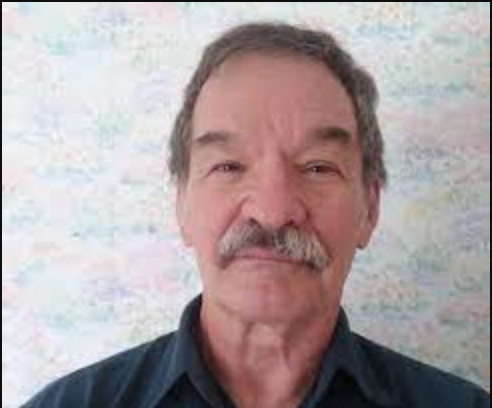
Ted Glick has devoted his life to the progressive social change movement. After a year of student activism as a sophomore at Grinnell College in Iowa, he left college in 1969 to work full time against the Vietnam War. As a Selective Service draft resister, he spent 11 months in prison. In 1973, he co-founded the National Committee to Impeach Nixon and worked as a national coordinator on grassroots street actions around the country, keeping the heat on Nixon until his August 1974 resignation. Since late 2003, Ted has played a national leadership role in the effort to stabilize our climate and for a renewable energy revolution. He was a co-founder in 2004 of the Climate Crisis Coalition and in 2005 coordinated the USA Join the World effort leading up to December actions during the United Nations Climate Change conference in Montreal. In May 2006, he began working with the Chesapeake Climate Action Network and was CCAN National Campaign Coordinator until his retirement in October 2015. He is a co-founder (2014) and one of the leaders of the group Beyond Extreme Energy. He is President of the group 350NJ/Rockland, on the steering committee of the DivestNJ Coalition and on the leadership group of the Climate Reality Check network.
ZNetwork is funded solely through the generosity of its readers.
Donate




