


The sound of what seems like thunder wakes me up at 3 am, Monday, a few hours after I arrived in Damascus. Storm coming, I think, and my jetlagged brain plunges back to sleep.
When I go down to jog at six, the side streets around the Hotel Arjaan are blocked off by burly security men who tell me I can only run in the hotel grounds. I am not about to argue with guys with Kalashnikovs, and I begin to sense that their presence has something to do with what woke me up hours earlier. Only when the Philippine Embassy car picks me up at 930 a.m. do I get the real story from our diplomatic staff. The sound of thunder was the explosion of a rocket-propelled grenade that killed eight alleged terrorists in a building just two blocks away from my hotel and about three blocks from the Philippine embassy here in West Mezzeh, which is also known as the diplomatic quarters.
The gunfight between government forces and “Afghan nationals,” as the government-controlled media described them, lasted six hours. Like the two massive explosions on Sunday, a few hours before I arrived in the Syrian capital, it was a grim announcement that the rebellion against the regime had arrived in the capital in earnest. Those blasts destroyed two government buildings that had been considered highly secure in the center of the capital, killing 27 people and wounded about a hundred.
Homs: Shattered City
The next day I travel to the city that has become emblematic of Syria’s version of the Arab Spring: Homs. This city, an opposition stronghold, was subjected to a 26-day siege by the Syrian Army in February. The estimates of how many people perished vary, with the city’s chief of police admitting to some 3,000 dead and the western press reporting twice or more that number.
I am here in my role as head of the Philippine House of Representatives Committee on Overseas Workers’ Affairs. My trip to Homs is part of a mission to locate Filipino overseas workers in Syria—mainly domestic workers—who are still in the country or have been killed in the fighting. The plan is to repatriate them or their remains to the Philippines. Filipino workers are among the millions of overseas workers who have been or are likely to be caught in the crossfire of the still continuing Arab Spring.
The signs of war are fresh as we enter the city, which lies some 170 kilometers from Damascus. There is no one on the streets at high noon, and Baath University, where some of the bitterest fighting took place, is deserted. The streets are littered with trash, and block after block of apartment buildings we pass show no signs of life. The asphalted roads are rough, imprinted with the tracks of tanks deployed to subdue the resistance. We pass the burned-out hulk of an armed personnel carrier.
At a roundabout where a statue of the current president’s father, Hafez Assad, casts a benign look at us a la Kim Il Sung, we encounter our first checkpoint. Soldiers armed with Kalashnikovs examine our papers as our driver, a Syrian named “Teddy” who speaks perfect English, explains in Arabic that we are trying to reach the police station to follow up the case of a Filipino domestic worker killed in an ambush during the fighting. We pass two more checkpoints manned by suspicious security men carrying the ubiquitous AK-47s before we reach the police station, the front of which sports a makeshift barricade of tires, wood, and stones. The thought flashes through my mind: This barrier will not stop a determined bomber.
Investigating A Death
We are met by the chief investigator, a man named Tobias, and we tell him that we really need to know more about the death a 23-year-old Filipina who was shot through the chest and killed in an ambush while traveling at 11 o’clock at night with her employer and his eight-year old son at the main highway on February 24, during the last phase of the siege of the city. We also want to locate her employer and collect her back wages to send to her family in the Philippines.
Tobias tells us that he helped bring the woman to the hospital, but all he had was the cell phone number of the employer, and this was no longer functioning. There was no number for a landline and no address for the employer, and he tells us that, for all he knew, the man and his family might have already left the city. Tobias tries to project concern and friendliness, but he is obviously eager to get rid of us.
Before we leave, however, I ask if he knew if there might be more Filipino domestic workers who might have been hurt or died during the siege. Having myself heard stories from Filipinas who had been trapped close to the fighting in Homs and then fleeing for the safety of the embassy in Damascus, I think it is very possible that there were more domestic workers who were killed or hurt in the fighting. But Tobias tells us he hasn’t heard of any. Aside from him, we have no other contact in Homs for now, underlining the difficulties of finding out the fate of neutrals caught in a war zone when one does not get cooperation from the host government.
“This is very poor police work, for a guy who says he took personal charge of the girl’s case,” comments Teddy on Tobias’ work on the circumstances of the death of the Filipina whose employers were are tracing as we drive away from the police station.
A People Under Occupation
As we make our way out of the city, we see several clusters of people, but these soon disappear and we pass by rows and rows of deserted apartment buildings. We see a child running here and there, and a few adolescents walking hurriedly, but that’s it. When we come to a checkpoint we passed earlier, we are stopped again, and this time, the soldiers are more suspicious and ask more questions. They want to see the papers of my Syrian companions and scan them for a long time, though for some reason they do not ask for my passport.
This is a city under occupation, I now realize fully. The soldiers regard the people as the enemy, and the people reciprocate. I do not see any prospect of reconciliation between the two sides. I half-jokingly request Teddy to bring us to Bab Amr, the lower-class district that bore the brunt of the government siege in February. He says that armed elements of the resistance are likely there, and they might mistake our car for one belonging to a government security agency. “You don’t want to become hostages of the terrorists,” says Teddy. “As diplomats you would be worth millions to them.”
When we finally get back to the highway after a good hour and a half in this shattered city, we all breathe a sigh of relief. One of us jokes that, with little knowledge about Southeast Asia, the government soldiers probably thought I was Chinese and thus friendly to the Assad regime. Does that mean we say I am an Asian-American if we are stopped by rebel forces, I ask, and we all laugh. With Assad now isolated, with his allies for all practical purposes down to China, Russia, Iran, and Lebanon, most diplomats and foreign visitors are increasingly treated with suspicion.
An hour and a half later, we are in Tartus, off the shimmering Mediterranean Sea. People are in the streets, and even in the early afternoon, families are taking leisurely walks in the cornice that is Tartus’ most attractive feature. This place has been largely exempt from the unrest since the majority of people here are Allawites, the president’s people. The civil war has brought an end to the tourist economy, but there is a sense of physical security that one does not find, even in Damascus. I have a feeling it won’t last very long.
Tartus and Homs. Two different worlds. Two faces of the same country.
Protracted Civil War?
Back in Damascus the next day, I read that there has been heavy fighting between government troops and rebel forces in the eastern city of Deir Ezzour. Along with the attacks in Damascus, the fighting in Deir Ezzour appears to reflect the rebels’ new strategy of attacking government forces at various points instead of taking them on in a big battle, as they did in Homs where they were no match for the heavy firepower of the Syrian Army. The so-called Free Syrian Army may be at a great disadvantage in terms of weaponry for now, but arms coming in from Saudi Arabia and some of the other Gulf states, which are ruled by Sunni elites that share the same sectarian religious affiliation as the majority of Syrians, will undoubtedly level the playing field.
Talks with diplomats, aid workers, and journalists in the few days I am in Syria produce varying assessments of the staying power of the Assad regime. Some say it can hold out indefinitely, some count its tenure in terms of months, and others say the collapse may come earlier than expected owing to an economy crippled by international sanctions. But there is consensus on one thing: for the Syrian people, things will get worse before they get better.
I leave Syria, four days after I arrived, with 11 domestic workers in tow. They are happy to be out of harm’s way. But they also worry about the fate of the compatriots and friends they leave behind in a country that is descending into civil war.
Foreign Policy In Focus columnist Walden Bello is chairman of the Committee on Overseas Workers’ Affairs in the Philippine House of Representatives, where he represents the party Akbayan. He is also an adjunct professor at the State University of New York at Binghamton and St. Mary’s University in Halifax, Nova Scotia, Canada.

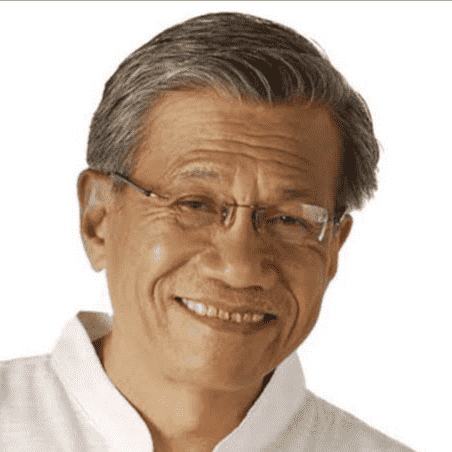
Walden Bello is currently the International Adjunct Professor of sociology at the State University of New York at Binghamton and Co-Chairperson of the Bangkok-based research and advocacy institute Focus on the Global South. He is the author or co-author of 25 books, including Counterrevolution: The Global Rise of the Far Right (Nova Scotia: Fernwood, 2019), Paper Dragons: China and the Next Crash (London: Bloomsbury/Zed, 2019), Food Wars (London: Verso, 2009) and Capitalism’s Last Stand? (London: Zed, 2013).
ZNetwork is funded solely through the generosity of its readers.
Donate




