


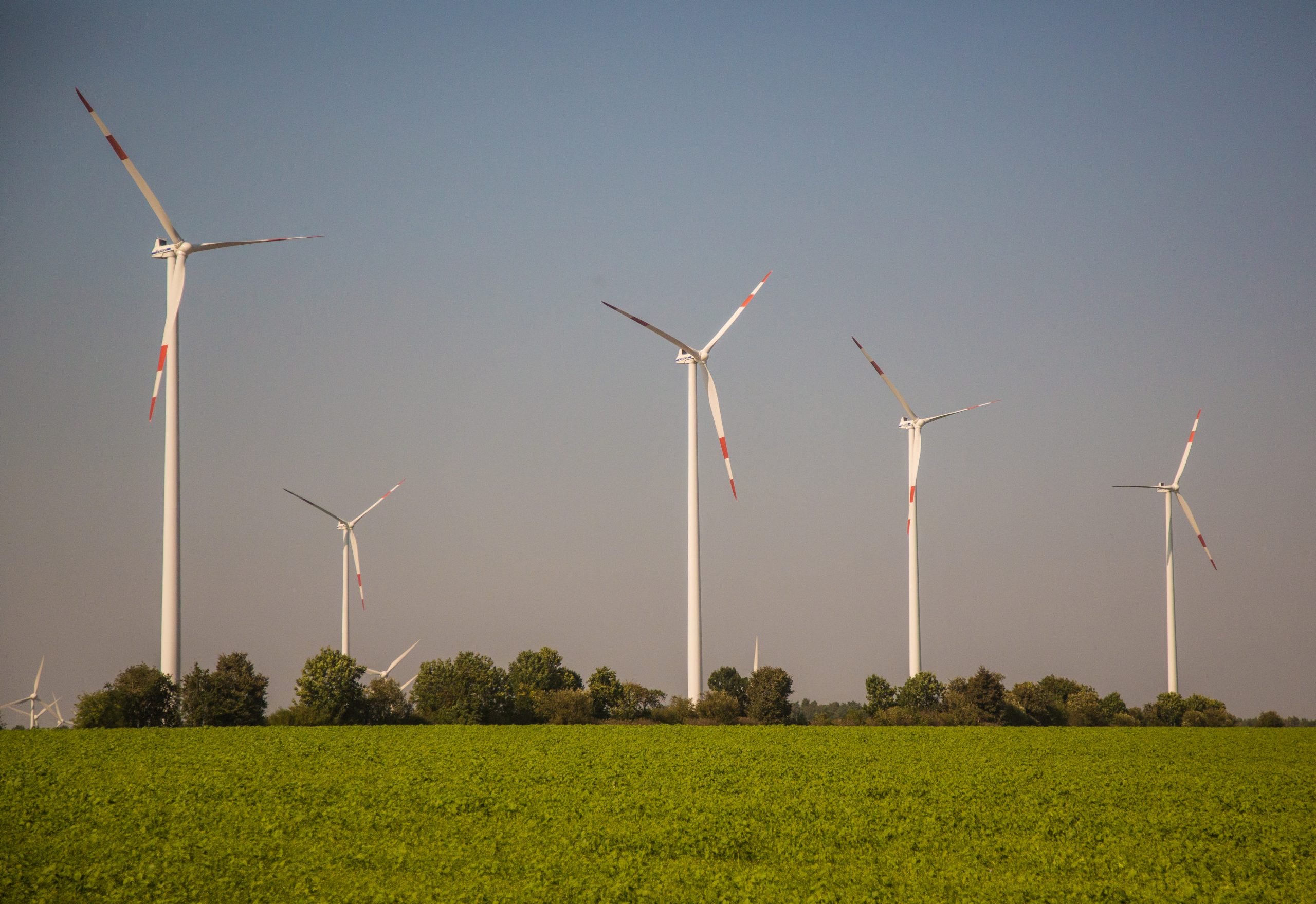
The mirage of environmental sustainability in Germany tells people it is possible to meet the over-consumption of capitalism-created so-called “needs” in support of mass consumerism — the ever-increasing use of planetary resources, energy, food, living space, and the pathological activities of corporations — without compromising the ability of future generations to meet their own needs. This is as far as the madness of capitalism goes.
One official definition of sustainability says that sustainability is “managing” how “we” “use” natural resources and interact with ecosystems so that the planet’s life-supporting systems stay healthy and functional over the long term, rather than being depleted or degraded faster than they can recover.
Interestingly, sustainability pretends that the Earth’s natural resources need something we call today “managing.” As if our planet needs management! Next comes the word “we,” hiding the word “capitalism” and other exploitative systems. This diverts attention away from one of the root causes that created our unsustainable world: capitalism – the perpetrator vanishes from the crime scene.
Worse, the term “we” even includes those people who actually do live sustainably. Finally, the word “use” camouflages what really happens: the exploitation of nature for profit. In other words, one of the most common definitions of sustainability hides its true character in almost pure greenwashing style while simultaneously including those who hardly should be included.
It pretends that we are all in on this. We are, but not by a long shot. A polluting corporation is not the same as an organic farmer living a sustainable life. Overall, one of the “official” definitions of sustainability is corporate propaganda at its best.
With this in mind, the apostles of sustainability want to make us believe that capitalism can live “within ecological limits” – an impossibility.
Left alone, the Earth’s ecosystems and natural resources — forests, fisheries, freshwater, fertile soil, and a stable climate — could indeed absorb a certain amount of “use” and pollution and still regenerate. At least that is the credence of those pushing the ideology of sustainability.
Beyond all that, sustainability should mean staying within the Earth’s limits. There should be no overfishing of a stock past its ability to reproduce, no emitting more carbon than natural systems can absorb, and so on.
To move the focus even further away from polluting and nature-ravaging corporations, the missionaries of sustainability have invented three pillars. This links environmental sustainability to economic and social sustainability. It claims that truly sustainable development needs all three to work together. For that, sustainability advocates key areas like:
- Reducing greenhouse gas emissions and addressing global warming
- Conserving biodiversity and protecting ecosystems
- Managing water and other natural resources responsibly
- Reducing waste and pollution, and moving toward circular (reuse/recycle) economic models
- Sustainable agriculture and land use
Finally, sustainability prefers to focus on the individual and the policy dimension. In third position is “the” economy – not to mention polluting corporations. In a second step, sustainability gets applied at very different scales as if they were the same: an individual choosing to reduce their energy use is not the same as a multinational company redesigning its supply chain to:
- cut emissions, eliminate the use of overseas sweatshops,
- cut out child labor such as cotton harvesting in Uzbekistan, and
- eliminate slave labor such as cobalt mining in the Congo and cocoa farming in Ghana and Côte d’Ivoire.
Despite all this and back in Europe, the transformation to a more sustainable society – perhaps even economy – is on the way, where sustainability is increasingly shaping the lives of people not only in Germany.
Additional urgency comes because of global warming’s direct impact on Germany, with 14,000 heat deaths during summer 2026, dried-up rivers, damaged Autobahns, etc. The change to sustainability is due to the goal of climate neutrality in the areas of energy, transport, and energy production.
In a nationwide survey of 6,500 people, this year’s findings paint a picture of increased urgency. There is a broad ecological consensus, but there are also diverging ideas about the concrete design of the transformation towards sustainability. Yet, the pressure to act is increasing.
There is a clear and persistently supported mandate for climate protection. Yet support is not as strong as it used to be because of Germany’s sluggish economic prospects – paraded daily in the corporate media.
Meanwhile, only one in ten people (11%) in Germany doubts that global warming is caused by human activity. In terms of political parties, it is the reactionary-neofascistic AfD‘s denial versus all other democratic parties. Meanwhile, more than half of all Germans call for expenditure on climate protection to be increased (54%).
At the same time, when both concerns — global warming and support for specific environmental goals — are taken together, there is general endorsement and approval.
Beyond that, individuals said that sustainability measures might impact personal finances (53%), economic welfare (39%), and the gap between rich and poor (50%). These are becoming increasingly important concerns.
There are concerns about lower individual readiness for environmental change. Yet there is also acceptance of political measures for sustainability. Both seem to go hand in hand.
While heavily opposed by Germany’s conservative and corporate media — which once ran a strong propaganda campaign against Germany’s Environmental Minister Habeck — the purchase of a climate-neutral heating system, for example, is supported by four in ten people (41%). Meanwhile, the acquisition of energy-efficient building refurbishment is supported by 52%.
Overall, Germany’s population sees the transformation towards sustainability as a company and state task, saying that sustainability is predominantly not an individual responsibility but lies with regulation by the state – so much for the ideology that the free market does it all.
Meanwhile, four-fifths of the population (79%) believe that a switch by private households to climate-neutral technologies is not feasible without government support. Again, Germans trust the government and the state – not the free market.
Beyond all that, Germans favor transparency of decision-making in climate policy, as well as fair investment opportunities.
At the business level, sustainability remains a top priority in companies – despite, or perhaps because of, greenwashing. In 73% of companies, responsibility for the sustainability transformation is anchored at board or management level. In other words, we are happy to change lightbulbs, support workers taking public transport, and separate recyclable rubbish, as long as it does not hurt profits and makes us look good.
Meanwhile, management’s self-set climate goals have mostly endured, as they neither challenge management nor capitalism but instead create a favorable public-relations image for companies.
However, the issue is losing priority and momentum in Germany’s corporate world. A recent sustainability transformation monitor by Germany’s Bertelsmann Stiftung showed as much.
When managers in 822 companies were surveyed, it found that the drive towards sustainability has declined among German managers. Perhaps German bosses are happy having a bicycle rack in front of the office and a solar panel on the roof to show how environmentally friendly they are.
Perhaps corporate bosses perceive the uncertain political framework deliberately created by Germany’s conservative government as a strong obstacle to further engagement with sustainability transformation.
Simultaneously, in Germany’s public – read: published – debate, the topic of sustainability is currently taking a back seat while issues like Russia’s war against Ukraine and Russia’s drone attacks on Germany have moved to the top of the media cycle.
German bosses are closely attuned to that. The attitudes of corporate managers (59%) indicate that sustainability is losing priority internally, inside companies. In the previous year, only 14% of managers reported this.
Especially in Germany’s large companies and larger medium-sized companies, this shift is felt most strongly as the debate on sustainability moves on. The decreasing momentum is also reflected in the stagnation of responsibility for the topic at boards of directors.
This is also reflected at the management level, as the proportion of companies that have sustainability measures “in planning” is down by 7%. If one sees the hiring of future employees as the strongest driver of a sustainability transformation, it is striking that this driver is falling sharply – down by 12%.
From the perspective of corporate managers, the relevance of politics for the transformation process has changed significantly since the conservative government was elected. At the same time, the resulting uncertain political-regulatory framework is now perceived as an obstacle to transformation. This perception is up by 30%. In other words, conservative politics is working.
In other words, without clear, reliable signals from politics, Germany’s transformation towards sustainability is set to enter a phase of stagnation. This seems to be the goal of Germany’s conservative government.
Germany’s Merz government has moved away from strategic prioritization and a reliable political framework for sustainability. Where there is no pressure from politicians, the prospect of something called the “business case” against sustainability could come to the fore.
Worse, only 17% of corporate managers see a clear business case for sustainability, although 43% recognize the financial value for “their” companies through the integration of sustainability and social issues.
Yet 70% reported that a lack of economic incentives is slowing down their transformation towards sustainability. In other words, if state cash flows in, managers are willing to move towards sustainability.
Overall, Germany’s sustainability transformation has not totally disappeared from the managerial agenda. For example, the share of companies that record their greenhouse gas emissions has risen to 86%. In short, reporting is up – sustainability is stagnating.
As a consequence, their climate targets are “mostly” maintained or even further developed. The proportion of companies with “self-set” climate targets has increased from 53% to 59%. In the case of banks, for example, it rose from 46% to 65% – even more significantly.
Yet, when asked “what is a bank?”, a different picture emerges. Not to allude to Graeber‘s seminal work on Bullshit Jobs, a bank is basically a large building where paper and numbers are transferred from one person to another – hardly a significant polluter like an aluminum smelter, an airline, or a mine. In the masterful world of corporate public relations (i.e., corporate propaganda), showing off those who are not polluting anyway always makes for a good corporate image.
Despite all this, the overall outcome of these surveys is that sustainability has moved to the back burner – just as Germany’s conservative government intended. Yet recent surveys also show that neither the German public nor Germany’s corporate bosses favor the free market when transitioning towards sustainability. Both see the involvement of the state as essential.
This is exactly what Germany’s conservative government isn’t doing, perhaps because it is – more than Germany’s general public and its corporate bosses – asphyxiated in its own free-market ideology. Germany’s conservative government operates just as the philosopher pair Horkheimer and Adorno once said,
Immovably, they insist on the very ideology which enslaves them

Thomas Klikauer has over 1200 publications (including 16 books) and writes regularly for Cross Border Talks ( Europe), Countercurrents (India), and ZNet (USA) on global warming, labor relations, and Germany’s far right.
ZNetwork is funded solely through the generosity of its readers.
Donate




