

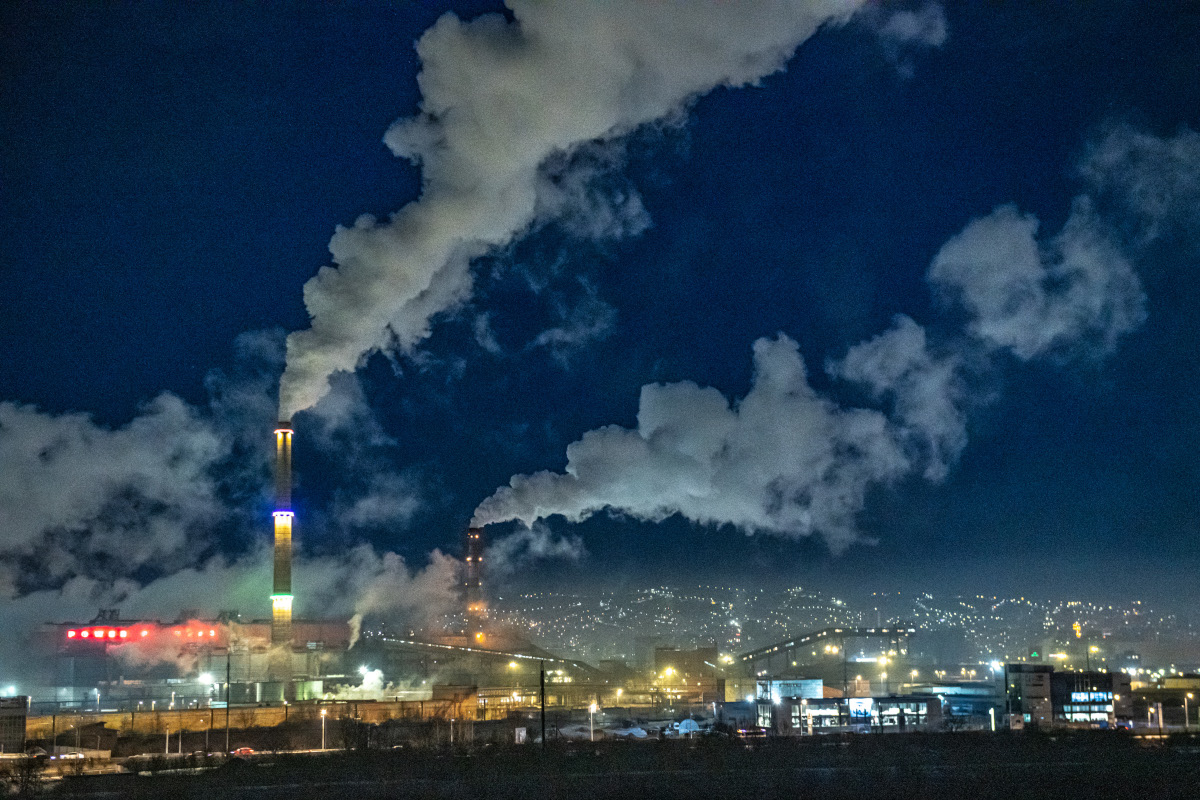
As the United States tries to meet its climate goals and address environmental justice issues, cutting greenhouse gases alone might not help communities of color dealing with air pollution.
In some cases, it might even hurt them, according to a new study from the University of California San Diego.
The study, published in the century-old scientific journal PNAS, reveals how, if the U.S. tries to cut greenhouse gases based on income or other factors instead of race, communities of color could suffer more from air pollution.
Air pollution and greenhouse gases have historically been separated into different categories, despite the fact that both are the end products of burning fossil fuels. But recent efforts, most notably by the Biden administration through the passage of the Inflation Reduction Act, have reclassified carbon dioxide as an air pollutant.
The study focused on a subset of particle pollution, called PM 2.5, that can be found at the end of tailpipes as well as in wildfire smoke. The type of pollution that researchers focused on is particularly harmful because of its small size. The 2.5 refers to particles that are less than 2.5 micrometers in diameter, tiny enough to bypass the body’s defenses and enter the bloodstream.
Meanwhile, the Biden administration introduced several key programs in the past few years to try to advance equity while fighting climate change. The most effective is an EPA initiative to cut power plant pollution by 2040. The move will give overburdened communities relief from excessive emissions.
One of the major programs of the administration is the Justice40 program, which directs 40 percent of federal funding to disadvantaged communities. But a screening tool for the program has been criticized by advocates for not explicitly including race, a key factor in determining where air pollution is the worst.
“Income is not a good proxy, alone, for race,” said Polonik.
Researchers modeled a variety of scenarios and found that cutting pollution based on the lowest cost scenario or randomly cutting pollution across the U.S. wouldn’t solve poor air quality in overburdened communities. In the scenario where the U.S. would use the cheapest option to slash emissions, air quality disparities would go up for Asian, Black, and Hispanic communities.
Additionally, researchers found that pollution from power plants and transportation are particularly important in perpetuating air quality inequity. When these types of pollution are targeted, it can reduce imbalances.
“Some of the major causes of climate change and local pollution that affects people’s health, such as asthma and other respiratory diseases, are primarily coming from the burning of fossil fuels,” said Michael Méndez, an assistant professor of urban planning and public policy at the University of California Irvine.
Méndez said as the U.S. continues to try to find ways to decarbonize quickly, the only way to address equity issues is to use targeted policy to reach people most affected by an issue.
“When you don’t have targeted policies to the most burdened communities — those experiencing the disproportionate amount of multiple, cumulative forms of pollution — then you have an ineffective policy,” he said.
ZNetwork is funded solely through the generosity of its readers.
Donate
