


It’s puzzling that there is almost no discussion among progressives about the U.S.’s completely unique way of choosing its top political leader and how we could use that fact strategically.
In the USA there are 50 separate election contests to choose “electors” to the Electoral College. It’s not the national popular vote that does it. If winning the most votes nationally was our system, Al Gore would have been inaugurated President in 2001.
It’s one of those things that’s kind-of “hiding in plain sight.” All during Presidential campaign season journalists talk and write about the 10 or so swing states, or battleground states, that receive the overwhelming bulk of Presidential candidate visits and TV ads. These are the states that, historically, have voted for either the Democratic or the Republican Presidential candidate in the last few decades, that have not regularly chosen one or the other, as is generally true for about 40 or so states.
This reality is the flip side of the spoiler coin that keeps large numbers of progressives, even some revolutionary and radical progressives, from voting for a third party candidate. The fear of spoiling it for the Democrat, leading to the Republican winning, overwhelms their appreciation that a third party candidate’s positions on issues is much more progressive than the Democrat. This fear was present even in 2000 when the Green Party brought forward the most substantive third party Presidential campaign in decades in the persons of Ralph Nader and Winona LaDuke.
The spoiler concern is the major reason these progressives give for voting for a candidate like Obama who by no means can be trusted to do the right thing on most issues. The other reason given is that existing third parties, the Green Party being the prime one today, are too small and weak to have any impact, so why “waste my vote” on them?
The Green Party is small and weak, no question about it, but it does exist, and given the incredibly undemocratic and corporate-dominated nature of our two-parties-only electoral system, that is an accomplishment. There are about 250 of its members who have been elected to local offices like water boards, school boards, town and city councils and even a few mayoral offices. It looks like it will be on the ballot in 40 or more states this year, no small thing given restrictive ballot access laws in many states. It qualified for federal matching funds by raising at least $5,000 in more than 20 states. And it has two candidates for President and Vice-President, Dr. Jill Stein and anti-poverty activist Cheri Honkala, who are substantive, hard-working, articulate and very good on the issues.
Of course, these candidates are not going to win. But it would be, strategically, a positive thing for the independent progressive movement, broadly defined, if, in a number of states, they won a decent percentage of votes.
What if, in multiple states, 4-5 or more, Stein and Honkala received 5% or more of the votes? That would be a victory. It would say to the Democrats that there are a growing number of voters who are looking for something other than centrist, system-supporting candidates. More importantly, it would say to the U.S. American people that there is a political force in the electoral arena other than the Tea Party that is consistently progressive and growing.
New York State, for example, is ripe for a serious campaign to get at least 5% of the vote for the Green Party. The latest realclearpolitics.com polling results show Obama ahead of Romney by 25 points.
Voting for Barack Obama in New York State if you are a progressive who gets it on how problematic the Democrats are is a completely unstrategic, wasted vote.
It’s the same in a state like Utah, where polls show Romney ahead by 42%. In Idaho there are no polls at realclearpolitics, but it’s solidly red for Romney.
Other states where a smart 4th or 5th grader can predict who’s going to win on November 6: California (Obama by 17%), Illinois (Obama by 21%), Arkansas (Romney by 24%), West Virginia (Romney by 21%) and Massachusetts (Obama by 19.2%).
The Green Party Presidential and Vice-Presidential candidates are on the ballot in all of these states.
It makes sense that the Green Party would lead the organizing of this kind of an effort, although there’s no reason why non-Green Party activists in the states listed above, or others, couldn’t do so. It could be a campaign entitled, in New York for example, “New York, Don’t Waste Your Vote.” Literature and a website and social media and campaign organizers can explain the reality of 50 separate state elections and the certain winner in New York and utilize all kinds of tactics and media to reach out to progressive-minded voters to not waste their vote by voting for Obama in New York.
It’s late in the political season for something like this to be organized, but it’s not too late. I sure hope I’m not the only person who thinks this is a good idea.
Ted Glick has been a progressive activist and organizer since 1968. Past writings and other information can be found at http://tedglick.com, and he can be followed on twitter at http://twitter.com/jtglick

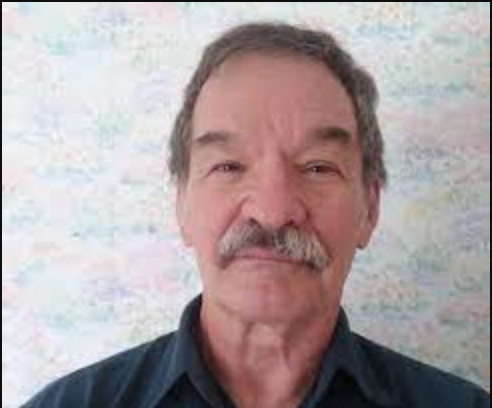
Ted Glick has devoted his life to the progressive social change movement. After a year of student activism as a sophomore at Grinnell College in Iowa, he left college in 1969 to work full time against the Vietnam War. As a Selective Service draft resister, he spent 11 months in prison. In 1973, he co-founded the National Committee to Impeach Nixon and worked as a national coordinator on grassroots street actions around the country, keeping the heat on Nixon until his August 1974 resignation. Since late 2003, Ted has played a national leadership role in the effort to stabilize our climate and for a renewable energy revolution. He was a co-founder in 2004 of the Climate Crisis Coalition and in 2005 coordinated the USA Join the World effort leading up to December actions during the United Nations Climate Change conference in Montreal. In May 2006, he began working with the Chesapeake Climate Action Network and was CCAN National Campaign Coordinator until his retirement in October 2015. He is a co-founder (2014) and one of the leaders of the group Beyond Extreme Energy. He is President of the group 350NJ/Rockland, on the steering committee of the DivestNJ Coalition and on the leadership group of the Climate Reality Check network.
ZNetwork is funded solely through the generosity of its readers.
Donate




