

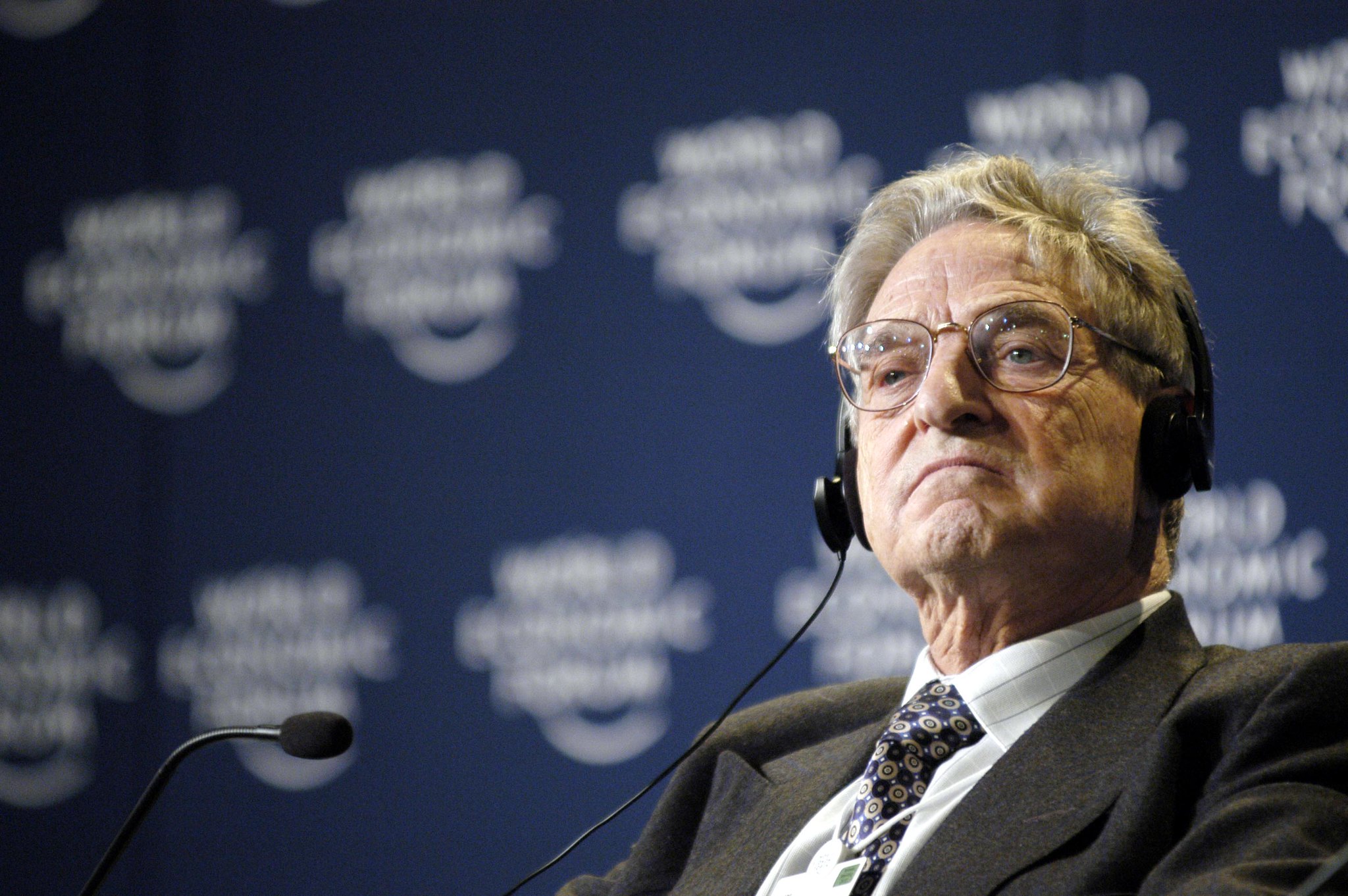
“Independent media” are sweeping developing countries; money from NATO governments and George Soros’ Open Society Foundations are flooding the public sphere.
In the past, the U.S. government used to subsidize traditional newspapers in the Arab world: those that were the most reactionary and right-wing such as Al-Hayat, An-Nahar and Al-`Amal (the last one is the mouthpiece of the Phalanges Party) received the bulk of the funding.
Their mission was to bash progress, downplay the Palestinian question and to go after the foes of U.S. and Israel, i.e. the Palestinian resistance, the Arab left and most importantly and significantly, the Arab nationalist leader Gamal Abdul-Nasser.
In that regard, Gulf regimes and Western powers funded the same outlets. Even when liberals or socialists or Democrats were in power in Western countries, the support for reactionary forces persisted.
U.S. and NATO governments find it rather cheap to launch internet-based media in developing countries. They all look the same and adopt the same message: a liberal social agenda accompanied by U.S. and Israeli military priorities and agendas.
You see it around the world, with civic groups engaged in the same mission benefiting from Western government funding and from private reactionary and liberal sources.
Soros (through his Open Society Foundations) has become ever present in the Arab world. But one is not able to talk about the billionaire (in the West and in the East) without having to explain his thrust and to exonerate him or herself from the ready charge of anti-Semitism.

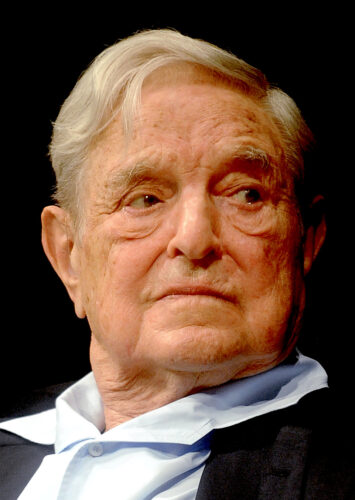
George Soros in 2018. (Niccolò Caranti, CC BY-SA 4.0, Wikimedia Commons)
That is a convenient method of intimidation — in line with how Israel and its supporters have succeeded, largely, in intimidating critics of Israel.
That success was manifested in the adoption by the U.S. State Department of the Zionist definition of anti-Semitism, by which criticism of Israel can be easily equated with anti-Semitism in terms of “proportion” of the criticisms and the “intensity.”
Real Antisemitism
There are of course right-wing reactionary forces in the West who can’t talk or refer to a person who is Jewish (or Jewish-born) without relating whatever complaints they have about him or her to his or her Jewishness. That is a clear symptom of anti-Semitism.
And the association of evil plots with Jewish money is as old as anti-Semitism itself. So, there are people who do attack Soros from an anti-Semitic point of view (or who infuse their attacks on Soros with their anti-Semitism), just as there are people who attack Israel from anti-Semitic perspectives.
But that does not make all attacks, no matter how strong or vicious, to be anti-Semitic (whether against Soros or against Israel).
Attacks on Muslim bankers or politicians or clerics don’t automatically imply motives of Islamophobia (granted that associating Jewry with banking is a classic anti-Semitic trope just as associating Muslims with fanatic clerics is an Islamophobic trope).
Some who attack Soros are indeed anti-Semitic, just as there are some who attack Soros from a purely political or economic perspectives (he has been a champion of unbridled capitalism and he refrained from doing business in Israel during the time when he accused the country of socialist excesses).
There are rightwing writers in the U.S. who accuse Soros of being a self-hating Jewish person because his family used a Christian identity during the Nazi years in Hungary. This charge is unfair because Soros was a boy at the time; stories that he assisted the Nazi regime can’t be taken seriously.
So reactionary forces in the West have attacked Soros for his Jewishness (or his being born Jewish) and for his alleged hostility to his religion of birth.
Meanwhile, however, liberals in the U.S. try to have it both ways. While they regularly went after Sheldon Adelson over his generous funding of the Republican Party, they don’t tolerate criticism of Soros as a chief funder of the Democratic Party.
Soros is a highly influential, multi-national political figure and there is nothing that says that he should be protected from criticism. Wealthy billionaires are now sovereigns who answer to no one and face no accountability, not even from the press which they can influence or buy.
Splitting the World in Two


(Steve Bowbrick/Flickr, CC BY-NC-SA 2.0)
Open Society takes its name, as is widely known, from the famous book by Karl Popper, who taught the young Soros in London. Popper was a reactionary and he split (like Soros) the world into two spheres (just like former President George W. Bush and Osama bin Laden): the open society and the closed society.
In interviews and his writings, Soros creates a rigid line of demarcation between the two societies. The open society is where people are, ostensibly, inquisitive and critical and not subject to inculcation and domination. And the closed societies were typified in the writings of Popper by the Nazi and communist regimes.
The conflation of communism and Nazism has been a successful U.S. government (and Soros) propaganda project and has infused academic works, especially those writing on totalitarianism.
The “founding” totalitarianism conference at Harvard was partly a U.S. government project. The word was reserved for governments that are not liked by Washington.
The apartheid regime of South Africa, for example, never fell into the category of totalitarian or even authoritarian (South Africa under apartheid was a non-secret ally of Western powers in the Cold War and in Western white supremacist policies in Africa and elsewhere).
Meanwhile, the notion that people in closed societies are neither inquisitive nor critical is belied by the very work by Soros and his allies in the U.S. government and the Vatican during the Cold War.
They supported and funded reactionary groups in communist countries because they defied their governments and were raising questions and opposing policies of the government. (Naturally, neither Soros nor the Western powers supported groups or movements that criticized a communist government from a leftist perspective).

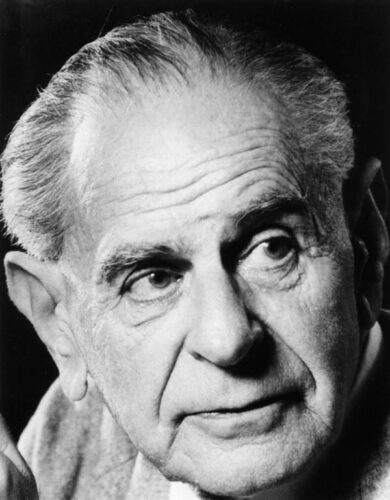
Karl Popper in the 1980s. (LSE library/Wikimedia Commons)
Popper warned against “unlimited tolerance,” so his open society can be closed to ward off dangerous ideas and movements.
This in itself can serve as a recipe for government repression, similar to the Western governmental repression of leftism.
And who decides who are the intolerant among us? Soros has not spoken against that in his writings or lectures.
People in developing countries have been increasingly criticizing the expanding role of media and civic groups funded by Soros’ foundation. Imagine if a Chinese billionaire were to launch a campaign of funding groups and media in Western societies? It is doubtful that Western governments would not crack down on that funding.
But when governments in developing countries consider restrictions on such blatantly political funding, Western governments and media decry any interference in the funding. They insist it be left unrestricted.
(Of course, Soros is far more likely to be active in countries that are not under direct U.S. domination: there is more Soros funding in Lebanon and Tunisia, for example, and none in the Gulf, perhaps because Gulf countries achieved the ideal of “open societies” that Soros strives for.)
Some Arab groups and media with Open Society Foundations funding have resorted to a new tactic in defending Soros from Arab critics. They say (as Daraj media has said) that he can’t be accused of having a Zionist agenda because he is criticized inside Israel itself. However, that does not disprove Soros’ Zionist agenda, since such criticisms of him are part of the internal polemics among Israeli political parties, all of which are Zionist.
Soros has supported the “left” in Israel where the left is more like the center in other countries and is often blind to Israeli racism and injustices toward Palestinians. Israeli Prime Minister Benjamin Netanyahu, in his last book, strongly attacked former U.S. President Barack Obama, but that does not make Obama anti-Zionist.
In an article in The New York Review of Books, and in the unauthorized biography of Soros by Robert Slater, we learn that Soros admitted that he refrained for years from criticizing Israel because he did not want to supply “its enemies” with weapons. By enemies Soros must have had in mind the Palestinian people living under Israeli occupation and not having the luxury of receiving funding from Soros to create their open and free society.
Soros may not be an enthusiastic Zionist but he has certainly dealt with Israel in a way that contrasts sharply with his handling of communist regimes in Europe. For Soros, Israeli Jewish society is what concerns him, and for that he invested there and supported the Netanyahu financial “reforms,” i.e, the elimination of the last vestiges of the state sector.
Among Arab media and civic groups that receive funding from Soros support such socially liberal causes as LGBTQ rights, coinciding with a generally Western bias that includes an absolute categorical abhorrence of the adoption of themes of resistance against Israel and the discussion of Israel purely in the mild language of the State Department’s spokesperson.
The focus in those media is that of the U.S. government: I counted on Lebanon-based social media platform Megaphone two months ago that for every 50 posts about Iran there was one about Israel, and the language about Israel is always polite and deferential while the language about Russia, Iran and Syria is adamant, and mockery and sarcasm (with images implanted) are common.
Soros has a big, unfair role in world affairs, and this role is the product of the advantages of capitalist injustice. He wants to support “open societies” but his agenda never deviated from that of U.S. imperialism.
As`ad AbuKhalil is a Lebanese-American professor of political science at California State University, Stanislaus. He is the author of the Historical Dictionary of Lebanon (1998), Bin Laden, Islam and America’s New War on Terrorism (2002), The Battle for Saudi Arabia (2004) and ran the popular The Angry Arab blog. He tweets as @asadabukhalil
The views expressed are solely those of the author and may or may not reflect those of Consortium News.
ZNetwork is funded solely through the generosity of its readers.
Donate




