


1) The progressive movement, broadly defined, from socialists/Marxists on the left to reasonably progressive Democrats on the right, has been doing its best over the past several months to counter the various Bush/Republican attacks: the continuation of the Iraq war, maddening appointments to Cabinet positions and judgeships, the bankruptcy bill which will tighten the economic vise for many working people, the weakening of legal avenues for challenging corporate violations of people’s rights, the efforts to dismantle Social Security, etc. It’s an uphill battle, and we are very much on the defensive, but there is reason to believe we can hold off some of the worst plans, such as on Social Security, and moderate others. The Republicans are not monolithic; there are internal divisions that will probably grow deeper and wider as the jockeying develops over who will be the ’08 Presidential nominee.
2) However, the progressive movement can in no way count upon the Democratic Party in either the House or the Senate. What else is new? They demonstrated once again how untrustworthy they are via the bankruptcy bill vote and the House vote on $81 billion more for the war, to name two recent examples. As has been true for a long, long time, there is a crying need for a unified, independent political movement which can both bring pressure to bear around critical issues and build towards a political realignment that will bring about the creation of a strong and powerful people’s alternative.
3) There are a number of factors preventing the emergence of such a movement. A key one is the undemocratic, winner-take-all set-up of our electoral system. Absent proportional representation, or instant runoff voting, it is extremely difficult for alternative progressive parties to win sufficient victories to generate a critical mass, a political momentum, that would lead to even more victories and the defection from the Democrats of progressives whose positions on issues are very similar. Instead, alternative party candidates are generally seen as “spoilers” for the least worst of the two corporate party candidates, as indeed they often are under our antiquated, 19th century political system.
4) Another reason, very related to point 3, is the relative weakness of the progressive third party movement as far as numbers of activists, resources and visibility. The Green Party is the most successful of such groups over the past 15-20 years, but it is still small. The Labor Party is important as a network of unions supportive of independent political activity whose total membership is over 2 million, but nine years after its founding it has yet to run any candidates for office and is struggling to gain traction. The New Party no longer exists. There are a small number of independent local and state progressive parties, particularly in Vermont and Madison, Wi., that have shown staying power and an ability to elect progressive independents to office, but the number of such groups is in the single digits.
5) There are hopeful signs that a growing number of progressives outside of the Democratic Party and progressives within it are seeing the importance of consciously working together to counter the dangerous, fascist-like tendencies of the Bush/Cheney administration and to discuss longer-term strategy. The Progressive Dialogue III meeting in early December which led to the birth of United Progressives for Democracy is one such sign. Another is the successful coalition work in December and early January between the Green Party, IPPN, other independent progressives, Rev. Jesse Jackson, Rep. John Conyers, Progressive Democrats of America and others which led to the successful January 6 challenge to the Ohio electoral college electors. That success has in turn inspired an on-going, new voting rights movement. Finally, progressive leaders who have not been active so far in third party organizations such as Bill Fletcher, Jr., Danny Glover, Andrew Stern, Jesse Jackson and Charles Ogletree are making public statements indicating support for seriously considering alternatives to the Democrats.
6) At the same time, there is a political current on the Left which underestimates the dangers posed by the near-dominance by the Republicans of all three branches of government. Though a very minor current within the overall progressive movement, and even within the progressive third party movement, they have some influence. The tactics used by some, probably a small percentage, go over the line into sectarianism. Within the Green Party, as a prime example, some supporters of Ralph Nader’s 2004 independent Presidential campaign are continuing to level ridiculous attacks on David Cobb and those who supported him as little more than fronts for John Kerry. Nader’s VP candidate, Peter Camejo, just sent out a fund-raising letter to try to retire Nader’s campaign debt in which he wrote that long-time, prominent progressives Norman Solomon, Medea Benjamin and Matthew Rothschild, in his words, “embraced the pro-war corporate Democrats” last year. The truth is that Solomon and Benjamin actively supported the Green Party and called for voters to vote for David Cobb in states where it was not close between Kerry and Bush, and Rothschild never endorsed any candidate for President.
7) United Progressives for Democracy is a prime example of the kind of conscious communication and collaboration that is needed right now. Though still young and resource-poor, it is a model for both the kind of respectful, dialogical political process and the kind of seeking-for-unity-in-action that are so essential today.
Author Immanuel Wallerstein, in an essay “Antisystemic Movements,” spoke of this way of working in relationship to the building of unity among diverse groups. He spoke of the need for “a conscious effort at empathetic understanding of the other movements, their histories, their priorities, their social bases, their current concerns. Correspondingly, increased empathy needs to be accompanied by restraint in rhetoric. It does not mean that movements should not be frank with each other, even in public. It means that the discussion needs to be self-consciously comradely, based on the recognition of a unifying objective, a relatively democratic, relatively egalitarian world.”
The building of respectful and comradely relationships among groups that don’t ordinarily interact isn’t just a “nice” thing to do. It is a strategic necessity. Energy and positive momentum, even during hard times like these, come from learning about the struggles of others, the sharing of experiences, and the discovery of common actions that can be undertaken.
The last thing we need right now is the “correct line” approach, individuals or small groups claiming to have all the answers or quick to jump on other progressives for their supposed failings.
Sometimes, the most revolutionary of acts is the act of listening.
Ted Glick continues to work with the Independent Progressive Politics Network (www.ippn.org) as well as the Climate Crisis Coalition (www.climatecrisiscoalition.org). He can be reached at indpol@igc.org or P.O. Box 1132, Bloomfield, N.J. 07003.

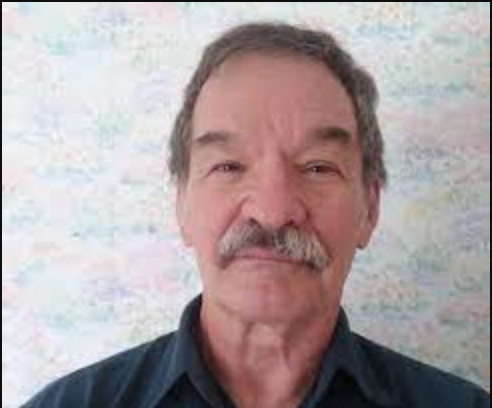
Ted Glick has devoted his life to the progressive social change movement. After a year of student activism as a sophomore at Grinnell College in Iowa, he left college in 1969 to work full time against the Vietnam War. As a Selective Service draft resister, he spent 11 months in prison. In 1973, he co-founded the National Committee to Impeach Nixon and worked as a national coordinator on grassroots street actions around the country, keeping the heat on Nixon until his August 1974 resignation. Since late 2003, Ted has played a national leadership role in the effort to stabilize our climate and for a renewable energy revolution. He was a co-founder in 2004 of the Climate Crisis Coalition and in 2005 coordinated the USA Join the World effort leading up to December actions during the United Nations Climate Change conference in Montreal. In May 2006, he began working with the Chesapeake Climate Action Network and was CCAN National Campaign Coordinator until his retirement in October 2015. He is a co-founder (2014) and one of the leaders of the group Beyond Extreme Energy. He is President of the group 350NJ/Rockland, on the steering committee of the DivestNJ Coalition and on the leadership group of the Climate Reality Check network.
ZNetwork is funded solely through the generosity of its readers.
Donate




