


“The bolder, more radical approach is obviously running outside of the two-party system. Do people believe at this particular point that there is the capability of starting a third-party movement? Or is that an idea that is simply not realistic at this particular moment in history? On the other hand, do people believe that operating in the framework of the Democratic Party, getting involved in primaries state-by-state, building organizational capability, rallying people, that for the moment at least that this is the better approach? Those are the options that I think progressives around the country are going to have to wrestle with. And that’s certainly something that I will be listening to.”
Bernie Sanders, interview with John Nichols in The Nation, March 6, 2014
We are writing as long-time progressive activists and organizers whose involvement with progressive electoral campaigns goes back over 30 years.
Without question, a major issue for a prospective Bernie Sanders for President campaign is whether to run on an independent line or within the Democratic Party primaries. We appreciate that Bernie is wrestling with that issue and that he is listening for input from other progressives.
We believe, first of all, that Bernie is right to identify the building of a broad progressive coalition as strategically key: “If I run, my job is to help bring together the kind of coalition that can win — that can transform politics. We’ve got to bring together trade unionists and working families, our minority communities, environmentalists, young people, the women’s community, the gay community, seniors, veterans, the people who in fact are the vast majority of the American population. We’ve got to create a progressive agenda and rally people around that agenda.”
Pulling together this coalition via a Presidential campaign has been tried before on a national level. It’s what actually happened between 1983 and 1988 as a result of Rev. Jesse Jackson’s campaigns for President within the Democratic Party and the building of the National Rainbow Coalition in connection with those campaigns. Both of us were deeply involved in those efforts; we know the power of such a coalition, and we know that it can be done.
Polling in 1988 indicated that if Rev. Jackson would have decided to continue his campaign after losing in the Democratic primaries, getting on the ballot as an independent, he would have started with 15% of the population in support. It is possible that today, given the widespread alienation from both the dominant parties and the political system as a whole, that percentage would be higher given similar movement-building conditions as back then. However, our movement is in no way close to the conditions which prevailed in 1988, after five years of organizational and movement-building efforts.
Is that broad progressive coalition today at the point where it is prepared to get behind Bernie Sanders, or anyone else, as part of an independent Presidential campaign? We don’t know for sure, but we doubt it. If it were, we would be seeing many more localities around the country where progressive candidates were running for office on third party lines and winning, or getting a strong percentage of the vote. That just isn’t the case.
Take the Green Party, the only broadly national third party effort that has survived the last 25 or so years of efforts that at one point included the Labor Party, the New Party and the Campaign for a New Tomorrow. About 200 Green Party members are currently in office around the country, but the vast majority of them have been elected in non-partisan local elections, elected in large part because party identification was not a major issue.
The political reality of the United States of America today is that the vast majority of strong progressives who run for political office, people with similar politics as Bernie’s, do so within Democratic primaries. We may wish it was different, but it is not. This has to be taken into account in determining the tactics of a strong progressive Presidential campaign.
There is one potential development that could affect this current reality: a major split within the Republican Party in 2016, leading to a divided right/ultra-right wing. Such a development seems possible right now given the level of antagonism internally among Republicans. If it happened, there could be a tactical rationale for a 2016 progressive third party Presidential campaign. After all, the last “third party” candidate to actually be elected was Abraham Lincoln, winning with 36% of the vote because there were four major Presidential candidates in 1860. Depending upon how things play out between now and 2016, we might be looking at a similar set of circumstances.
The more likely reality, however, is that the effort to advance ultra-right politics will take place within the Republican Party process, and the main efforts to advance progressive politics will take place for now within the Democratic Party.
The bottom line for us, and we believe for Bernie, should be that he runs for President in a way which brings together, holds together and builds that broad progressive coalition. He should be very clear and forthright that this is the path to ultimate victory and social and economic transformation in this country and make his decisions accordingly.
We stand ready to work with him to advance this winning strategy leading up to and in 2016.

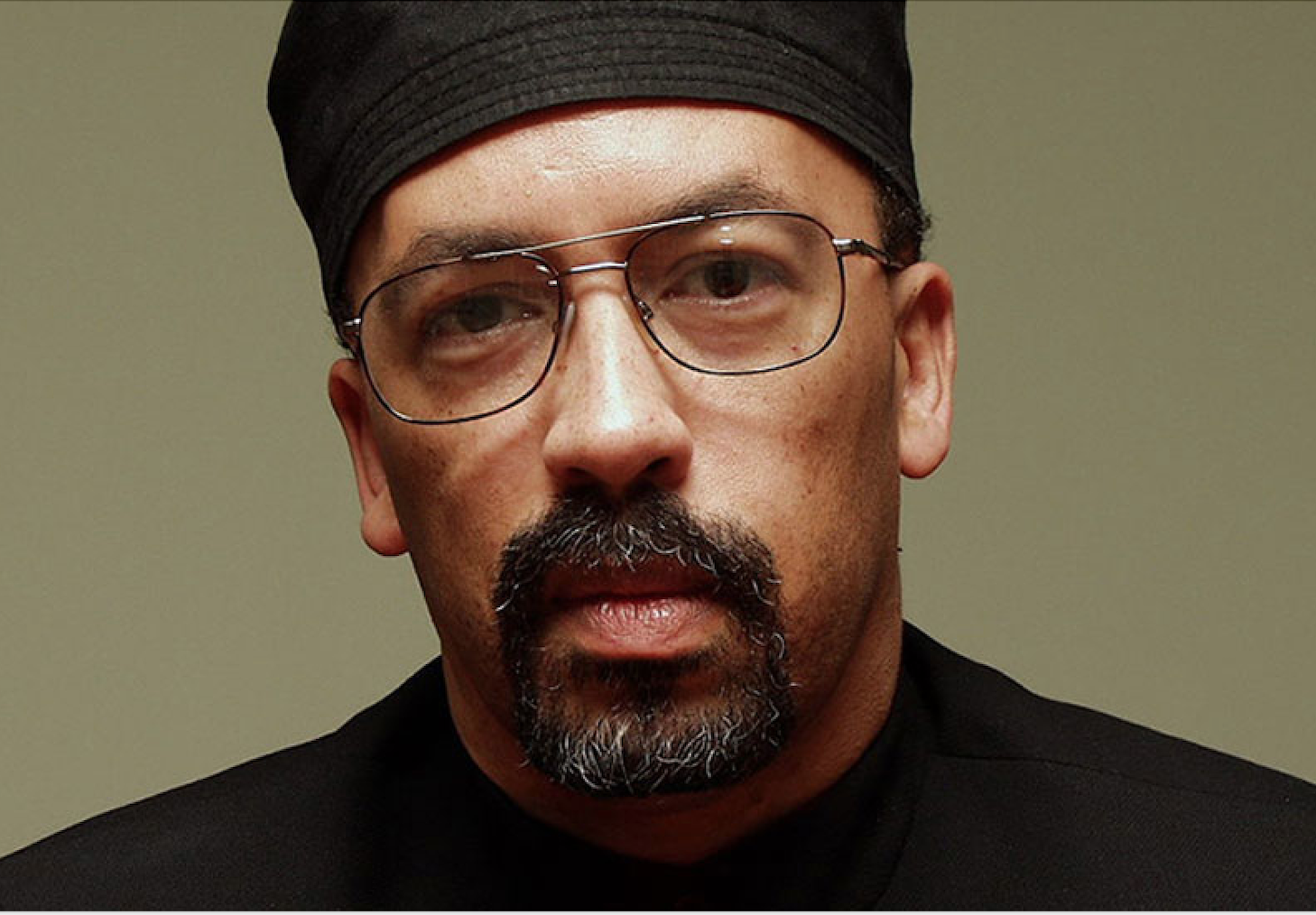
Bill Fletcher Jr (born 1954) has been an activist since his teen years. Upon graduating from college he went to work as a welder in a shipyard, thereby entering the labor movement. Over the years he has been active in workplace and community struggles as well as electoral campaigns. He has worked for several labor unions in addition to serving as a senior staffperson in the national AFL-CIO. Fletcher is the former president of TransAfrica Forum; a Senior Scholar with the Institute for Policy Studies; and in the leadership of several other projects. Fletcher is the co-author (with Peter Agard) of “The Indispensable Ally: Black Workers and the Formation of the Congress of Industrial Organizations, 1934-1941”; the co-author (with Dr. Fernando Gapasin) of “Solidarity Divided: The crisis in organized labor and a new path toward social justice“; and the author of “‘They’re Bankrupting Us’ – And Twenty other myths about unions.” Fletcher is a syndicated columnist and a regular media commentator on television, radio and the Web.
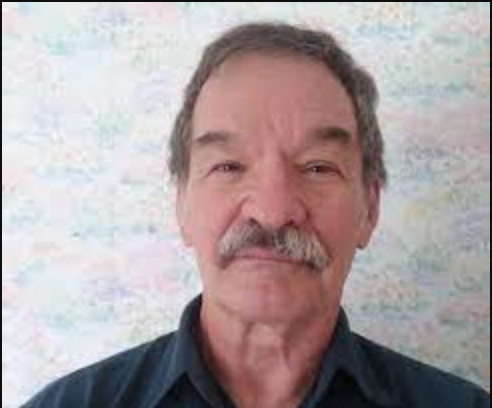
Ted Glick has devoted his life to the progressive social change movement. After a year of student activism as a sophomore at Grinnell College in Iowa, he left college in 1969 to work full time against the Vietnam War. As a Selective Service draft resister, he spent 11 months in prison. In 1973, he co-founded the National Committee to Impeach Nixon and worked as a national coordinator on grassroots street actions around the country, keeping the heat on Nixon until his August 1974 resignation. Since late 2003, Ted has played a national leadership role in the effort to stabilize our climate and for a renewable energy revolution. He was a co-founder in 2004 of the Climate Crisis Coalition and in 2005 coordinated the USA Join the World effort leading up to December actions during the United Nations Climate Change conference in Montreal. In May 2006, he began working with the Chesapeake Climate Action Network and was CCAN National Campaign Coordinator until his retirement in October 2015. He is a co-founder (2014) and one of the leaders of the group Beyond Extreme Energy. He is President of the group 350NJ/Rockland, on the steering committee of the DivestNJ Coalition and on the leadership group of the Climate Reality Check network.
ZNetwork is funded solely through the generosity of its readers.
Donate





2 Comments
https://www.facebook.com/Bernie.Sanders.Go.Green/photos/a.599813163433801.1073741828.595850753830042/630094657072318/?type=1&theater
The Democratic Party is a neoliberal, corporate party. It advocates austerity at home and aggression abroad. The party will not be reformed from within by one person; the party would reform him.
The Green Party, on the other hand, does not need reforming. It needs growth, investment, and visibility. It’s time to build a leftist third party that can challenge the two corporate parties on a substantive, noncorporate, progressive level.
If you would like to see Bernie Sanders reject the Democratic Party in his 2016 campaign for president in favor of a truly leftist coalition, you can ask him to seek the Green nomination by signing this petition:
https://www.change.org/petitions/senator-bernie-sanders-run-for-president-in-2016-as-a-green-party-candidate
The “quadrennial electoral extravaganza” as per Chomsky will again excite the pols and bore the masses because something in their genes tells them that if voting mattered, it would be illegal, as per Emma Goldman. The last real president, J.F.K. was taken out because he opposed the M.I.C. in probably ten major areas. Read James Douglass’ “J.F.K. and the Unspeakable.” I believe that the Citizens United decision put the last nail in the coffin of democracy. The candidate with the most money wins 94% of the time, and we continue to sail full speed ahead with a light on the stern as per Barbara Tuchman in “The March of Folly.” This corporate system serves its master well, the .001%. They win. We lose. When is that message going to sink in? They play good cop-bad cop and we roll over. They beat the hell out of us as in an abusive relationship, and we rationalize our obsequiousness and cover our black eyes with rose colored glasses.