


Source: Tedglick.com
The reports about late night street battles in Portland between some demonstrators and local police, and now Federal Protective Services and other federal militarized units, have reminded me of experiences at demonstrations I’ve had over the years.
One that came to mind was being in Quebec City, Quebec in the late summer of 2001 as part of a major global justice action. There was a meeting taking place of government leaders from throughout the Americas to try to create a “Free Trade Area of the Americas.” Following a march of thousands of people, many of us went right up to a line of police and a fence they had constructed to keep us from getting to the building where the government leaders meeting was happening.
While many of us tried to occupy the area right next to that fence and police line, others took direct action, first by pulling down the fence and then, for a very small number of the thousands of us there, throwing concrete blocks pulled up from a plaza area at the police. I remember thinking, damn, if someone got a direct hit, if the shields they were using didn’t stop the concrete blocks, they could be badly hurt or even killed.
That was when the tear gas began to be used in earnest to try to clear all of us away from the big plaza area close to the FTAA meeting building. For the rest of the afternoon, there was a back and forth as we were driven back, but then we would regroup and advance again.
At one point, there were hundreds of people who had nonviolently advanced pretty close to an area being held by a small number of cops. People were talking to them about why we were there. I remember seeing a young man dressed in black with a slingshot trying to creep up close enough without being seen by the police to use the sling shot. Again I thought, damn, someone could get really hurt if they got hit by something shot from that sling.
This isn’t the only time I’ve experienced these kinds of tactics, but it’s one of the most dramatic.
From what I’ve read and researched, it is clear that the vast majority of the people demonstrating in Portland are not throwing concrete bricks or angling for a good shot via slingshot at a policeman or FPS guy. The vast majority are not there with the intention of hurting anyone but, just the opposite, to stop racist police from hurting and killing Black people and other people.
I have always opposed the kind of violence that I saw in Quebec, and elsewhere, and that seems to be taking place in Portland, mainly late at night. I oppose it because it can be used—as it now is—by people like Trump to try to paint our broadly-based movement as violent and criminal, which, if successful, will hurt our movement and strengthen Trump. I oppose it because it is possible that some of those responsible for this violence are agent provocateurs, or racist militia trying to undercut our movement’s support or stimulate a race war.
I don’t oppose it because I am a pacifist. I’m not. Although I am a nonviolent person in every way that I can be, including, and as much as I can be, on an interpersonal level with others, I believe that people have the right to defend themselves. I believe that there have been, are and may be in the future times when people struggling for survival, justice and democracy might have to use violence against a particularly repressive and massively violent government.
That is not our situation in the United States, although if Trump is reelected and is able to carry through on all he has done so far and wants to do with his accomplices in the Republican Party, it might be.
I think more of us need to speak out now about the counter-productive, adventuristic tactics being used by a small number of the Portland activists, and any similar tactics elsewhere.
Ted Glick is the author of the just published Burglar for Peace: Lessons Learned in the Catholic Left’s Resistance to the Vietnam War. Past writings and other information can be found at https://tedglick.com, and he can be followed on Twitter at https://twitter.com/jtglick.

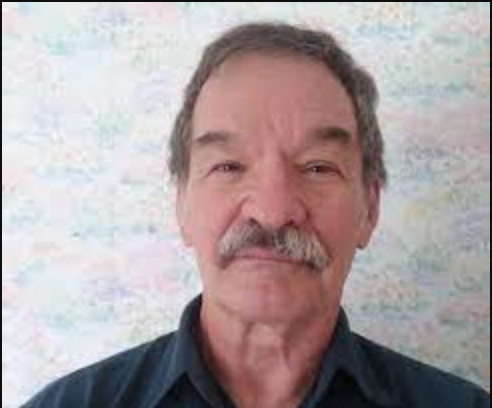
Ted Glick has devoted his life to the progressive social change movement. After a year of student activism as a sophomore at Grinnell College in Iowa, he left college in 1969 to work full time against the Vietnam War. As a Selective Service draft resister, he spent 11 months in prison. In 1973, he co-founded the National Committee to Impeach Nixon and worked as a national coordinator on grassroots street actions around the country, keeping the heat on Nixon until his August 1974 resignation. Since late 2003, Ted has played a national leadership role in the effort to stabilize our climate and for a renewable energy revolution. He was a co-founder in 2004 of the Climate Crisis Coalition and in 2005 coordinated the USA Join the World effort leading up to December actions during the United Nations Climate Change conference in Montreal. In May 2006, he began working with the Chesapeake Climate Action Network and was CCAN National Campaign Coordinator until his retirement in October 2015. He is a co-founder (2014) and one of the leaders of the group Beyond Extreme Energy. He is President of the group 350NJ/Rockland, on the steering committee of the DivestNJ Coalition and on the leadership group of the Climate Reality Check network.
ZNetwork is funded solely through the generosity of its readers.
Donate




