

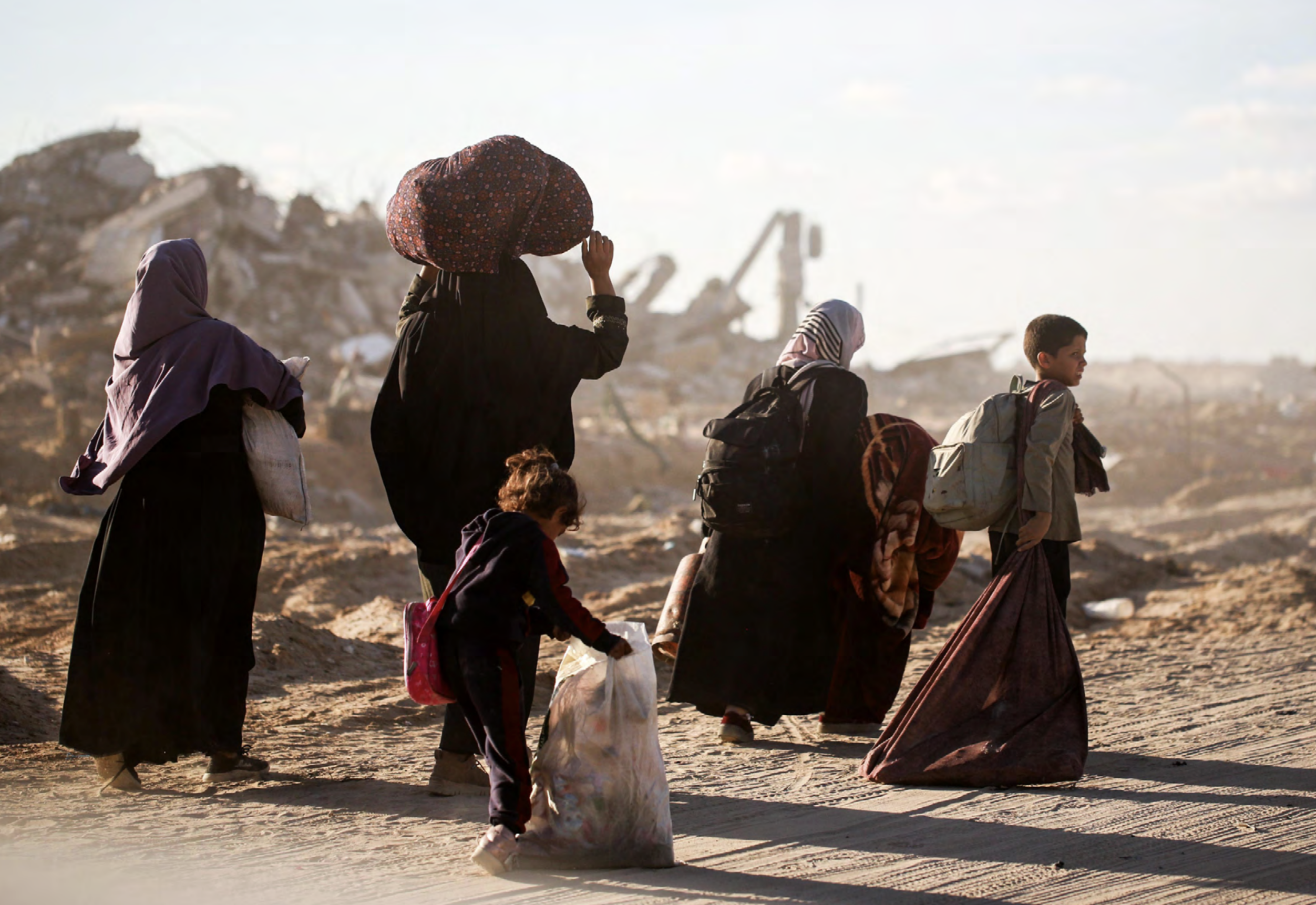
That grand old thing is getting on a bit. Still significant and still functioning wearily, the United Nations Refugee Convention of 1951 has suffered abuse, subversion and neglect from state parties. At times, it is only honoured in the breach. At other times, it is not honoured at all. After three-quarters of a century, it is easy to forget the hot ideal that streaks through the document: that it contains, as Christopher Bentram aptly remarks, “a kind of substitute citizenship” for those who have left their country of origin and find their bonds “broken by the threat of prosecution.” It was the first of its kind to expand the focus of protection beyond narrowly designated groups. (Consider, in this regard the 1933 Convention relating to the International Status of Refugees, applicable to Russian, Armenian and “assimilated” refugees.)
From the start though, the concerns and ambivalent approach of certain States, notably wealthier ones, were registered. The original 1951 document maintained that a refugee was an individual outside their country of nationality or habitual residence with a well-founded fear of persecution for reasons of race, religion, nationality, membership of a social group or political opinion arising from “events occurring before 1 January 1951.” It took the 1967 Protocol to remove the temporal limitation on the definition of refugees.
Certain salutatory principles remain in the document. The principles of non-discrimination, non-penalisation and non-refoulement (not returning refugees or asylum seekers to a place where they risk harm) seem deathless, even in the face of sovereign frigidity. Australia, a country very much a pioneer in the field of tarnishing, if not trashing the Convention, continues to take a brutal line towards unwanted boat arrivals without the requisite paperwork. Indeed, the government of Anthony Albanese has continued the policy of Operation Sovereign Borders almost as a matter of habit, introduced with populist glee by Tony Abbott’ coalition government in 2013. “I said people wouldn’t be allowed to come here unauthorised,” stated Albanese last November. “What we are doing is making sure we deliver.” That form of delivery remains a policy of repelling and turning back boats with secret ruthlessness. (Details on such operations are treated as matters of military importance.)
The administrative apparatus overseeing the protection of refugees, the office of UN High Commissioner for Refugees (UNHCR,) has also faced dwindling funds as the anti-aid drummers exercise their influence. The US, having been the agency’s largest donor, has withdrawn much support. By November 2025 the commissioner’s office faced a shortfall of US$1.3 billion compared to 2024, a fall of 25%, with 5,000 positions being slashed and 185 offices being closed or merged. The workforce has been reduced by 30%.
The Convention has also been assailed for its skimpiness about certain details. The applicable refugee definition ignores the genuinely desperate claims of those who wish to flee conditions of famine, starvation or natural disasters. This omission is a blessing for states keen on keeping their borders impervious to the arrival of those accused of being economic migrants or not being in genuine need of protection. “The general principle should be this,” proposes Kieran Oberman of the Department of Philosophy, Logic and Scientific Method at the London School of Economics: when “choosing a refugee definition we want to make sure that no one’s claim to refuge is denied for some arbitrary reason. No one should be refused refuge simply because of how we have historically chosen to use a particular word.” Unfortunately, definitions are controlling, particularly in this field.
The Convention has another weakness in not providing a mechanism or a means by which displacement can be addressed through international cooperation. “Without a mechanism for responsibility-sharing,” argue Susan Fratzke and Meghan Benton of the Migration Policy Institute, “most of the world’s displaced people have sought refuge in a small number of low- and middle-income countries, which thus shoulder a disproportionate share of responsibility.” The authors suggest the addition of another, reforming Protocol, permitting states to narrow the issues on, for instance, limiting cases of asylum to instances where immediate harm might rise; generating a “blueprint for responding to situations of mass displacement” and, rather airily, a system of sharing responsibility “with a focus on results-based conditions to promote refuge self-sufficiency.” (When will this constipated managerial lingo be abandoned?)
The brutal, unmissable reality is that the refugee is valuable currency for demagogic exploitation. States are marshalling their resources against arrivals, going so far as to adopt artificial intelligence technology in terms of border control and surveillance. (The EU Artificial Intelligence Act excluded migration and law enforcement from its ambit.) In January 2025, the Trump administration suspended the US Refugee Admissions Program (USRAP), only resuming it in October 2025 with a dramatically reduced cap of 7,500 admissions with heavy preference given to white Afrikaners from South Africa. Whatever the pretence, States do discriminate.
In his June address to the Domus Bibliotheca at the University of Oslo, Daniel Ghezelbash of the Kaldor Centre based at the University of New South Wales suggested that States had engaged in sabotaging the Convention “while professing fidelity to it in principle.” Certain politicians had “concluded that a growing part of the public no longer values compliance with international law – and that there is now active political reward for attacking it openly.” Boisterous calls to reform the Convention were not necessarily failures of the document itself but “the product of deliberate evasion: of States hollowing out protection in practice, then pointing to the resulting failures as evidence that the framework itself is broken and eroding public trust in the Convention itself.”
Filippo Grandi, the 11th UN High Commissioner for Refugees, insists on a sounder strategic approach towards displacement routes and the identification of protective measures for those on the move, and those parties hosting them. It is an approach needed at the earliest point “before people cross several borders.” This would include improving systems of asylum, formulating the lawful transfer of asylum seekers to safe third countries and instituting return programmes for those not needing protection. “They also include creating predictable and regulated migration pathways – for labour, education or family reunification.” This sounds humanely sensible and, being such, will receive a cold reception across the capitals of wealthy states sniffing at the revival of any humanitarian sentiments.
ZNetwork is funded solely through the generosity of its readers.
Donate
