


South American social movements face an unprecedented panorama: the majority of governments on the continent define themselves as progressive or on the left. This is a reality which these same movements contributed to shaping and which can either help them to grow or block their development.
Indeed, seven of the ten South American countries have governments which claim affinity with the social movements. This new scenario is having such an impact on the movements that they can no longer continue working as before. In broad outlines, there are two notable differences from the previous period. On the one hand, the contradiction between neo-liberal governments and social movements no longer takes first place. The growing polarization between new governments and the old right, now renewed with new issues and slogans, tends to displace the movements from their previous prominence.
In Venezuela and Bolivia the right is able to mobilize important sectors of the population, and in the latter case raises autonomy proposals that serve as an excellent playing field to bring together their societies. Something similar could happen in Ecuador when Rafael Correa takes office on January 15. In Argentina, the right is regrouping to block the advance of the human rights cause and was able to organize an important strike in the agricultural sector against Nestor Kirchner’s policy for that area. In Brazil, the excuse for the electoral mobilization of the right was corruption.
The novelty is that the right is able to bring together segments of the middle classes and sometimes to take to the streets with hundreds of thousands of sympathizers. In these circumstances, not only are the movements and their demands displaced, but they are also forced to rally in support of governments with which they are often only partly in agreement.
On the other hand, a new relationship is emerging between the forces which make up progressive and left-wing governments and the popular sectors which form the social base of the movements. These are complex relations which are beginning to be built, almost everywhere, on the basis of previous policies focused against poverty. In general, there are two “models” in use on the continent.
The one being implemented in Ecuador, and to a certain extent in Bolivia, appears to be centred on “strengthening social organizations”, which were assigned – starting with the creation of PRODEPINE (Development Project for Indian and Black Peoples of Ecuador) in the mid-1990’s – the task of designing and implementing their own welfare programs. These programs have profoundly damaged the movements. In Ecuador, they were at the point of provoking a split in the Confederation of Indigenous Nationalities of Ecuador (CONAIE) and succeeded in weakening it considerably.
In Brazil, Argentina and Uruguay, the policies on poverty being implemented by progressive governments have taken a qualitative step forward compared to previous programs, all of them financed and promoted by the World Bank, as in the previous case (Ecuador). In a strict sense, we can no longer talk of “focused” policies, given that in Brazil they cover 25% of the population and in Argentina and Uruguay somewhere between 10 and 20%. In reality we are facing a reconfiguration of relations between the state and the popular sectors, different from the one which developed during the period of the welfare state.
The result is that these policies affect the capacity for action by the movements — of the organized poor — and further, tend to bring into question their own autonomy, gained during the period of hard and fast neo-liberalism. Two facts are at the base of this weakening effect: social subsidies generate client – and therefore, vertical – relations between the “social” ministries and the masses of unorganized poor, which now appear less inclined to mobilize. In parallel, many leaders of the movements move into lower-level jobs in the progressive governments, distancing themselves from their organizations or even placing them in a subordinate relation to the governments for which they work.
Faced with this new scenario, there is little use in insisting on repeating what until now has produced results. Recognizing the changes is the first step towards moving out of the current state of weakness. Insisting on strengthening autonomy (cultural, political, and material) appears essential for facing the current difficulties. On our continent, in addition to the Zapatistas, the landless of Brazil are those who have developed the clearest analysis. They did not hesitate to mobilize in support of Lula in the second round of elections, with the object of cutting off the right. But now they have launched a campaign of mobilizations and propaganda, knowing that without pressure from below Lula will not move a finger to implement agrarian reform. Although it is necessary, returning to the streets cannot solve all problems. As the coordinator of MST (Movement of the Landless Workers), Joao Pedro Stedile, points out, it is necessary to study, analyze and comprehend the new realities that are being born under these governments.
And finally, it appears indispensable to establish new relations between the organized sectors and the unorganized from below. Without that, it will not be possible to retake the initiative. But we still do not known precisely how, nor with whom, nor where. Everything points to the belts of poverty around the big cities being the scenario of future revolts. The landless are betting on the hip hop movement – on the poor black youth. In Buenos Aires, there are glimpses of new relations among the youth that mobilized in the pickets, the young poor influenced by underground music, and the Paraguayan and Bolivian immigrants. In any case, in these districts satanized by the powers-that-be – even the progressive powers – there is a world of potential which could feed new movements.
Translation: Donald Lee and ALAI.

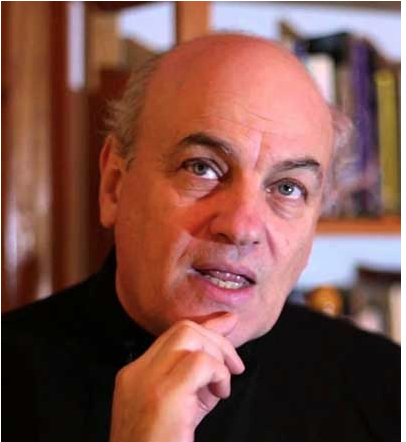
Raúl Zibechi (born January 25, 1952, in Montevideo, Uruguay) is a radio and print journalist, writer, researcher, militant, and political theorist. Between 1969-1973, as a student, he was a militant of the Frente Estudiantil Revolucionario (FER). In the '80s he began to publish in left newspapers and magazines. He focuses on social movements in Latin America and their relationships. As a popular educator he conducts workshops with social groups, particularly in urban peripheries and with peasants. He has published 18 books, almost all about concrete experiences of social movements. Three of his books have been translated into English: Dispersing power, Territories in resistance and The New Brazil (AK Press). He publishes regularly in La Jornada (Mexico), Gara (Spain) and other alternative media.
ZNetwork is funded solely through the generosity of its readers.
Donate




