


The caged bird sings with a fearful trill
from Maya Angelou poem, I Know Why the Caged Bird Sings
Of things unknown but longed for still
And his tune is heard on the distant hill for
The caged bird sings of freedom.
Thinking about what I would write in this column about the importance of group singing for a mass people’s movement I somehow remembered this Maya Angelou poem, this poem about singing at a time of adversity.
One of the first times I ever sang out loud outside of a church or school setting was when, at the age of 20, I was literally “caged,” in a cell in the Monroe County Jail in Rochester, NY. I had just been arrested with seven others for a nonviolent, “Catholic Left” action in 1970, spending five hours inside a Federal Building in the FBI, Selective Service and US Attorney’s offices. We cut up draft files and looked for incriminating FBI files [they were paper back then, not electronic] as a nonviolent protest against both the Vietnam War and the J. Edgar Hoover/FBI-led government repression of many of the organizations working for peace, racial justice and women’s rights.
I remember how I felt inside that Rochester jail cell: very scared, very aware that I could end up spending a long time in prison. My response to that deep fear was to sing. And as I did so it was strengthening to hear others arrested with me calling out words of support.
Singing can be a very special thing, especially within mass movements for positive, progressive change. Here’s something Bruce Hartford wrote in his excellent book, Troublemaker, about the role of singing in the 1960s Black Freedom movement:
The songs spread our message,
The songs bonded us together,
The songs elevated our courage,
The songs shielded us from hate,
The songs forged our discipline,
The songs protected us from danger,
And it was the songs that kept us sane.
Hartford wrote this about one of those experiences:
I so vividly remember those night marches during the school crisis when white mobs filled the outer perimeter of the square. As we marched around the green singing with every ounce of energy and passion we could muster we had to circle again, and again, and again, past that one spot where they were most intensely trying to break into our line. Most of the time they couldn’t do it. They simply couldn’t do it. In some way I can’t explain our singing and our sense of solidarity created a kind of psychological barrier between us and them, a wall of moral strength that they couldn’t physically push through to attack us with their clubs and chains, as they so obviously wanted to do.
p. 347
25 years ago my wife, son and I moved from Brooklyn, NY to Bloomfield, NJ. I soon began seeing and hearing at various activist protests a group called the Solidarity Singers, an all-volunteer group which sang at demonstrations, meetings, conferences, anywhere they were asked to sing. They sang songs with melodies drawn from the civil rights and labor movements but with words appropriate to the particular issue at that time. About 10 years ago, after retiring from paid employment, I became an increasingly active member of this group to the point where today I consider it to be one of my main areas of activist work in New Jersey.
There is no question that the existence and persistence of this group has made a difference in building a stronger, multi-issue, activist progressive movement in New Jersey.
James Connolly, the famous Irish labor, socialist and independence leader, also a women’s rights supporter, understood the importance of singing. In the introduction to Revolutionary Songs, published in Dublin in 1907, he wrote this:
No revolutionary movement is complete without its poetical expression. If such a movement has caught hold of the imagination of the masses they will seek a vent in song for the aspirations, the fears and the hopes, the loves and the hatreds engendered by the struggle. Until the movement is marked by the joyous, defiant, singing of revolutionary songs, it lacks one of the most distinctive marks of a popular revolutionary movement, it is the dogma of a few, and not the faith of the multitudes.
To defeat Trump, Musk and MAGA and advance towards a very different future than what they and the billionaire/fossil fuel class want, it will take multitudes, multitudes lifting our voices together in defiance and in song.
As we saw yesterday with tens of thousands of people protesting in a coordinated way in all 50 states, and as we will continue to see in multiplying and growing acts of resistance going forward, we won’t go back! Let’s go forward singing!

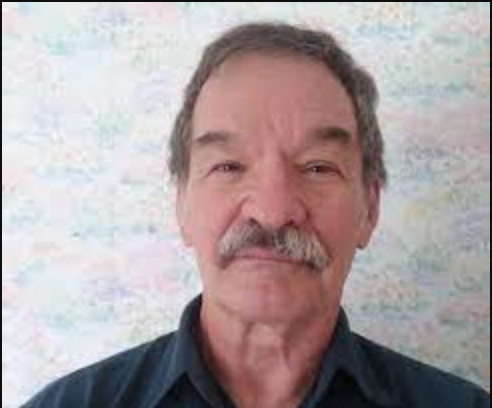
Ted Glick has devoted his life to the progressive social change movement. After a year of student activism as a sophomore at Grinnell College in Iowa, he left college in 1969 to work full time against the Vietnam War. As a Selective Service draft resister, he spent 11 months in prison. In 1973, he co-founded the National Committee to Impeach Nixon and worked as a national coordinator on grassroots street actions around the country, keeping the heat on Nixon until his August 1974 resignation. Since late 2003, Ted has played a national leadership role in the effort to stabilize our climate and for a renewable energy revolution. He was a co-founder in 2004 of the Climate Crisis Coalition and in 2005 coordinated the USA Join the World effort leading up to December actions during the United Nations Climate Change conference in Montreal. In May 2006, he began working with the Chesapeake Climate Action Network and was CCAN National Campaign Coordinator until his retirement in October 2015. He is a co-founder (2014) and one of the leaders of the group Beyond Extreme Energy. He is President of the group 350NJ/Rockland, on the steering committee of the DivestNJ Coalition and on the leadership group of the Climate Reality Check network.
ZNetwork is funded solely through the generosity of its readers.
Donate




