


“It’s really important that the bloc of white people—and whiteness as a project—has been falling apart. White folks who have been moved—by the Movement for Black Lives, the recession, the pandemic, the climate crisis—are looking at white people on the other side of the political divide, and saying, ‘I am less like you than I am like a Black person.’ That is a meaningful thing that our movements are accomplishing, and in my read, for the first time in the history of this country we have the cultural, social, material, and economic conditions to actually break apart whiteness as the majority-bloc. The opportunities for us to transform what’s going on in this country are really powerful.”
-Sendolo Diaminah, of the Carolina Federation, in the book Power Concedes Nothing: How Grassroots Organizing Wins Elections
For months, as Joe Biden’s polling numbers have come down and stayed down in the low 40’s, the outlook for the Democrats maintaining a majority in the House and getting a majority in the Senate come election day November 8 has not been good. Biden’s unpopularity, due in large part to Manchin and Sinema’s killing of Build Back Better legislation in the Senate, has been a definite drag. But there are signs that things are changing.
A poll by CBS/You Gov that came out this week reported that the Supreme Court’s decision to overturn Roe vs. Wade has motivated left of center voters. 50% of Democrats said that this decision motivates them to come out and vote, as compared to only 20% of Republicans. This is no small thing given the crucial importance of voter turnout to the winning of elections.
More significantly, an NPR/PBS News Hour/Marist poll also out this week reported that in just two months there has been a turnaround as far as voter party preference. Right now, “48% say they are more likely to vote for a Democratic candidate in the fall and 41% more likely to vote for a Republican. In April, Republicans led on that question in the poll 47% to 44%.”
The Roe Vs. Wade decision is not the only reason, I believe, for this shift. Also involved is the impact of the public hearings of the House Select Committee to Investigate the January 6 Attack on the US Capitol. Not all but a good number of these hearings have been carried by Fox News, it should be noted. The continuing series of revelations, mainly by former Trump Administration figures, of the blatant criminality of Mafioso Trump in his efforts to take power have got to be demoralizing for more than a few Trump supporters, which in turn is likely to suppress Republican voter turnout on November 8.
But as the saying goes, polls don’t vote, people do. And that’s why the recently published book, Power Concedes Nothing: How Grassroots Organizing Wins Elections, is such a timely, valuable source to inspire and educate those of us on the progressive side of the political divide, those of us who must rise to the occasion in the fall of 2022 as we did in 2018 and 2020. As Bill Fletcher, Jr. has written, “An effective electoral strategy and practice—one that is carried out at scale and makes our base communities stronger and more connected—is absolutely essential for building a powerful US left. By providing a detailed accounting and in-depth analysis of progressive electoral engagement in 2020, Power Concedes Nothing makes a huge contribution to getting us there.”
The book is comprehensive. There are 22 chapters grouped into five sections: Building Progressive Power in the States, Communities of Color Drive the Win, Workers on the Doors [Canvassing], Bernie, Democratic Socialism and the Primary Battles, and Mobilizing Voters Across the Country.
A major strength of the book is the first section, one third of the pages, which carries articles about the experiences and tactics used in 2020 by independent progressives in Georgia, Michigan, Arizona, Virginia, Florida, Pennsylvania and California. Held in common by all of these organizing efforts is the importance of door to door, in person outreach, or, less effective, phone outreach when the pandemic required it.
Art Reyes III and Eli Day of We the People Michigan wrote of what they learned: “We learned that state power infrastructure matters in the fight to reshape our country. We also learned that multiracial organizing against authoritarian forces is possible even in one of the most segregated states—but only if we are intentional about campaign structure, deliberate about state strategy, explicit about race, diligent in preparing more than the right, and clear that we must build trust early before the stakes are high. These lessons [are] important for anyone looking to stave off future attacks on our fragile democracy, and those building movements to expand and deepen it.”
How they worked together was critical: “We had simple but clear agreements: we would approach the work with joy; we would treat core team meetings as sacred; we would have agendas for every meeting; we would engage, challenge and push each other with respect and love; we would assume best intentions but acknowledge the impact of our action; we wouldn’t let things fester; we would hold ourselves accountable to maintaining anti-racist values; we would be transparent with each other and we would trust the group.”
There is so much more in this book of immediate and long-term value. If you want fuel for the coming next few months of all-hands-on-deck organizing to defeat those who are such a threat to so many people and to life itself on this planet, get and read Power Concedes Nothing.
Ted Glick is an organizer with Beyond Extreme Energy, President of 350NJ-Rockland and author of the recently published books, Burglar for Peace and 21st Century Revolution. More info can be found at https://tedglick.com, and he can be followed on Twitter at https://twitter.com/jtglick.

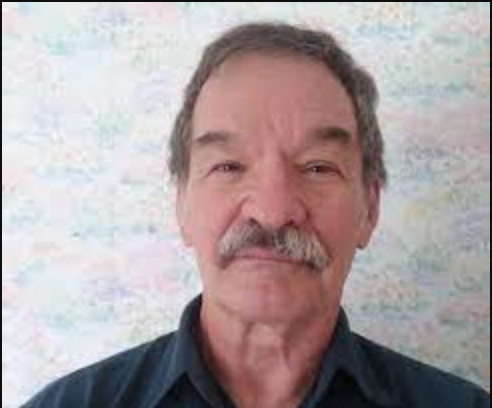
Ted Glick has devoted his life to the progressive social change movement. After a year of student activism as a sophomore at Grinnell College in Iowa, he left college in 1969 to work full time against the Vietnam War. As a Selective Service draft resister, he spent 11 months in prison. In 1973, he co-founded the National Committee to Impeach Nixon and worked as a national coordinator on grassroots street actions around the country, keeping the heat on Nixon until his August 1974 resignation. Since late 2003, Ted has played a national leadership role in the effort to stabilize our climate and for a renewable energy revolution. He was a co-founder in 2004 of the Climate Crisis Coalition and in 2005 coordinated the USA Join the World effort leading up to December actions during the United Nations Climate Change conference in Montreal. In May 2006, he began working with the Chesapeake Climate Action Network and was CCAN National Campaign Coordinator until his retirement in October 2015. He is a co-founder (2014) and one of the leaders of the group Beyond Extreme Energy. He is President of the group 350NJ/Rockland, on the steering committee of the DivestNJ Coalition and on the leadership group of the Climate Reality Check network.
ZNetwork is funded solely through the generosity of its readers.
Donate




