


They told us Hamas is a bloodthirsty gang. They told us there was no one to negotiate with. They told us that Israeli military intelligence was the best in the world and that we know everything there is to know about that cruel gang (but not where Gilad Shalit was being held). And lo and behold, the most right-wing government in the country’s history conducted serious negotiations with this fundamentalist gang and came to a serious agreement with it. And if that’s not enough, it turns out the “gang” kept its word.
But let’s not get too excited. Israel can be counted on not to shake things up as a result of the Shalit deal in how it relates to Hamas. The sea remains the same, the Arabs remain the same, and Hamas remains the same in the eyes of Israel (and the United States) even after the agreement.
Israel can be counted on not to change a thing in its way of thinking, because even in the midst of the prisoner deal, efforts at brainwashing and sowing fear along with demonization and dehumanization continued in all their strength and ugliness. All 1,027 of the prisoners are to be seen as human monsters and the release of every one of them, including 82-year-old Sami Younis, constitutes a walking danger.
· Any effort to understand the joy of the families of the released Palestinian prisoners, some after decades in jail, is encountered with derision and flashes of nationalistic hatred. Only Shalit has a family and the only joy is in Israel. Every television anchor ran off at the mouth with obscenities at the sight of the celebrations in Gaza. Just imagine what would have happened if even one announcer tried to state the opposite: that maybe it was good that, for the first time, there was joy in both Gaza and in Shalit’s community of Mitzpeh Hila.
Anyone who tried to argue that both sides have blood on their hands, and that there were those Palestinian prisoners who were sentenced to cruel and totally disproportionate jail terms, was pilloried. Or that their prison conditions were unbearably harsh, without furloughs or even one phone call over a period of decades and sometimes without family visits for years. That in Israel you can murder seven Palestinians and get frequent furloughs. Or set up a Jewish terror underground and get out in a flash. Or smash the skulls of bound and shackled terrorists and be granted a pardon without a trial. In this same county where the rule of law prevails, someone who transported a terrorist to his attack must sit in jail for life, while someone who kills a Palestinian is sometimes even spared a trial.
All 1,027 prisoners in the Shalit deal are “murderers.” Have you ever heard about a “Jewish murderer?” Ami Popper, for example, who killed seven Arabs waiting on a corner in 1990? Yoram Skolnick isn’t a “murderer.” He murdered a shackled Palestinian and was released after less than eight years in prison. An Israeli Arab, Karim Younis, who provided transportation to Maher Younis who in turn killed a soldier, has been sitting in jail for 29 years without a single furlough, without a single phone call, even without any reduction in his sentence. Similarly Israeli Arab Walid Daka isn’t even allowed conjugal visits with his wife. But who would dare mention these things amid the wave of self-adulation?
Our hearts have gone out to the feelings of the bereaved families whose loved ones were murdered by terrorists released in the Shalit prisoner exchange. But what about the bereaved Palestinian families whose loved ones were murdered by Israelis, who either never stood trial or served ridiculously short prison terms? How should they feel? Don’t even raise the question.
Amid the outpouring of joy in Israel, which is understandable and justified, it would have been possible to take a humane look at the other side, too, even if for a moment. There are human beings there, too, including some of the prisoners and their families, who have feelings and rights. It would have been appropriate if some of the prisoners were never released from prison, but there are also those who should have been let go long ago, if only equality had prevailed in the Israeli justice system.
Also if only wisdom had prevailed, because then the prisoner exchange should have become a means to change the atmosphere. What would have happened if the group of women prisoners who were erroneously not included in the deal had been set free? And what would have happened if prominent Palestinian prisoners Marwan Barghouti and Ahmed Sa’adat had also been released, in a gesture to the moderate camp? And what can Israel tell those now calling for other Israeli soldiers to be abducted? That the prospect exists that Palestinians serving life terms could be set free by other means?
Anyone who raises these thorny questions meets the same response. We have only one single, irreplaceable truth.

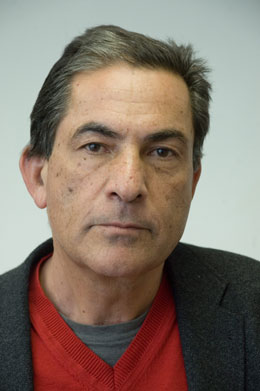
Gideon Levy is a Haaretz columnist and a member of the newspaper's editorial board. Levy joined Haaretz in 1982, and spent four years as the newspaper's deputy editor. He is the author of the weekly Twilight Zone feature, which covers the Israeli occupation in the West Bank and Gaza over the last 25 years, as well as the writer of political editorials for the newspaper. Levy was the recipient of the Euro-Med Journalist Prize for 2008; the Leipzig Freedom Prize in 2001; the Israeli Journalists’ Union Prize in 1997; and The Association of Human Rights in Israel Award for 1996. His new book, The Punishment of Gaza, has just been published by Verso Publishing House in London and New York.
ZNetwork is funded solely through the generosity of its readers.
Donate




