


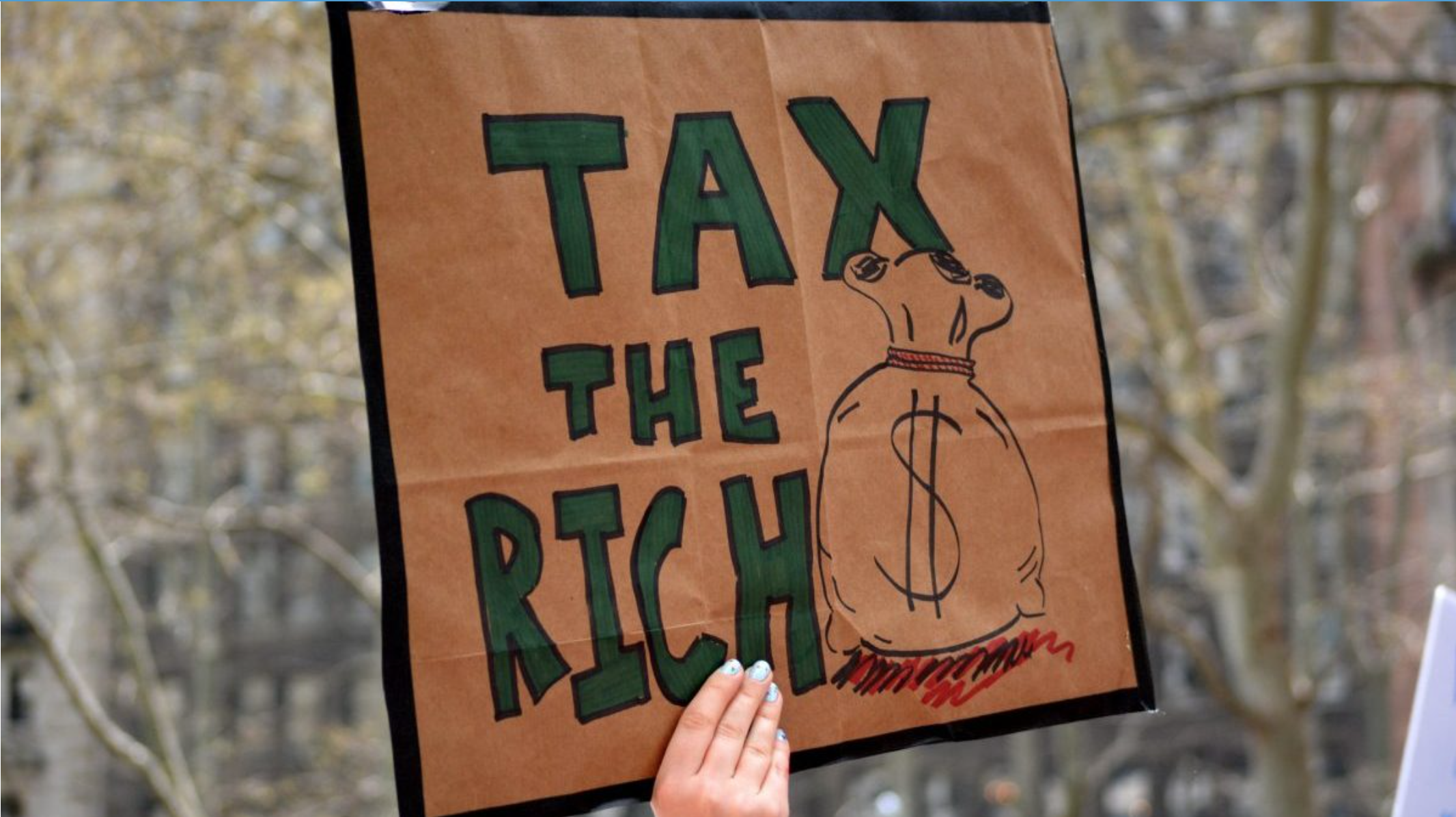
Back in 1974, almost a half-century ago, any ordinary income over $200,000 — the equivalent of just over $1.2 million today — faced a 70 percent federal tax rate. A deep pocket today faces just a 37 percent top rate at that same level. The impact of this striking plummet? Households in America’s richest 0.01 percent have since 1974 more than quadrupled their share of our nation’s wealth.
But that stat doesn’t do anywhere near full justice to the abject failure of our contemporary federal tax system. We’re not just taxing our richest at significantly lower rates. We’re letting huge chunks of the dollars our wealthiest pocket go totally untaxed. Our wealthiest are simply not reporting all their income, and the IRS simply doesn’t have nearly enough staff to find the income the rich are hiding.
Some numbers, courtesy of a just-published Wall Street Journal analysis: Back in 1974, the IRS had a staff about 84,000 strong. The sheer size of the U.S. economy, ever since then, has quadrupled, and the overall population of the United States has jumped by 120 million people. Yet the IRS — after suffering years of budget cuts — has no more staff today than the agency had back in 1974.
America’s rich and the corporations they run like things this way. Almost all “complex and opaque” business tax returns now go unexamined, the Journal notes, and audits of mega-millionaires and billionaires have gone “tumbling” by 80 to 90 percent.
That “tumbling” began during the Ronald Reagan years, and Republicans have kept up the defund-the-IRS pressure ever since. Their current target: the $80 billion in new funding — over the next ten years — that the Inflation Reduction Act enacted last year has earmarked for re-energizing how the IRS operates.
This past January, Republicans took over control of the U.S. House of Representatives. The first bill this new GOP majority passed eliminates most of that $80 billion, under the bogus rationale that the IRS will be using this new cash infusion “to target American working-class families.”
In fact, under a directive from U.S. treasury secretary Janet Yellen, the IRS will not use any of the new funding enacted last year to up audit rates in taxpayers making less than $400,000 a year. The nation’s tax agency, IRS commissioner Daniel Werfel has added, will focus “on enhancing the IRS’ capabilities to ensure that America’s highest earners comply with applicable tax laws.”
How much new revenue could that focus collect? The IRS last October put the overall “tax gap” at $496 billion but cautioned that “the tax gap estimates cannot fully account for all types of evasion.” So we just don’t know exactly how much in taxes our richest are evading.
We do know that in 2019 — the most recent year with data available — only 0.4 percent of taxpayers with reported incomes over $500,000 ended up getting audited.
Two years ago, analysts at ProPublica took a crack at dramatizing just how colossally little the richest among us pay in taxes. Over the five-year stretch that led up to 2019, these analysts noted, our nation’s 25 richest paid a mere $13.6 billion in federal income taxes. Over those same years, our top 25 fortunes grew by $401 billion. Our richest paid, in effect, what “amounts to a true tax rate of only 3.4 percent.”
Subjecting the wealthiest among us to serious audits would certainly help raise that true tax rate. But those among our wealthiest who belong to the Patriotic Millionaires fair-tax group believe we need to do much more than up the rate for audits on our richest. Earlier this week, meeting in Washington, D.C., activists with Patriotic Millionaires unveiled a bold new gameplan — Crack the Code — for thoroughly overhauling how we treat the rich at tax time.
“Money is money is money, whether it comes in through birth into the right family, an investment gain, or a paycheck,” Crack the Code explains, and “should all be taxed at the same rates” at upper income levels. That means everything from taxing capital gains and ordinary income at identical tax rates to replacing the estate tax with an income tax on inheritances equal to the same rate imposed on other types of income, subject to a $1 million exclusion per person.
And how high should the tax rate on high incomes go? Our tax code, Patriotic Millionaires believes, ought to give every American a full “cost of living” exemption from income tax and then impose above that basic cost-of-living benchmark “progressively higher marginal rates of tax” that rise all the way up to 90 percent on annual income over $100 million.
To complete the tax picture, Crack the Code calls for a special new tax to “constrain undue wealth concentration.” Grand fortunes from 1,000 to 1,000,000 times the nation’s median household wealth, Patriotic Millionaires believes, should face an annual wealth tax that ranges from 2 to 8 percent.
“If our economy and our democracy are to survive, we must fundamentally reimagine our tax code,” sums up the Patriotic Millionaires gameplan. “For our future, our grandchildren’s future, and our country’s future, we must tax the rich.”
Sam Pizzigati co-edits Inequality.org. His latest books include The Case for a Maximum Wage and The Rich Don’t Always Win: The Forgotten Triumph over Plutocracy that Created the American Middle Class, 1900-1970. Twitter: @Too_Much_Online.


Sam Pizzigati, an associate fellow at the Institute for Policy Studies, has written widely on income and wealth concentration, with op-eds and articles in publications ranging from the New York Times to Le Monde Diplomatique. He co-edits Inequality.org Among his books: The Rich Don’t Always Win: The Forgotten Triumph over Plutocracy that Created the American Middle Class, 1900-1970 (Seven Stories Press). His latest book: The Case for a Maximum Wage (Polity). A veteran labor movement journalist, Pizzigati spent 20 years directing publishing at America’s largest union, the 3.2 million-member National Education Association.
ZNetwork is funded solely through the generosity of its readers.
Donate




