


On May 12, 2018, Muqtada al-Sadr’s list unexpectedly won a plurality in the Iraqi legislative elections. This event shook up the entire political situation in the Middle East. It was greeted in other countries with expressions both of surprise and of dismay – notably in the unusual parallel reactions of the United States, Saudi Arabia, and Iran.
Yet, there was no good reason to be surprised and even less to be dismayed. Muqtada al-Sadr’s victory should have been no real surprise, since it was long in the making. There was even less reason to be dismayed, at least by anyone who wished to see a progressive outcome of the political turmoil in the region. Some of the reactions were amazing. Time magazine even made the bizarre suggestion that Muqtada al-Sadr was Iraq’s “version of Trump.”
The last time I discussed the Iraqi political situation was in my commentary of July 4, 2017, which I entitled “The Two Competing Middle-Run Scenarios for Iraq.” In it, I argued that the expansion of the Islamic State [IS], which was then at its apex, was bound to reach its limits. At that point, the question before Iraq would be to choose between two radically different roads to take in a post-IS situation. We have now reached that moment.
One road was the road of pseudo-ethnic separation (either de facto or de jure) into three states: a “Shi’ite” state located in the center and southeast, a “Kurdish” state in the northeast, and a “Sunni” state in the west. I put each of these names in quotes because, of course, each such region would in reality be multi-ethnic despite accelerated ethnic purging, albeit one dominated by one group.
This kind of division of one state into three has, in the past, transformed a relatively wealthy and powerful state into a much poorer and geopolitically much weaker zone. We have the recent notable examples of Yugoslavia and Libya to see how this scenario plays out. We can easily understand why the United States and western European states might find this outcome desirable. It might also attract pseudo-ethnic leaders in the three zones.
The alternative road, which Muqtada al-Sadr has long been advocating quite forcefully, would be to create an alliance of groups in all three pseudo-ethnic regions, as well as secular pan-Iraqi forces. The last refers particularly to the Iraqi Communist Party, which historically had a significant organizational base despite serious repression. The unifying policy of this alliance was to be Iraqi nationalism. Its program would be directed primarily against the United States and other “imperialist” powers. It would be directed secondarily against Iranian pretensions to control an Iraqi Shi’ite-dominated government, based on the religious primacy of Iran’s Ayatollah Khamenei and his successors to come.
The primary opposition to the United States had been continuous since the U.S. invasion in 2003, against which Muqtada al-Sadr fiercely fought. It is the relationship with Iran that is more complicated.
The Shi’ite community in Iraq is deeply split in three different and not totally overlapping ways. The first of these might be termed the existence of two rival clans. Since these clans trace their genealogy far back and still exist, it is easiest to define them by two of their most famous leaders.
One is the Grand Ayatollah Mohammad Mohammad Sadeqh al-Sadr. He was Iraqi by nationality and his organizational base was in Baghdad. After the end of the Gulf war, he pursued rebellious activities against Saddam Hussein and his secularist policies. He was assassinated in 1999, most people believe by agents of Saddam Hussein, who denied this. Muqtada al-Sadr is his son.
The other clan was led at that time, and still is today, by Grand Ayatollah Ali al-Sistani, Iranian by nationality, but resident in Najaf, where he is the leading cleric in the religiously very important Imam Ali Mosque. Ali al-Sistani had less hostile relations with Saddam Hussein, and close ties to the collectivity of clerics in Qom in Iran.
A second cleavage is that of class. The clan of Sadeqh al-Sadr was especially strong in those parts of Baghdad (and elsewhere) in which the poorest Shi’ites lived. He championed their demands for a better allocation of material rewards, as opposed to the more middle-class locales, which tended to support Ali al-Sistani.
The third cleavage, less mentioned at present but always present, is the competition between Najaf in Iraq and Qom in Iran. Najaf has arguably the better claim to Shi’ite religious primacy for Shi’ites as the location of the tomb of Ali. However, the Iranian revolution has resulted in the strengthening of the claims of Qom to primacy.
There is a contradiction between Ali al-Sistani’s control of the Imam Ali Mosque and his close links with, some would say subordination to, the clerics in Qom. The Sadrist victory in the elections was the pay-off for his coalition. His list obtained more votes than the list of Ali al-Sistani, despite Iranian support. The list of the present Prime Minister, Haider al-Abadi, supported by the United States, came in third.
We will have to see whether Muqtada al-Sadr will be able to sustain this level of support in the next few years. He can expect a very vigorous effort by both Iran and the United States to undermine him. On the other hand, to be the bearer of the nationalist standard in a country that has such economic and cultural difficulties is a very powerful political stance.

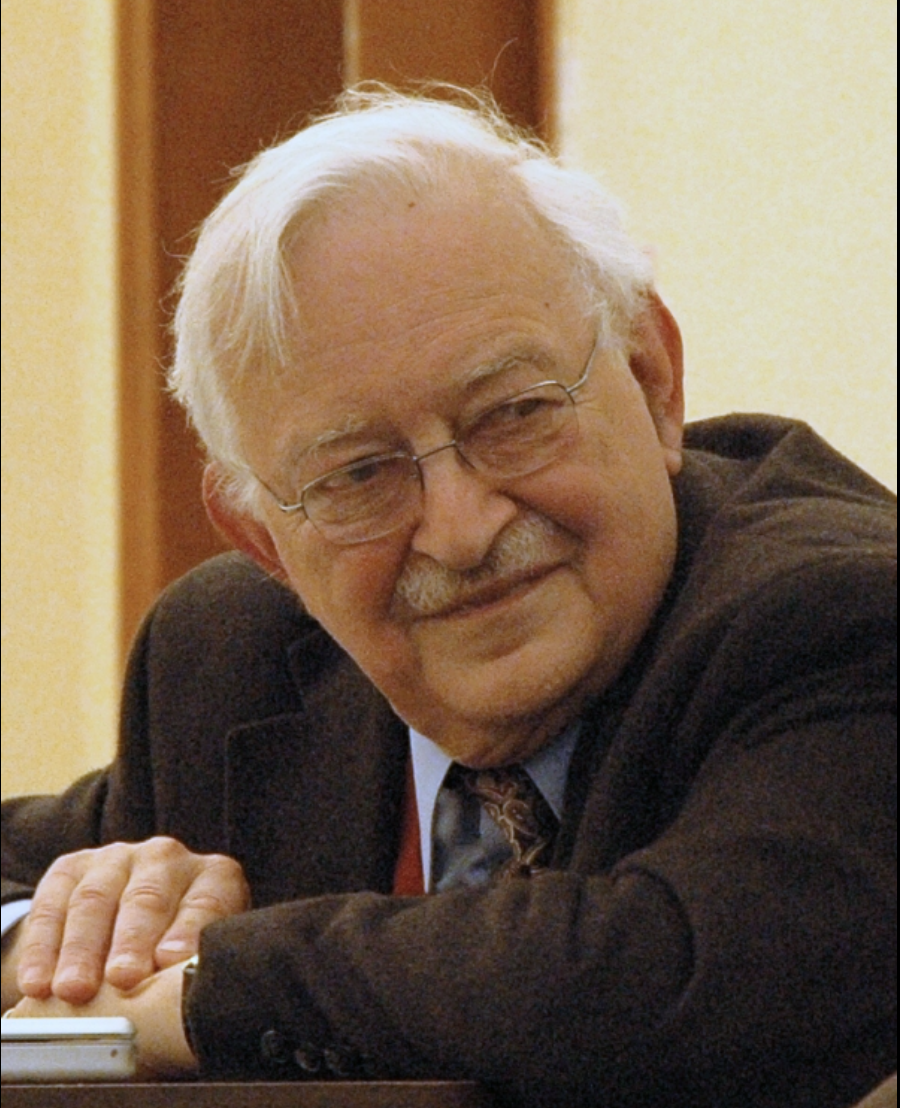
Immanuel Wallerstein (September 28, 1930 – August 31, 2019) was an American sociologist and economic historian. He is perhaps best known for his development of the general approach in sociology which led to the emergence of his world-systems approach. He was a Senior Research Scholar at Yale University from 2000 until his death in 2019, and published bimonthly syndicated commentaries through Agence Global on world affairs from October 1998 to July 2019. He was the 13th president of International Sociological Association (1994–1998). Politically, he considered himself on the "independent left" and was active in a variety of organizations. He argued that we are in the transition from our existing capitalist world-economy to some new system, and that the great political struggle of our time is about which new kind of systemic order will replace our existing one. A new systemic order could be better or worse, depending on our collective ability to push the worldwide decision in one direction or another. He believed that a crucial element in this is a vast debate about the kind of better system we wish to build, and saw the Reimagining Society Project as one of the ways to further this collective debate.
ZNetwork is funded solely through the generosity of its readers.
Donate




