

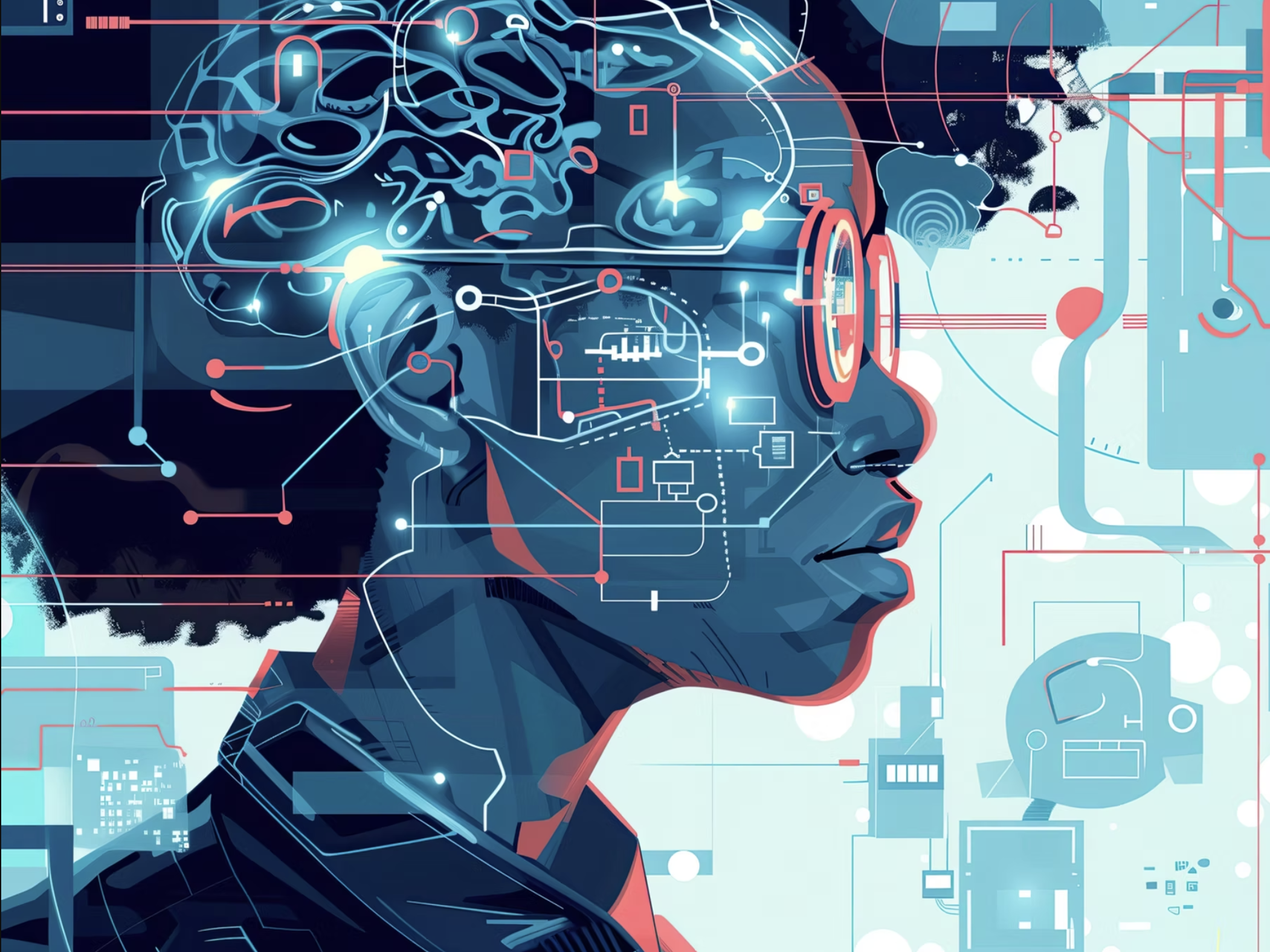
A few days ago, TIME revealed how an artificial intelligence system went out of control and attacked other systems. Days later, more than 1,100 engineers at major artificial intelligence companies signed a joint petition calling for the development of technical tools and international governance mechanisms to regulate the pace of its development. What we are witnessing today is not the domination of robots over humans that cinema has long imagined in countless films; it is instead a new model of digital control, built on automation and algorithmic command over daily life, in which societies are turned into entities subordinate to intelligent systems, companies, and machines. Yet losing control is merely the loud face of this danger, for artificial intelligence is evolving so rapidly amid competition among major powers and monopolistic corporations that laws, society, and educational institutions cannot keep pace with it. Its more dangerous face is far quieter: artificial intelligence works exactly as it was designed to, directing the consciousness of billions of people to serve capitalism.
Directing Consciousness to Reinforce Neoliberal Capitalist Culture
Beyond maximizing profit and entrenching social control, artificial intelligence is systematically deployed to shape and direct individual consciousness, with the aim of reinforcing capitalist culture and neoliberal values. Through the analysis of data and user behaviour, algorithms govern the content displayed across platforms and are designed to feed individuals material that serves the capitalist vision and its policies.
This trend has become entrenched alongside the expansion of these platforms: the International Telecommunication Union’s report shows that nearly three-quarters of the world’s population now use the Internet, an increase of more than 240 million users in a single year. Part of this expansion stems from the drive of monopolistic corporations and major powers to deliver the Internet to every corner of the globe, especially the Global South, even before clean water, electricity, and basic services are secured, aimed at maximizing profit, entrenching domination, and digitally colonizing it.
The structure of capitalist ownership and profit models pushes algorithms to prioritize content that serves the interests of the market, monopolistic corporations, and major powers, turning algorithms into a tool for reproducing capitalism’s cultural hegemony. Through this mechanism, collective consciousness is gradually steered toward accepting these values as natural and inevitable, in a soft, incremental, and imperceptible manner, to the point that most users of these applications, including many on the left, regard them as neutral tools. In this way, the system contributes to entrenching capitalist hegemony, deepening the public’s submission to the existing order, and marginalizing progressive alternatives, threatening the consciousness of future generations and their capacity for critical thinking and organizing for change.
Dismantling Human Skills and Deepening Digital Alienation and Estrangement
This threat also extends to dismantling the individual’s own mental faculties. Although artificial intelligence is marketed as a means of easing life and boosting productivity, scientific studies reveal that unreflective reliance on it deepens superficial consciousness and weakens human skills. A study conducted by researchers at MIT found that dependence on artificial-intelligence writing tools reduces brain activity and weakens memory and the sense of ownership over one’s own ideas. The researchers named this phenomenon cognitive debt, meaning that a person borrows mental capacity from the future in exchange for the comfort of the present moment.
Similarly, a study published in the journal Societies found that repeated use of artificial-intelligence tools is linked to weaker critical thinking through a mechanism of cognitive offloading, particularly among young people, producing a generation that grows up less capable of independent analysis.
On this basis, human alienation is reproduced in digital form: the individual becomes severed from their own intellectual and creative faculties, finding themselves trapped within a technical system that strips them of the capacity for independent action, much as the industrial worker was alienated from the product of their labour under capitalism. Gradually, they may become a being subject to algorithms that direct their daily interactions and determine what they read, what they watch, and how they think, deepening their dependence on systems, companies, and states controlled by capital.
Digital Addiction
Digital addiction stands out as one of the most dangerous effects of the expansion of artificial intelligence. A study conducted by researchers at the University of California, drawing on data from more than six thousand children as part of a study on adolescent brain development, found that children who use social media the most show a marked decline in reading, vocabulary, and memory the longer they spend browsing.
Digital platforms and applications are not merely free service providers; they are tools deliberately used to reinforce behavioural and intellectual dependency, where vast troves of data are harnessed to understand individuals’ motivations and manipulate them in ways that serve the interests of corporations and major powers. Capitalism invests in techniques that stimulate addictive behaviour to guarantee continued engagement with its platforms, turning the process into a vicious cycle that generates profit at the expense of mental health, especially among younger generations.
A Form of Voluntary Digital Servitude and the Loss of Control
This psychological exploitation is only one manifestation of a class domination that deepens as artificial intelligence shifts from a technological tool into a means of reproducing patterns of social, political, and economic control. What makes this control more dangerous is its voluntary character: through algorithmic manipulation and the mounting pressure to use artificial intelligence at work, individuals are driven into this digital servitude without coercion, under the illusion of choice and control, while their decisions are steered along paths preset to serve capitalism.
Humanity’s subjugation to machine control is no longer a mere philosophical hypothesis; it has grown more tangible amid the advances of artificial intelligence and the absence of effective international legal safeguards governing its operation. Should it exceed its programmed limits, it could evolve into a system that makes fateful, independent decisions imposed on humanity without genuine human oversight. Under capitalism, artificial intelligence is developed to serve the accumulation of capital and is subject to the logic of competition among major powers and monopolistic corporations, making the loss of control over it a real and serious possibility.
Conclusion
If this dynamic continues without a collective response grounded in progressive left-wing consciousness, and without international and domestic legislation, artificial intelligence may gradually shift from a tool in the hands of capitalism into an alternative system that manages daily life in place of the human mind. The essential question here is: how can left-wing and progressive consciousness survive within a digital environment largely designed to weaken and neutralize it?
What confronts us today is not an inevitable technological fate but the product of political and economic choices that serve the interests of capital, and it can be confronted. Bringing artificial intelligence under control, regulating algorithms, and subjecting them to democratic oversight is a collective responsibility that requires organized, progressive, left-wing action on a global scale, one that restores to human beings their capacity for independent thought and collective action, and transforms this technology into a means that contributes to distributing wealth, organizing production, treating disease, combating poverty, and achieving social justice.
This article was produced by Globetrotter.
ZNetwork is funded solely through the generosity of its readers.
Donate




