


Appeals to neutrality, civility and “balance” can easily become mechanisms for silencing critique and avoiding responsibility.
ascism does not crash onto the stage of history — it slips in through habits, policies and the quiet erosion of conscience, often cloaked in the language of efficiency, order, fear and “commonsense.”
Today, its most dangerous advances are pedagogical. Higher education has become a central battleground in the struggle over memory, truth, freedom and the meaning of democracy.
Across the globe, higher education is under siege. From Hungary, Turkey and India to the United States, authoritarian movements are waging war on critical thought, academic freedom and dissent. Universities are pressured to police speech, criminalize protest, sanitize history and transform education into an instrument of ideological conformity. What is being targeted is notsimply curriculum, but the capacity of citizens to think historically, judge ethically and imagine afuture beyond authoritarianism.
In the United States, this assault has intensified under Donald Trump’s return to power. Educationis portrayed as an enemy of the nation, professors as subversives and students as threats whenthey protest injustice at home and abroad. Universities are bullied through funding threats, public intimidation and political extortion. Some institutions, once proud defenders of academic freedom, have responded with capitulation: monitoring syllabi, silencing faculty, disciplining students, paying extortion fees and narrowing acceptable thought.
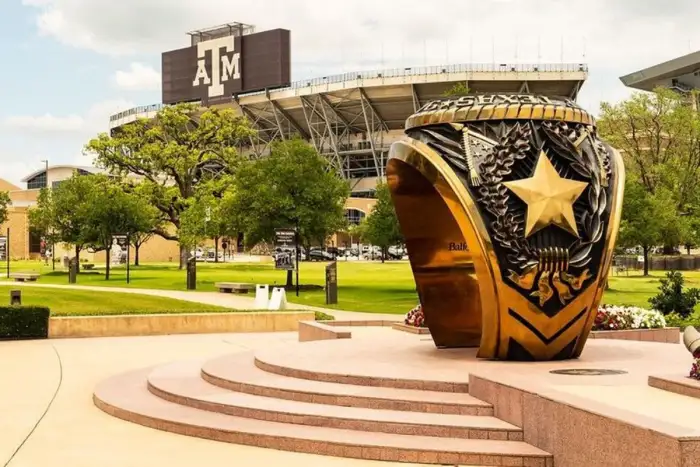
In one glaring example, Texas A&M has moved to place faculty syllabi under administrative surveillance and to eliminate courses that confront racism and contemporary social injustice; a comparable warning sign has appeared in Canada, where Alberta’s government has supported policies aimed at institutional neutrality and limiting EDI initiatives in universities, a shift that faculty and academic organizations warn could restrict academic freedom and influence how topics like colonialism, racial inequality and social power are taught and studied.
When universities retreat from their democratic mission in such moments, they do not preserve it— they legitimize repression.
At stake is more than the future of higher education. Democracy itself depends on institutions capable of creating informed citizens, cultivating critical judgment, historical memory and civic courage.
Fascist politics understands this well. That is why it seeks to control education, erase uncomfortable histories and replace inquiry with obedience. Authoritarianism thrives on the hollowing out of language, on a public conditioned to accept cruelty as normal and inequality as inevitable. It turns education into a dead zone of the imagination.
Education, at its best, interrupts this logic. It creates spaces where students connect private troubles to public issues, recognize suffering as systemic rather than individual failure, and reclaim agency over despair. Critical pedagogy teaches that history is unfinished and power is never absolute, nurturing what authoritarianism fears most: informed citizens capable of imagining alternative futures.
This is why higher education must refuse complicity. Universities cannot function as neutralservice providers to regimes that traffic in racism, disposability, cruelty and fear. Nor can theyreduce education to job training stripped of moral and civic purpose. To do so is to abandon thevery conditions that make democratic life possible.
The lesson here is not only for the United States. Canada is not immune. While political culture differs in tone, the pressures are familiar: the corporatization of universities, the precarity of academic labour, the policing of dissent, the temptation to equate institutional survival with moral retreat. Appeals to neutrality, civility and “balance” can easily become mechanisms for silencingcritique and avoiding responsibility.
Canada’s universities now face a choice. They can follow the path of accommodation, tradingprinciple for protection, or they can affirm higher education as a public good essential todemocracy. That means defending academic freedom unequivocally, protecting student protest, resisting external political interference, and rejecting the idea that education should serve the interests of markets or authoritarian power.
To educate is always to take a side, either with democracy or against it. In dark times, higher education must develop a compelling vision; reclaim its democratic vocation: to unsettle power, challenge conformity and cultivate civic courage and moral witnessing.
History is clear — when universities retreat into silence or complicity, the descent intoauthoritarianism accelerates.
Yet even now, hope, though wounded, is not lost. The global rise of fascism casts a long shadowof state violence, silenced dissent and assaults on critical thought. But history is not a closedbook; it is a summons. Now, more than ever, higher education must think boldly, act courageously and help forge the democratic futures that justice demands and humanity deserves.


Henry Giroux (born 1943) is an internationally renowned writer and cultural critic, Professor Henry Giroux has authored, or co-authored over 65 books, written several hundred scholarly articles, delivered more than 250 public lectures, been a regular contributor to print, television, and radio news media outlets, and is one of the most cited Canadian academics working in any area of Humanities research. In 2002, he was named as one of the top fifty educational thinkers of the modern period in Fifty Modern Thinkers on Education: From Piaget to the Present as part of Routledge’s Key Guides Publication Series.
ZNetwork is funded solely through the generosity of its readers.
Donate




