


Source: The Guardian
Evo Morales – President of Bolivia from the MAS party (Movimiento al Socialismo, Movement Towards Socialism) – was forced to resign on November 10, in what many observers view as a coup. In the wake of Morales’ resignation, there has been mounting chaos and violence. What is happening in Bolivia is highly undemocratic and we are witnessing some of the worst human rights violations at the hands of the military and the police since the transition to civilian government in the early 1980s. We condemn the violence in the strongest terms, and call on the US and other foreign governments to immediately cease to recognize and provide any support to this regime. We urge the media to do more to document the mounting human rights abuses being committed by the Bolivian state.
On November 10, Morales’ vice president and the heads of both chambers of Congress also resigned in the face of threats of violence against top MAS officials unless they left office. The pressure campaign included the burning of MAS officials’ houses and kidnapping of relatives. This paved the way for the ascension to the presidency of Jeanine Áñez (a conservative Roman Catholic opposition leader from northeastern Bolivia, widely accused of holding racist views) on Tuesday November 12.
The circumstances surrounding the rapid-fire resignations makes Áñez’s assumption of power highly questionable. There are serious doubts about the constitutional legitimacy of her succession. Without the forced resignations by MAS officials, Áñez would not have had even a minimally plausible constitutional path to the presidency, as she was serving as Vice-President of the Senate, a position that is not in the line of presidential succession within the constitution. Additionally, Áñez, whose party received only 4% of the vote in the most recent October 20 election, declared herself President in a Senate session lacking quorum, with MAS senators who make up the legislature’s majority boycotting partly due to fears for their physical safety.
Áñez represents the radical-right sector of the Bolivian opposition, which has taken advantage of the power vacuum created by Morales’ ouster to consolidate control over the state. Áñez appears to have full support of Bolivia’s military and police. Over the course of the last week the military and police have engaged in significant and increasing repression against protests, which have been largely, though not entirely, peaceful. By the night of November 13, La Paz and Cochabamba city center streets were empty of anyone but the police, military, and self-appointed neighborhood militias. There has been ongoing looting, burning of buildings, and violence on the streets and protesters have been met with much repression. In a highly disturbing move, Áñez issued an executive order on November 15 exempting the military from criminal responsibilities related to the use of force. Áñez has said Morales will face prosecution if he returns to Bolivia. And she has also floated the idea of banning the MAS party – which is undoubtedly still Bolivia’s largest and most popular political force – from participation in future elections.
Equally disturbing has been a resurgence of public anti-Indigenous racism over the course of the last week. Shortly after Áñez was declared President, she thrust a massive Bible into the air and proclaimed “The Bible has returned to the palace!” Three days earlier on the day of Morales’ ouster, Luis Fernando Camacho, a far-right Santa Cruz businessman and ally of Áñez, went to the presidential palace and knelt before a Bible placed on top of the Bolivian flag. A pastor accompanying him announced to the press, “The Pachamama will never return to the palace.” Opposition activists burned the wiphala flag (an important symbol of Indigenous identity) on various occasions. These are extremist views that threaten to reverse decades of gains in ethnic and cultural inclusion in Bolivia.
Despite increasing violence and repression, diverse social forces have been demonstrating around the country to condemn the government of Áñez. It is important to note that they include not only MAS supporters but also a broad swath of popular sectors that repudiate the rightwing seizure of the state. Thousands of largely unarmed protesters, mostly coca-leaf growers, gathered peacefully in Sacaba, a town in the department of Cochabamba, on the morning of November 15. After unsuccessful negotiations to march to the town square, protesters tried to cross a bridge into the city of Cochabamba, heavily guarded by police and military troops. Soldiers and police fired tear gas canisters and live bullets into the crowd. During the two-hour confrontation, nine protesters were shot dead, and at least 122 were wounded. Most of the dead and injured in Sacaba suffered bullet wounds. Guadalberto Lara, the director of the town’s Mexico Hospital, told the Associated Press it is the worst violence he has seen in his 30-year career. Families of the victims held a candlelight vigil late Friday in Sacaba. A tearful woman put her hand on a casket and asked, “Is this what you call democracy? Killing us as if we counted for nothing?”
We denounce the repressive state violence unfolding in Bolivia. We also voice our concern that the international media have not been able to effectively cover the human rights violations in Bolivia as they too have been met by the violence of the military. On November 15, an Al Jazeera journalist covering protests in La Paz was gassed by the police in the streets and could no longer hold her microphone or camera. Although she later backed down, Áñez’s new minister of communications told the press that the government will not tolerate “seditious” media. This environment, in which freedom of the press is not only not guaranteed, but threatened by the government, has resulted in an alarming lack of coverage of the gross human rights violations being committed by the armed forces against civilian unarmed protesters.
We are outraged by the Áñez regime’s violations of Bolivians’ political, civil, and human rights, and by the deplorable use of deadly violence that has led to a mounting death toll of protesters and countless serious injuries. We call upon the international community to immediately and publicly condemn these acts of violence. We ask international human rights bodies and organizations to impartially investigate and document the acts of violence committed by government agents. We demand that the international community ensure that this de facto regime, which is at best highly dubious and viewed by many as lacking any legitimacy, protect the lives of peaceful protesters, respect the rights of all to freedom of assembly and speech, and strictly abide by international norms on the use of force in situations of civilian violence. We demand that the US and other foreign governments cease all support to this regime and withhold international recognition until free and fair elections – including all political parties – are held, repressive violence ceases, and the fundamental human rights of all Bolivians are respected.
Signatory
Angela Davis, University of California Santa Cruz
Greg Grandin, Yale University
Molly Crabapple, Author and Artist
Javier Auyero, University of Texas, Austin
Sinclair Thomson, NYU
Brooke Larson, University of Stony Brook
Forrest Hylton, Universidad Nacional de Colombia-Medellín
William Robinson, University of California-Santa Barbara
Sujatha Fernandes, University of Sydney (Australia)
Gianpaolo Baiocchi, NYU
Steve Ellner, Universidad de Oriente (Venezuela)
Micah Uetricht, Jacobin
Shawn Gude, Jacobin
Alex Main, Center for Economic and Policy Research in Washington, DC.
John L. Hammond, Hunter College and Graduate Center, CUNY
Marc Edelman, Hunter College and Graduate Center, CUNY
Deborah Poole: Johns Hopkins University (Baltimore)
Judy Helmand, York University, Toronto, Canada
Susan Spronk, University of Ottawa
Mark Healey, University of Connecticut
Laura Enriquez, University of California, Berkeley
Daniel Aldana Cohen, University of Pennsylvania
John Lindsay-Poland, Global Exchange
Ben Dangl, University of Vermont
Nicole Fabricant, Towson University
Carwil Bjork-James, Vanderbilt University
Santiago Anria, Dickinson College
Gabriel Hetland, University at Albany, SUNY
Samuel Handlin, Swarthmore College
Christy Thornton, Johns Hopkins University
Thea Riofrancos, Providence College
Rebecca Tarlau, Penn State University
Andrew Orta, University of Illinois at Urbana-Champaign
David Bacon, independent journalist
Michelle Fine, The Graduate Center, CUNY
Emily Martin, Department of Anthropology, New York University
Doug Hertzler, Practicing Anthropologist
Bret Gustafson, Washington University, St. Louis
Donald Kingsbury, University of Toronto
Pierre M. LaRamee, Independent Scholar
Kirsten Weld, Harvard University
Joseph Nevins, Vassar College
Todd Miller, Independent Journalist
Penelope Anthias, Durham University, UK
Hester Eisenstein,Queens College and the Graduate Center
Hilary Goodfriend, Universidad Nacional Autónoma de México
Gerardo Renique, City College of New York, CUNY
Angus McNelly, Queen Mary University of London
Nell Haynes, Colby College
Nancy Romer, Brooklyn College, CUNY
Leith Mullings, Anthropology Graduate Center, City University of New York
Christine Folch, Duke University
Peter Ranis Graduate Center, CUNY
Premilla Nadasen, Professor of history, Barnard College
Emily Achtenberg, Independent Journalist
Marisol LeBrón, The University of Texas at Austin
Dan Beeton, Center for Economic and Policy Research
Andrea Marston, Rutgers University
Justice Emily Jane Goodman, New York State Supreme Court
and more …
- This open letter was signed over 850 public figures. For a full list of signatories, click here


Angela Yvonne Davis (born January 26, 1944) is an American political activist, philosopher, academic, scholar, and author. She is a professor at the University of California, Santa Cruz. A feminist and a Marxist, Davis was a longtime member of the Communist Party USA (CPUSA) and is a founding member of the Committees of Correspondence for Democracy and Socialism (CCDS). She is the author of more than ten books on class, gender, race, and the US prison system.
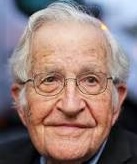
Noam Chomsky (born on December 7, 1928, in Philadelphia, Pennsylvania) is an American linguist, philosopher, cognitive scientist, historical essayist, social critic, and political activist. Sometimes called "the father of modern linguistics", Chomsky is also a major figure in analytic philosophy and one of the founders of the field of cognitive science. He is a Laureate Professor of Linguistics at the University of Arizona and an Institute Professor Emeritus at the Massachusetts Institute of Technology (MIT), and is the author of more than 150 books. He has written and lectured widely on linguistics, philosophy, intellectual history, contemporary issues, and particularly international affairs and U.S. foreign policy. Chomsky has been a writer for Z projects since their earliest inception, and is a tireless supporter of our operations.

John Richard Pilger (9 October 1939 – 30 December 2023) was an Australian journalist, writer, scholar, and documentary filmmaker. Based mostly in the UK since 1962, John Pilger has been an internationally influential investigative reporter, a strong critic of Australian, British and American foreign policy since his early reporting days in Vietnam, and has also condemned official treatment of Indigenous Australians. Twice winner of Britain’s Journalist of the Year Award, he has won many other awards for his documentaries on foreign affairs and culture. He was also a cherished ZFriend.

ZNetwork is funded solely through the generosity of its readers.
Donate




