


“And through conversations with others in the growing climate justice movement, I began to see all kinds of ways that climate change could become a catalyzing force for positive change—how it could be the best argument progressives have ever had. . . The urgency of the climate crisis could form the basis of a powerful mass movement, one that would weave all these seemingly disparate issues into a coherent narrative about how to protect humanity from the ravages of both a savagely unjust economic system and a destabilized climate system.”
-Naomi Klein, “This Changes Everything”
The reaction to the horrific ISIS terrorist bombings in Paris have brought back memories of what happened after the Al Qaeda terrorist actions in the United States on September 11th, 2001. Now, as was true then, there are calls for further militarization not just to defeat ISIS but “terrorism” or “radical Islam,” for a restriction of civil liberties so as to better locate ISIS members or supposed sympathizers, and for anti-Islamic actions in general.
A very immediate front in the battle to prevent the use of the Paris bombings for these regressive purposes is the series of activities being organized by the international climate movement from November 29 to December 12 during the UN Climate Conference in Paris. As this is being written, it is uncertain what the stance of the French government will be toward those actions.
Tim DeChristopher has put this situation in its proper context (http://www.timdechristopher.org/don_t_back_down):
“This attempt to keep the movement out of the streets is coming at a time when the people power of the climate movement is actually winning against the entrenched monied power of the fossil fuel industry. The last few weeks have been unprecedented in the history of the US climate movement. The unrelenting #ShellNo campaign convinced Shell to give up on their attempt to drill in the Arctic. The northern leg of the Keystone XL pipeline was vetoed in the face of a huge resistance campaign. A real climate bill that would keep fossil fuels in the ground has been introduced in the Senate. Exxon has been subpoenaed for lying about climate change, the Port Ambrose liquified natural gas export facility was vetoed, and late last night the Bureau of Land Management cancelled an oil and gas auction in Utah that faced major protest. That momentum is what would have been on display in Paris and what political leaders are now trying to suppress.
“Thankfully, the politicians who are trying to call off the protests are not the people who were planning the protests. Our movement has the choice of how to respond to this attempt at repression, and this development just raises the stakes. Since the power of our movement is in the display of commitment and resistance, an unwanted protest is far more powerful than a sanctioned one.
“The call to kick the fossil fuel industry out of the climate talks should be amplified louder than ever into a fierce demand. Journalists who are told there is not enough space for them at the official talks should be asking why there is always enough space for corporate lobbyists. And the movement must march. People have to fill the streets.”
Like it or not, the climate movement has a crucial role to play right now. It must provide leadership by example for the overall international movement for justice, peace and ecological sanity. It must make clear that the struggle against the dominance of the fossil fuel industry is integrally related to the struggle for a world where terrorism is dramatically reduced because of the world’s increasing commitment to economic, racial and gender justice, a reversal of the arms race, and respect acted out in deeds for all people, all nationalities, all religious beliefs and all cultural backgrounds.
Those who are on the ground in Paris will need to determine the specific tactics to deal with this new situation, and they must clearly take into account the political dynamics among the French people after the ISIS attacks. But I would see these as among the main points and demands to be brought forward leading up to action during the COP 21 Climate Conference:
-As Tim writes of above, kick the fossil fuel industry out of the conference. Period.
-Take a firm position that terrorism is not going to be reduced or eliminated by military means. Terrorism grows in the soil of injustice, oppression, poverty and racism. The shift from fossil fuels to renewable energy, particularly distributed renewables, is essential to avoid increasing water scarcity, crop failures, the spread of disease and massive climate refugee movements as the world heats up. Conversely, renewables can be a key driver of justice-based and non-polluting economic development for struggling communities and nations.
-Climate change-related drought in Syria was connected with the emergence of ISIS out of desperate economic conditions.
-And as Bernie Sanders, to his credit, raised in the recent Democratic Presidential debate, regime change by outside powers ultimately breeds resistance, including violent terrorism. Self-determination and respect for various nationalities and cultures must become the for-real foreign policy of the formerly colonial European powers, of the USA and of all the world’s nations.
In Tim’s concluding words: “This is a critical juncture for a movement that has forward momentum on our side. We have the power right now. We cannot allow ourselves to give up our power out of concerns about safety and security. Juxtaposed to the overwhelmingly hopeful news about the climate movement has been the equally overwhelmingly dire news about the climate science. That means we are entering a desperate age of unraveling in which there will never again be a safe time when protest is welcomed and appropriate. Elites and officials will always have reason to fear insecurity. But young people and future generations will never have the security that UN officials insist upon for themselves. Now that we have a movement with real power, it is essential that we have the courage to use it.”
Ted Glick has been a progressive activist and organizer since 1968. Past writings and other information can be found at http://tedglick.com, and he can be followed on Twitter at http://twitter.com/jtglick.

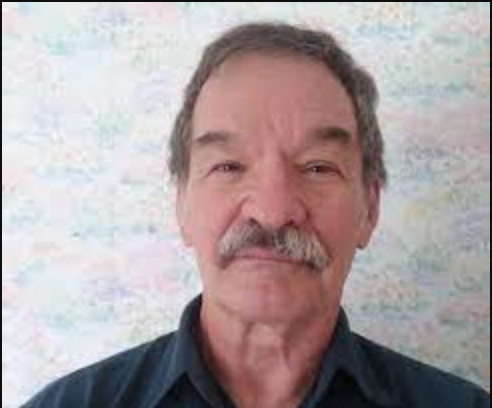
Ted Glick has devoted his life to the progressive social change movement. After a year of student activism as a sophomore at Grinnell College in Iowa, he left college in 1969 to work full time against the Vietnam War. As a Selective Service draft resister, he spent 11 months in prison. In 1973, he co-founded the National Committee to Impeach Nixon and worked as a national coordinator on grassroots street actions around the country, keeping the heat on Nixon until his August 1974 resignation. Since late 2003, Ted has played a national leadership role in the effort to stabilize our climate and for a renewable energy revolution. He was a co-founder in 2004 of the Climate Crisis Coalition and in 2005 coordinated the USA Join the World effort leading up to December actions during the United Nations Climate Change conference in Montreal. In May 2006, he began working with the Chesapeake Climate Action Network and was CCAN National Campaign Coordinator until his retirement in October 2015. He is a co-founder (2014) and one of the leaders of the group Beyond Extreme Energy. He is President of the group 350NJ/Rockland, on the steering committee of the DivestNJ Coalition and on the leadership group of the Climate Reality Check network.
ZNetwork is funded solely through the generosity of its readers.
Donate




