


In the first week of June 2024, the Palestine office of the World Health Organization (WHO) released figures about the atrocious attacks on health care facilities and workers in Gaza since October 7, 2023. Thus far, according to the WHO, the Israelis have attacked 464 health care facilities, killed 727 health care workers, injured 933 health care workers, and damaged or destroyed 113 ambulances. “Health care,” the WHO’s Palestine office argues, “is not a target.” And yet, during the past seven months, health care workers have faced relentless attacks by the Israeli military. Each of the stories about the deaths is heartbreaking, the names of the dead are too long to list in any article (although a group called Healthcare Workers for Palestine did read the names of their dead colleagues as a protest against this war). But some of the stories are worth reflecting on because they tell us about the commitment of the workers and the great loss to humanity from their murder.
Dr. Iyad Rantisi, who was 53 years old, ran the Kamal Adwan Hospital in Beit Lahiya, which lies in the northern part of Gaza. There are many Rantisis in Gaza, but they are not native to that part of Palestine. Like many Palestinians who live in Gaza, they have roots in other parts of Palestine from which they had been expelled in the Nakba of 1948; the Rantisis come from the village of Rantis, northwest of Ramallah.
On November 11, 2023, during the Israeli military assault inside northern Gaza, Dr. Rantisi was taken into custody at an Israeli military checkpoint when he tried to leave northern Gaza for the south, following the orders of the Israeli military. Since then, his family had not heard anything about his whereabouts. Now, months later, the Israeli newspaper Haaretz reports that he was taken to the Shikma Investigation Center of the Shin Bet (Israel Security Agency), which is inside the Ashkelon Prison. Dr. Rantisi was tortured and then killed six days into his detention. His family was not informed of this until the Haaretz report. Then, Dr. Rantisi’s daughter Dima wrote of the death of her father, a social media post that she paired with photographs of him in medical scrubs performing surgery on a patient.
Dr. Adnan Al-Barsh, also 53, trained in Romania before he returned home to Gaza to head the orthopedic department at Al-Shifa Hospital. He has a reputation of being a very loved doctor, whose office was crowded with his diplomas (from Jordan, from Palestine, from the United Kingdom). When the Israeli military attacked al-Shifa, Dr. Al-Barsh was forced to leave his post, but he did not leave his work. He first went to Kamal Adwan Hospital, where Dr. Rantisi worked, and then to Al-Awda Hospital in the area east of the Jabaliya refugee camp in northern Gaza, which was also attacked several times by the Israelis. On December 18, 2023, the Israeli military raided Al-Awda and took Dr. Al-Barsh and other hospital personnel into custody. Included among those arrested was the manager of the hospital and another very popular doctor, Dr. Ahmed Muhanna. On October 15, 2023, Dr. Muhanna made a video—which went viral—in which he pleaded to the world for help and for an immediate ceasefire. It is now reported that on April 19, 2024, Dr. Al-Barsh was killed by the Israelis in Ofer Prison. Tlaleng Mofokeng, the UN Special Rapporteur on the right to health, said, “Dr. Adnan’s case raises serious concerns that he died following torture at the hands of Israeli authorities.”
Dr. Hammam Alloh, age 36, was killed when an Israeli missile struck his home near his ward in Al-Shifa Hospital on November 12, 2023. Trained in Yemen and Jordan, Dr. Alloh was Gaza’s only nephrologist, a kidney specialist. Concerned about his patients who were on dialysis, particularly with the lack of electricity and the constant attacks, Dr. Alloh—who was known as “The Legend” during his residency in Jordan—refused to leave the hospital. On October 31, Dr. Alloh was asked why he did not abandon his post and go to southern Gaza. “If I go,” he replied calmly, “who would treat my patients? We are not animals. We have the right to receive proper health care. You think I went to medical school and for my postgraduate degrees for a total of 14 years so I think only about my life and not my patients?” This was the caliber of Dr. Alloh. Less than two weeks later, when he left his post to have a rest at home with his parents, his wife (pregnant with a child), and his two children, the Israelis struck his home. He died alongside his father.
At the International Court of Justice in January 2024, the Irish lawyer Blinne Ní Ghrálaigh made the closing arguments for South Africa’s claim of genocide against Israel. In the course of her statement, Ní Ghrálaigh showed an image of a whiteboard with the following written on it: “Whoever stays until the end will tell the story. We did what we could. Remember us.” These lines had been written by 38-year-old Dr. Mahmoud Abu Najaila, who worked as a physician for Médecins Sans Frontières (MSF) at Al-Awda Hospital in northern Gaza. On November 21, 2023, the Israeli military bombed the third and fourth floors of the hospital, where Dr. Najaila worked with Dr. Ahmad Al-Sahar and Dr. Ziad Al-Tatari. All three of them were killed.
On her LinkedIn page, Reem Abu Lebdeh, a physiotherapist who was an associate trustee on the board of MSF’s UK branch, wrote, “Such a devastating loss for the medical community and humanity.” These doctors, whom she knew, she said, “were true embodiments of selfless service and humanitarian dedication, tirelessly saving lives in the most urgent conditions.” Then a few weeks later, sometime in December, the Israelis attacked a residential area in Khan Younis and killed Reem Abu Lebdeh, whose own messages of solidarity now sit on the web like Dr. Najaila’s whiteboard note: Remember us.
This article was produced by Globetrotter.

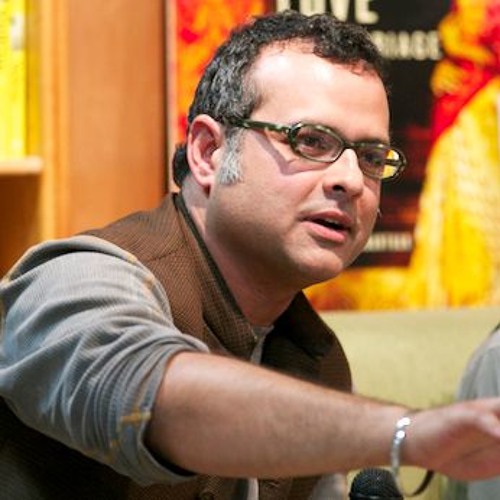
Vijay Prashad is an Indian historian, editor, and journalist. He is a writing fellow and chief correspondent at Globetrotter. He is an editor of LeftWord Books and the director of Tricontinental: Institute for Social Research. He is a senior non-resident fellow at Chongyang Institute for Financial Studies, Renmin University of China. He has written more than 20 books, including The Darker Nations and The Poorer Nations. His latest books are Struggle Makes Us Human: Learning from Movements for Socialism and (with Noam Chomsky) The Withdrawal: Iraq, Libya, Afghanistan, and the Fragility of U.S. Power. Tings Chak is the art director and a researcher at Tricontinental: Institute for Social Research and lead author of the study “Serve the People: The Eradication of Extreme Poverty in China.” She is also a member of Dongsheng, an international collective of researchers interested in Chinese politics and society.
ZNetwork is funded solely through the generosity of its readers.
Donate




