


People everywhere make claims and complain regularly about corruption and about national security. There is virtually no country in the world where this does not occur. If no one inside the country – whether citizen, resident, or transitory visitor – speaks publicly using such language, it is only because those in power respond with exceptionally harsh repression.
Otherwise, these themes are central to the politics and geopolitics of all countries in the world. The situation of a particular country is subject also to discussion about it by persons outside its boundaries. Citizens of the country in exile talk about it. Social movements in other countries talk about it. Other governments talk about it.
However, this long list of persons who discuss these issues publicly say very different things about them in the case of any particular country. It behooves us to look more closely at the language people use and the descriptions of reality they make in order to understand what is going on and how we should evaluate the claims and complaints.
Corruption is virtually inescapable. As a general rule, the richer the country the larger the amounts that can be accumulated via corruption. We learn all the time in the headlines of the press about some very high-level political figure or some very high-level corporation executive who is accused of corruption and is prosecuted for it or even imprisoned. We learn the same thing about lower-level persons as well. But the press is less likely to speak of these persons.
How does one practice corruption? The answer is quite simple. One has to be situated in a location where the money flows from one person in the chain to another. No doubt there are some individuals whose internalized values keep them from playing the game. But they are more rare than we publicly admit.
What is the purpose of denouncing some miscreants for corruption? It can be the desire for a change of government. Public criticism can lead to street demonstrations or other organized forms of anti-government efforts. Such efforts may succeed or fail, but this remains their objective.
At the same time the government or other persons in dominant positions may accuse the anti-government demonstrators of being corrupt and therefore in no position to denounce those in the government of this.
When we look at governments speaking of other governments, the accusations of corruption reflect primarily geopolitical interests. Again as a general rule, one government does not accuse another government of corruption if it is an ally or it is a government that one prefers to see remain in power. However, one government may denounce another government of corruption when it considers the other government to be an enemy or at least prefers to see the other government removed from power. Or a government may refrain from accusing publicly another government of corruption, while suggesting privately that such restraint is temporary and its continuance depends on some shift in position of the other government.
The theme of national security has a similar gamut of meanings. Governments hope to restrain, even eliminate, public discussion of corruption or of geopolitical alliances by invoking the theme of national security. This is a relatively effective method of achieving various ends. Governments may make the claim of national security without having to prove its validity. They can argue that giving the evidence itself violates national security.
The way someone can counter such blockage of public debate is through leakage by insiders who hope that the press will spread the word that the claim about national security is an invention whose purpose is to silence the opposition. And such leakage (also known as whistle-blowing) is countered by the government by prosecution for endangering national security.
A language allied to national security is that of espionage. Espionage is also universal. It is however expensive and difficult. Therefore, it is done more extensively and probably successfully by richer governments. And the spies may be punished more severely.
The reader may have noticed that I have refrained from using the name of any particular country in this commentary. That is because the article is not about the political or geopolitical situation of any particular country. The essential point I am making is that there is almost nothing but “fake news” as the current expression goes. But one must remember that invoking fake news about accusations is itself a mode of trying to suppress public discussion.
Are we then helpless to see what is really going on? Is there no way of discerning reality? Of course not. We can each of us engage in the necessary detective work to sift through the use of these recurrent themes vis-à-vis a particular situation in order to make a relatively plausible analysis.
The point is that it takes work, lots of work, to be a detective. Few of us have the taste, the money, and the time to do this work. We therefore subcontract this work to others: one or more particular social movements, one or more particular newspapers, one or more particular individuals, etc. To do this, we have to have confidence in the subcontractor(s), and to have it renewed regularly. A big job. But unless we do this work ourselves or rely on one or more first-rate subcontractors, we are doomed to be swamped by the use of these recurrent themes. We are rendered powerless.

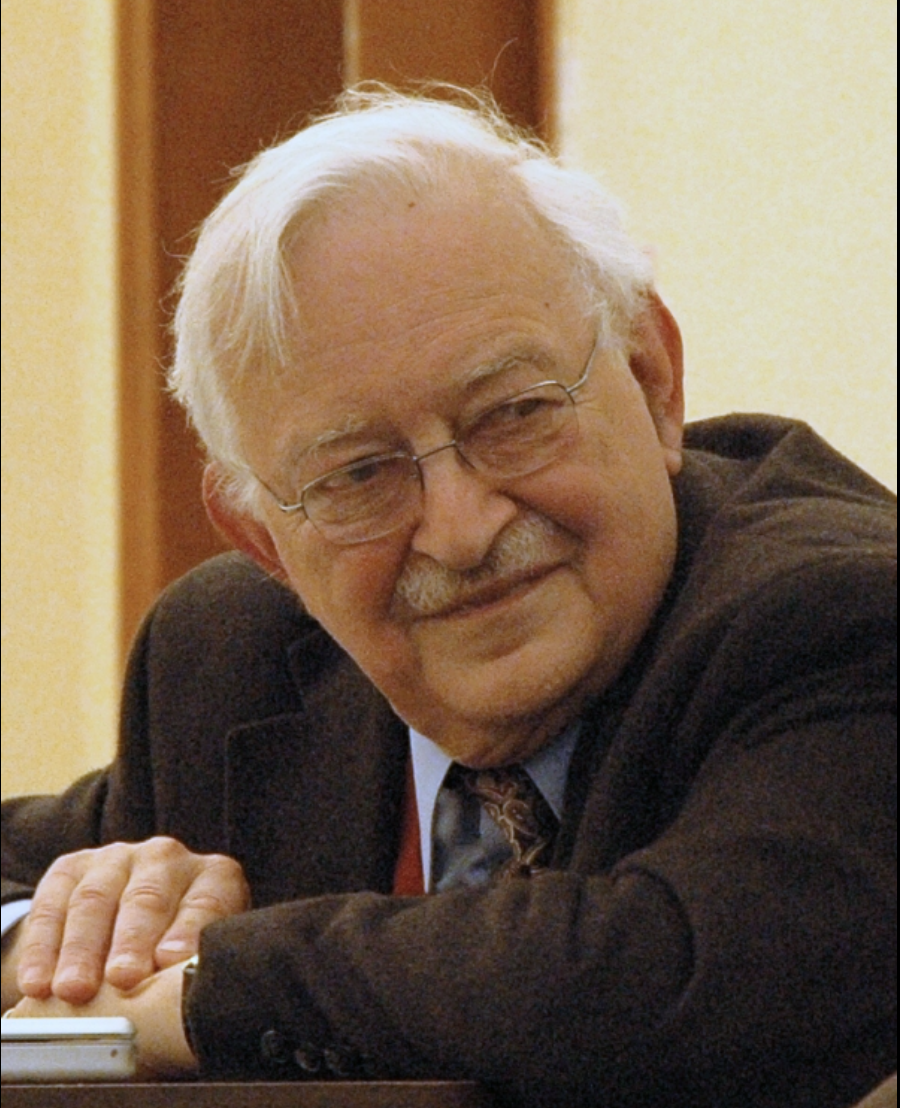
Immanuel Wallerstein (September 28, 1930 – August 31, 2019) was an American sociologist and economic historian. He is perhaps best known for his development of the general approach in sociology which led to the emergence of his world-systems approach. He was a Senior Research Scholar at Yale University from 2000 until his death in 2019, and published bimonthly syndicated commentaries through Agence Global on world affairs from October 1998 to July 2019. He was the 13th president of International Sociological Association (1994–1998). Politically, he considered himself on the "independent left" and was active in a variety of organizations. He argued that we are in the transition from our existing capitalist world-economy to some new system, and that the great political struggle of our time is about which new kind of systemic order will replace our existing one. A new systemic order could be better or worse, depending on our collective ability to push the worldwide decision in one direction or another. He believed that a crucial element in this is a vast debate about the kind of better system we wish to build, and saw the Reimagining Society Project as one of the ways to further this collective debate.
ZNetwork is funded solely through the generosity of its readers.
Donate




