


The Michael Steele 2006 Senatorial campaign in Maryland posed the question front and center of what does one mean by “Black Politics?†Does “Black politics†mean the politics of the mass of Black people or does it mean the politics of people who happen to be Black? In posing the question that way I am not trying to be amusing, but rather pointing to a matter, or perhaps quandary that became clearer and clearer after the end of the Jesse Jackson 1988 run for the Democratic Presidential nomination, and is today in our face.
After the collapse of Booker T. Washington’s Tuskegee political ‘machine’ in the early part of the 20th century, Black politics came to be defined largely as the politics of African Americans in struggle against Jim Crow segregation and, in the North, de facto segregation. As such, these politics were broad and, after the New Deal reforms initiated by President Franklin Roosevelt, came to be increasingly identified with the Democratic Party. But Black politics have never been identical to the politics of the Democratic Party. There have been overlapping interests.
With the end of formal segregation, the political situation became increasingly complicated. Voting rights led to an explosion in Black elected officials in the late 1960s and early 1970s, illustrated by the famous 1972 Gary, Indiana National Black Political Convention. By the late 1970s and early 1980s, Black politics took another upturn in both its dramatic opposition to Reaganism as well as its demand for genuine Black political power. It was in the context of that Black-led political upsurge of the 1980s that Rev. Jesse Jackson’s 1984 and 1988 campaigns emerged.
Something happened in the 1990s. Part of it clearly was represented by the disappearance of formal barriers of racial segregation, but in either case Black politics started to lose its edge. Instead of Black politics being the champion of coalition building and an inclusive social justice movement, Black politics seemed to fragment, with pieces going in different directions, including some toward crude ethnic politics; some towards progressive electoral work; and some towards the “…I happen to be black but don’t let that turn you off…†politics.
A piece, however, swung Republican, and this is what is both curious and ironic. The Republican Party, or at least a section of it, made a very calculated decision to try to rip a portion of the Black electorate away from the Democratic Party. It did so by fronting Black individuals, both in certain races as well as in prominent positions within the George W. Bush administration. As I have said elsewhere, Blacks could enter the Republican Party but the price of admission was silence on a Black agenda.
Thus, the Michael Steele campaign, an extremely slick, professional, and at times humorous campaign, flipped history on its head. The Steele campaign suggested that the Republicans were now (and possibly always were???) the party that would advance the interests of those Black people who wish to get ahead. In that sense, the Republicans, through the Steele campaign, and other campaigns such as that witnessed in the Pennsylvania gubernatorial run by former football player Lynn Swann, worked to mutate Black politics such that it was no longer the politics for the advancement of the MASS of Black people, but instead, a politics that was at the service of those Black people willing to worship at the alter of the Republican idols of privatization, aggressive war, tax cuts for the rich, and ignoring the fact that racist oppression remains a central feature of US reality.
In my humble opinion, we are fortunate that Steele did not win, but we must recognize that there is a 21st century struggle underway to define the direction of Black America and the character of Black politics. This struggle is particularly fueled by which class within Black America gets the chance to set the direction. Will it be the wealthy who were among the main beneficiaries of the Black Freedom struggle, many of who now seem to believe that the door is wide open to accumulating more and more wealth, or will it be the Black worker who has been disproportionately hurt by the economic restructuring, war, and cut backs that the Republicans—and in many cases centrist Democrats—have championed?
There will be no room for observers in this fight.
BC Editorial Board member Bill Fletcher, Jr. is a long-time labor and international activist who currently serves as a visiting professor at Brooklyn College-CUNY. He is the immediate past president of TransAfrica Forum. Click here to contact Mr. Fletcher.

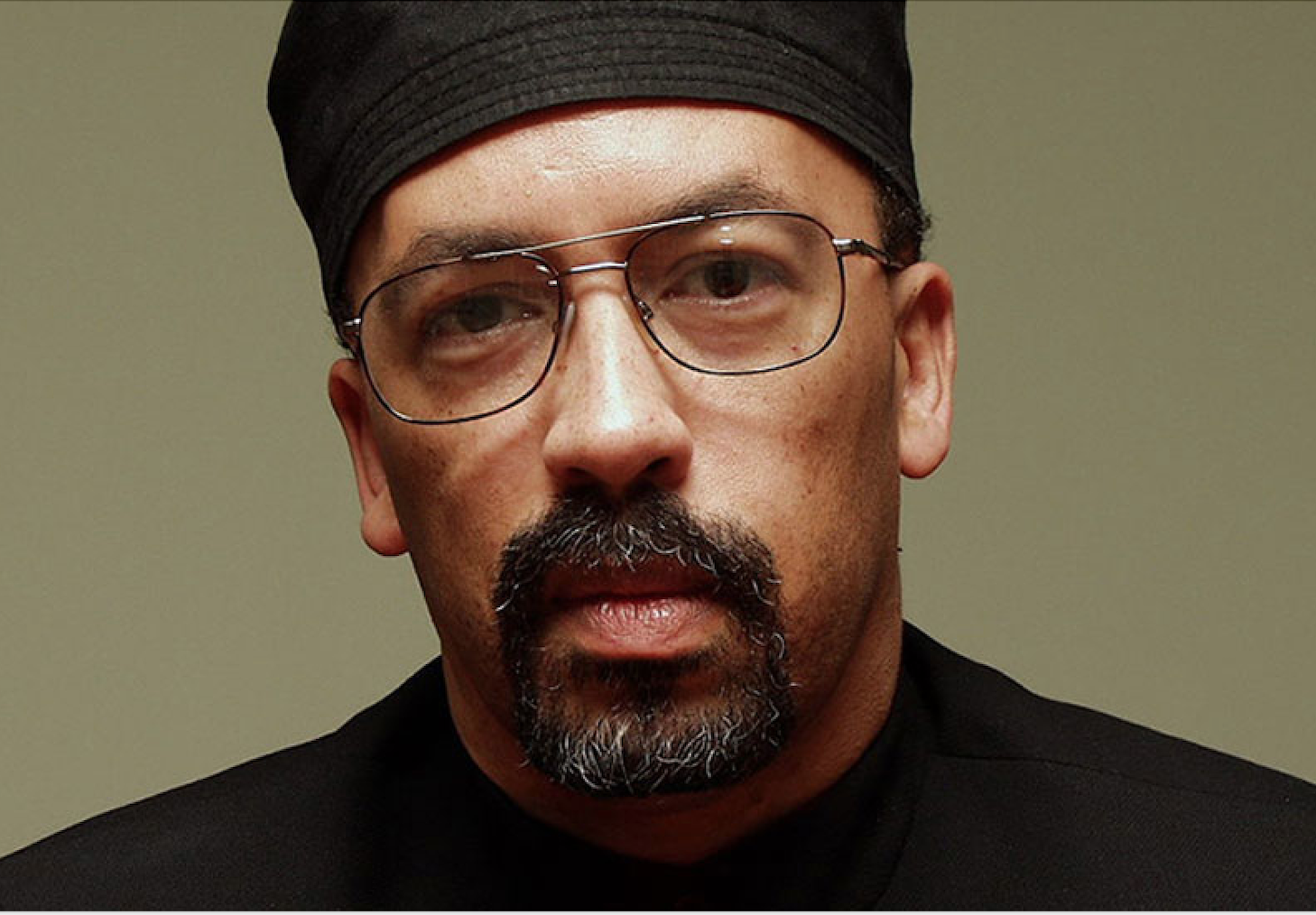
Bill Fletcher Jr (born 1954) has been an activist since his teen years. Upon graduating from college he went to work as a welder in a shipyard, thereby entering the labor movement. Over the years he has been active in workplace and community struggles as well as electoral campaigns. He has worked for several labor unions in addition to serving as a senior staffperson in the national AFL-CIO. Fletcher is the former president of TransAfrica Forum; a Senior Scholar with the Institute for Policy Studies; and in the leadership of several other projects. Fletcher is the co-author (with Peter Agard) of “The Indispensable Ally: Black Workers and the Formation of the Congress of Industrial Organizations, 1934-1941”; the co-author (with Dr. Fernando Gapasin) of “Solidarity Divided: The crisis in organized labor and a new path toward social justice“; and the author of “‘They’re Bankrupting Us’ – And Twenty other myths about unions.” Fletcher is a syndicated columnist and a regular media commentator on television, radio and the Web.
ZNetwork is funded solely through the generosity of its readers.
Donate




