


This will be a short post, but something important happened in London this afternoon that I imagine will go unreported in America—something courageous and something with real implications.
You might recall that a few weeks ago I wrote that the international agreement last month that the time had come doe “transitioning away from fossil fuels in energy systems, in a just, orderly and equitable manner” meant that it was no longer intellectually defensible for nations to allow expansion of the oil and gas industry.
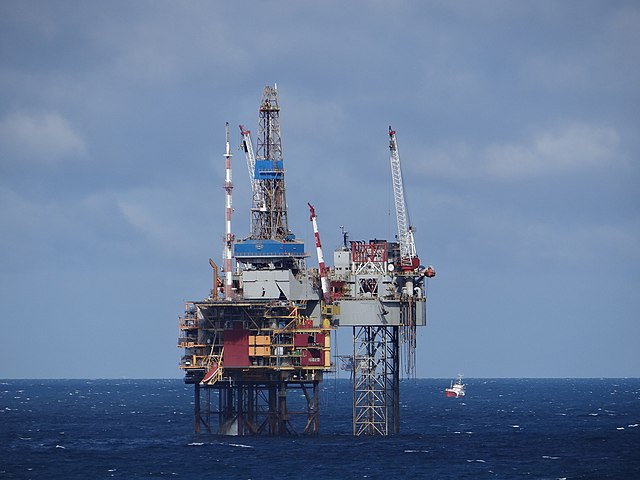
Earlier today, Chris Skidmore, a Conservative MP and former Secretary of Energy in the Tory government, announced his resignation from Parliament. Why? Because next week that government, led by Rishi Sunak, is going to try and open up the North Sea to a huge new wave of oil and gas drilling. It’s as if a Republican Senator said, I’m not running again because my party has become a subsidiary of the fossil fuel industry. That won’t happen, I fear—but it did in Britain, and in the most explicit way. As Skidmore pointed out in his resignation letter:
Decisions taken at COP28 last month set in motion the global transition away from fossil fuels. As the exponential growth of renewable and clean power continues, as we seek to reduce our energy demand for fossil fuels through the adoption of better energy efficiency in buildings and industry, as the adoption of electricity replaces fossil fuels, there is no case to be made for increasing fossil fuel production at a time when investment should be made elsewhere, in the industries and businesses of the future, and not of the past.
He went on to say
As fossil fuels become more obsolete, expanding new oil and gas licences or opening new oil fields will only create stranded assets of the future, harming local and regional communities that should instead be supported to transition their skills and expertise to renewable and clean energy.
And this:
The bill that will be debated next week achieves nothing apart from to send a global signal that the UK is rowing ever further back from its climate commitments. We cannot expect other countries to phase out their fossil fuels when at the same time we continue to issue new licences or to open new oil fields. It is a tragedy that the UK has been allowed to lose its climate leadership, at a time when our businesses, industries, universities and civil society organisations are providing first class leadership and expertise to so many across the world, inspiring change for the better.
Skidmore is straightforwardly setting out the reality the planet faces: there is no way to deal with the climate crisis if we go on expanding fossil fuel production. And yet every fossil fuel nation, as Shannon Osaka pointed out recently in a sagacious Washington Post piece, insists that it should be allowed to go expanding fossil fuel production. “Every country has their own reason why they should be the last,” Michael Lazarus, a senior scientist at the Stockholm Environment Institute, told her. As a result, “by 2050…countries expect to produce 2½ times more fossil fuels in 2050 than would align with a target of 2 degrees Celsius.”
Someone has to stop that cycle, and Skidmore is suggesting it should be the UK.
Of course, it could also be the U.S. This bold resignation ups the pressure on the Department of Energy (which, remember, is in the hands of Democrats) to at least say they will pause the granting of new export licenses for LNG, the demand of a growing list of activists and groups around the country.
President Biden gave a tremendously moving speech today at Valley Forge, launching his campaign with a promise to protect democracy. It’s more than enough to secure my vote. But one prerequsite for democracy is a planet to practice it on, and the LNG battle gives the president a perfect chance to show he understands what’s at stake, recouping some of the credibility he lost when he greenlighted a vast oil complex in Alaska. Simply by announcing that pause, he could show that America meant what it signed in Dubai.
As Skidmore so eloquently put it,
The future will judge harshly those that [promote more fossil fuel expansion]. At a time when we should be committing to more climate action, we simply do not have any more time to waste promoting the future production of fossil fuels that is the ultimate cause of the environmental crisis that we are facing.


Bill McKibben is an author, environmentalist, and activist. In 1988 he wrote The End of Nature, the first book for a common audience about global warming. He is a co-founder and Senior Advisor at 350.org, an international climate campaign that works in 188 countries around the world.
ZNetwork is funded solely through the generosity of its readers.
Donate




