


May 17, 2004; Ramadi, Iraq – The city of Ramadi, about 120km west of Baghdad, appears to be much more stable than nearby Falluja, where the U.S. military currently won’t enter the city after the failed siege of April.
Here U.S. military patrols still roam the streets and attacks seem to be down. Both the Governor of the vast Al-Anbar Province and the Commander of the Iraqi Police (IP) are hopeful about the recent calming throughout the area.
In the heavily fortified building in central Ramadi which houses the Governor of the Al-Anbar Province Mr. Ezzedin Abdul Kareem, he is upbeat about the situation, despite having had three assassination attempts in the last year.
“Both Ramadi and Falluja are extremely tribal,” he explained while discussing why things have gone more smoothly as of late in Ramadi. “But Ramadi is closer to Baghdad and the people of Ramadi are more influenced by their religious leaders.”
He stated that there are good relations between the Coalition Provisional Authority (CPA), and the government structures of Ramadi, and that in addition to the $500 million the CPA plans on spending to rebuild in Ramadi, there is now another $70 million earmarked for Ramadi and Falluja.
While he said the payment is to be issued in one lump sum, the actual delivery of this money has yet to occur.
What is worth noting as another reason why the situation in Ramadi remains relatively stable as of late is that on April 11, 2003, Governor Abdul Kareem was elected as governor by a council of Sheikhs. In addition, he is extremely well respected throughout Ramadi.
Nevertheless, he was surprised at how well the formation of the councils in the cities and villages throughout Al-Anbar had gone this past January. Even though the caucuses were set up by the CPA, many people have still felt a fair degree of autonomy in that it was their own tribal leaders selecting their governor and other council members. This differs greatly from the appointing of the Iraqi Governing Council (IGC) members by the CPA.
In sum, the governor said, “The people asked me to be in this position.”
It is safe to say that in Iraq today, I’ve been hard pressed to find anyone who supports the IGC. If you want to anger an Iraqi, mention the occupation or the IGC.
Jaadman Ahmed Al-Awany is the Commander of the Iraqi Police of Al-Anbar Province, and in charge of 10,850 IPs. He agrees with the governor that the sheikhs and religious men have helped to calm the volatile situation in Ramadi. “There have been less attacks on IPs here the last few months because so many of them come from this area, and are being better equipped than before,” he said.
Nevertheless, two IPs had just been killed in Ramadi prior to our interview.
One must not forget that calm is a relative term in occupied Iraq.
Today was the meeting of all the city IP commanders from throughout the province. Colonel Sabar Fahdil is the Commander of the IPs of Falluja, and openly expressed his anger towards what occurred in his city during April.
“The Americans used the execution of the four American contractors there as an excuse to surround and attack Falluja,” he said angrily. He lamented over how helicopters and warplanes were used to bomb civilians and homes. “They killed over 1200 Fallujans!” He continued, “I was there negotiating with the Americans, but they broke the ceasefire so many times.”
After a huge lunch and pleasant goodbyes, out on the street the mood was anything but calm.
One shop owner named Sfook, when asked if he felt things in Ramadi were more stable nowadays said, “It’s not safe here, for Iraqis or Americans. The Americans attack our homes so much, whether there is a reason or not. The problem is the Americans’ presence here. We will never accept the occupiers!”
He was asked what would happen in Ramadi if the US military attempted to do what it did in Falluja. “This would be worse than Falluja,” he replied.
“Even now they are hit 3-4 times each day. We are honored by the resistance here.”
Another man, Abdul Ahab, a 21 year-old student at the Economics College, said, “Security is worse. All Ramadis are against the Americans. I used to think they were different, but after seeing the torturing, I hate them.”
A 24 year-old student of the Science University here, listening to the conversation, added, “The Americans are invaders. They took their authority by invading, and it is worse here than before they came.”
All of the men I spoke with were extremely angry. Each question was like taking another lid off of a boiling kettle.
The student continued, “They came with a mask of freedom, but we are not free. They brought torture, worse security, and terrorism. They are the terrorists!”
As an afterthought he added, “Saddam never closed hospitals to prevent injured people from reaching them. Saddam never killed 2 year-old children!
They invaded Falluja because General Abizaid was almost killed there.”
As news of the assassination via car bomb of the current leader of the IGC in Baghdad flashed across the television in another shop we were in, people began celebrating.
I asked one man what the cheering was about, and he said, “They are not the Iraqi Governing Council. They are the Prostitution Council!”
Outside, the main street of Ramadi was filled with countless cars honking their horns in celebration of the bombing.
The impromptu poll continued on the sidewalk, and another man, when asked how he felt about the situation in Ramadi, stated firmly, “Today is much better than tomorrow. It is getting worse everyday because of the Americans.
I challenge the governor if he thinks things here are good.”
———————————————-
Dahr Jamail is Baghdad correspondent for The NewStandard. He is an Alaskan devoted to covering the untold stories from occupied Iraq. You can help Dahr continue his crucial work in Iraq by making donations. For more information or to donate to Dahr, visit http://newstandardnews.net/iraqdispatches .

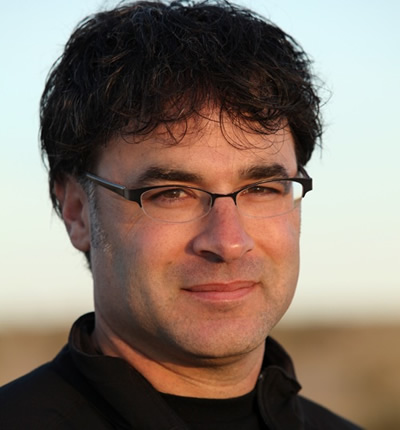
Dahr Jamail is the Baghdad correspondent for The NewStandard. Jamail, a political activist from Anchorage, Alaska, first traveled to Iraq in November 2003 to write about the effects of the US occupation on the Iraqi people. After nine weeks covering Iraq under occupation, he returned to the US and addressed audiences in Alaska and the Northeast about his experience. He has recently returned to Iraq in order to continue reporting on US occupation and privatization. You can view his dispatches and articles at http://newstandardnews.net/iraq.
ZNetwork is funded solely through the generosity of its readers.
Donate




