


Last week’s comments by Attorney General Eric Holder to the effect that when it comes to race, the USA is a nation of cowards brought forth immediate condemnation by right-wing talk radio. This was to be expected.
The more mainstream media also reacted, albeit more mildly. Nevertheless, they have tended to focus on Holder’s wording, suggesting that he would be more likely to be heard if he used other language, such as that the people of the USA need to be more sensitive to race.
The problem that Holder encountered was not simply the attitude of the people of the USA toward race, but more fundamentally, the prevailing attitude toward history. The USA has the distinction of being one of the few countries on the planet that has little interest in history as such, and when it is forced to address history, it tends to view history in terms of myth(s). As such, there are few useful lessons, often making history a boring subject in school, not to mention something that is ignored when it is time to develop policy.
Let’s take the example of the American Revolution. Most of what passes for the history of the War of Independence either falls into the realm of myth or the selective use of facts. Rarely are we presented with the significant fact that the colonies probably would not have won had it not been for the intervention of the French and Spanish (not to mention Haitian volunteers who are often completely overlooked). Ignoring these facts, except perhaps to acknowledge the Marquis de Lafayette, gives one a completely inaccurate sense of what it took to win independence from Britain, not to mention the impact the American Revolution had on bringing a revolution to France.
We also fail to acknowledge in most histories of the Revolution the mighty contradiction in the middle of the entire process: all men are created equal. vs.
slavery.
In the USA, the prevailing approach toward history, then, is to set it aside and assume that we can march forward, ignoring the past and any lessons it has to offer. In a recent speech, I suggested that in other spheres, such an approach would be ridiculed. Consider the horrible bridge collapse in Minneapolis last year. Could anyone ever imagine the Minneapolis-St. Paul authorities proposing to ignore the causes of the collapse; failing to investigate anyone or anything responsible, and not taking appropriate action PRIOR to building a new bridge? Such an approach would defy imagination.
Holder’s comments were attempting to highlight just that point, specifically in the realm of history and race relations. With all the excitement in connection with the election of the first African American president, there have been too many mainstream white Americans who believe that we have now entered a post- racial era where we can all march forward, hand in hand, with the past behind us.
Holder’s comments, much more than Obama’s March 2008 speech on race, acknowledge that race and racism remains a problems deeply embedded in the fabric of the USA, a problem that must be understood in order for it to be fully eradicated. Although Holder did not indicate specifically how this should happen, he should be loudly applauded for calling the attention of the USA to the necessity for this dialogue.
If we are to build on Holder’s comments, what could it mean to confront the `cowardice’ when it comes to race? Here are a few ideas:
* The Bill Clinton "Race Initiative" was poorly
focused. A real dialogue would need to happen at
several levels simultaneously. A "Truth and
Reconciliation Commission" model might be a good
framework. There would need to be, in other words, a
commission that directs the work of a multi-year
study and dialogue.
* The Commission would sponsor studies on different
aspects of race and racism in US history, going back
to the colonial era and running through the present.
Such studies would be published and be the basis for
local discussions, available to all, but also
targeted at key opinion-makers and political
leaders.
* A curriculum would be developed that would be
introduced in the public school system and that
would be made available for private schools, as well
as colleges and universities. The US Department of
Education would sponsor a special training program
for teachers to use the curriculum.
* Hearings would be held across the USA, looking at
different aspects of race. This would not simply
focus on what is happening to people of color, but
would also look at the impact of race and racism on
the lives of white Americans.
* Through vehicles established at the time of the 2001
United Nations World Conference Against Racism,
further hemispheric discussions would be encouraged,
with the full and constructive participation of the
USA, examining race in the Western Hemisphere.
* Specific policy recommendations would be put before
the President of the United States with the
intention of translating them into legislative
action items. Such proposals would aim to repair the
damage which resulted from the hundreds of years of
racist oppression we have experienced in North
America.
The question remains as to whether there is the political will – what Holder described as `courage’ – for the USA to come to grips with its history. After all, that history is not as Pollyanna-ish as the myth we have been taught, but it is nevertheless more exciting, challenging and true.
BlackCommentator.com Executive Editor, Bill Fletcher, Jr., is a Senior Scholar with the Institute for Policy Studies, the immediate past president of TransAfrica Forum and co-author of, Solidarity Divided: The Crisis in Organized Labor and a New Path toward Social Justice (University of California Press), which examines the crisis of organized labor in the USA.

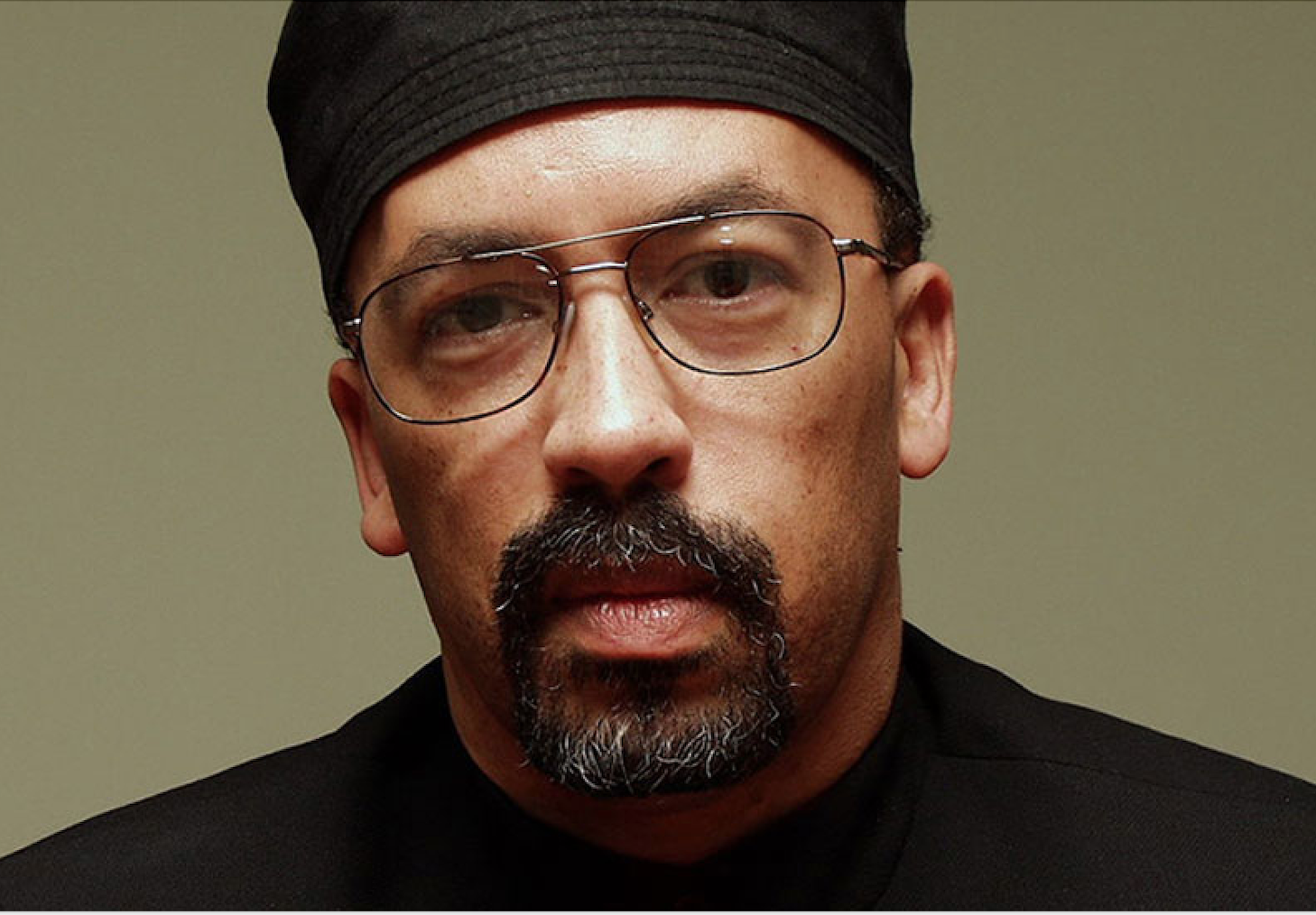
Bill Fletcher Jr (born 1954) has been an activist since his teen years. Upon graduating from college he went to work as a welder in a shipyard, thereby entering the labor movement. Over the years he has been active in workplace and community struggles as well as electoral campaigns. He has worked for several labor unions in addition to serving as a senior staffperson in the national AFL-CIO. Fletcher is the former president of TransAfrica Forum; a Senior Scholar with the Institute for Policy Studies; and in the leadership of several other projects. Fletcher is the co-author (with Peter Agard) of “The Indispensable Ally: Black Workers and the Formation of the Congress of Industrial Organizations, 1934-1941”; the co-author (with Dr. Fernando Gapasin) of “Solidarity Divided: The crisis in organized labor and a new path toward social justice“; and the author of “‘They’re Bankrupting Us’ – And Twenty other myths about unions.” Fletcher is a syndicated columnist and a regular media commentator on television, radio and the Web.
ZNetwork is funded solely through the generosity of its readers.
Donate




