

Reprehensible as it is, the arms trade is an exercise of purgatorial ethics pursued by all states keen on having a market for the merchants of death: from the perspective of countries and those who represent them, it’s a matter of cold business and hot transactions. The principles (how the arms will be used, how many innocents will be butchered) can go and sod themselves. No other figure in modern times has been as candid about this fact than US President Donald Trump. When confronted with the unsettling claims that his admired Saudi Arabian Crown Prince Mohammed bin Salman had directed the carving up of a dissident journalist, Jamal Khashoggi, in the Kingdom’s consulate in Istanbul, he thought little of it, except to scorn the victim. “You’re mentioning someone that was extremely controversial. A lot of people didn’t like that gentleman that you’re talking about. Whether you like him or didn’t like him, things happen. But he [MBS] knew nothing about it. You don’t have to embarrass our guest.” The guest was, more importantly, purchasing American military hardware in obscene quantities.
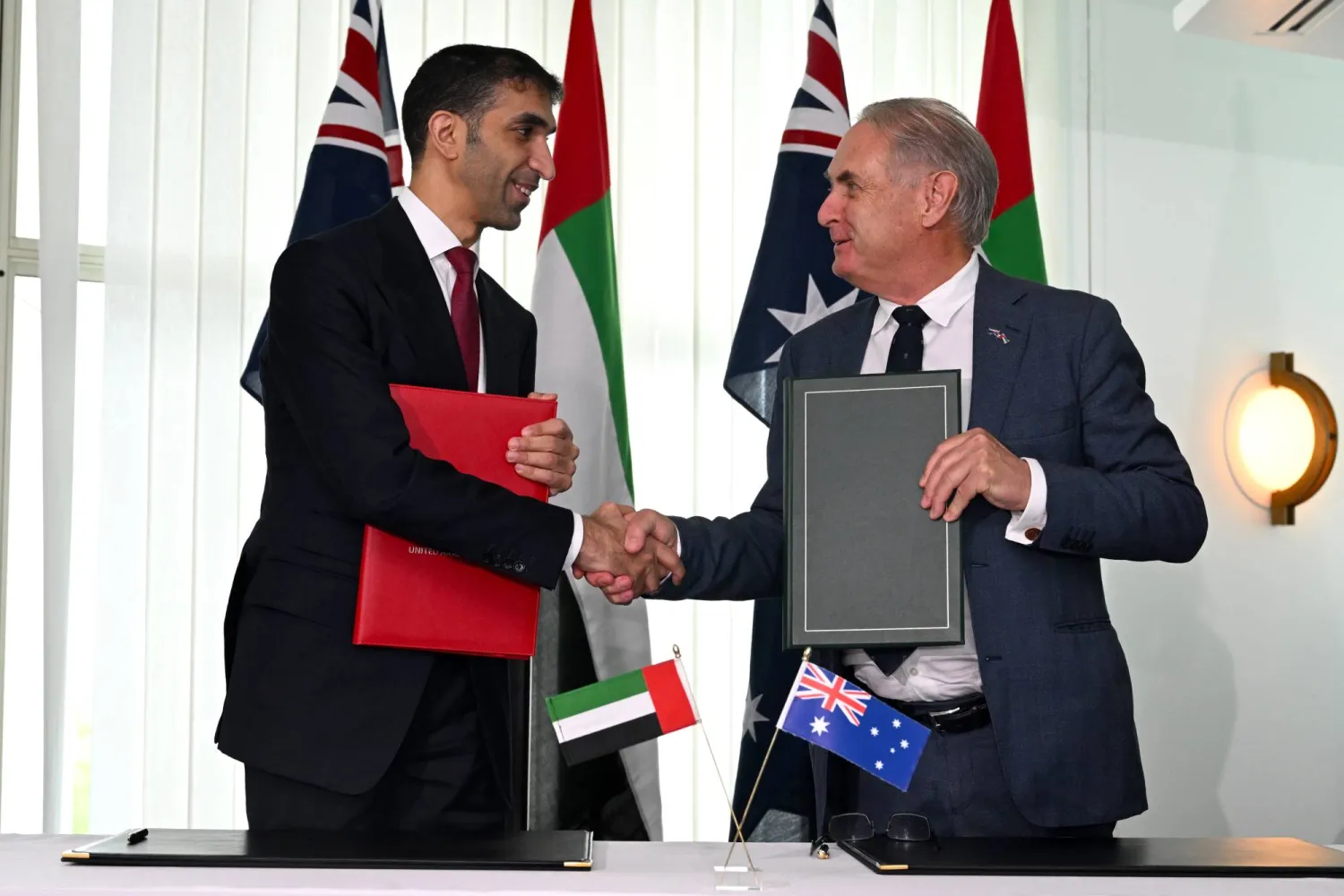
While it is a matter of scant comfort, Trump’s openness about selling arms is cuttingly cathartic. Other Western industrialised states continue to maintain a façade of humanitarian decency while encouraging a murderous industry. Australia, in this regard, must count itself as foremost among them. Markets await. Governments, however shabby on the issue of human rights, are there to be wooed. Take, for example, the United Arab Emirates, which has received assistance from an E-7A Wedgetail during the Iran War to aid in surveillance and shoring up Gulf air defences, and the supply of AIM-120 Amraam missiles. Last November, the Guardian Australia would have surprised some readers in reporting that the UAE was Canberra’s biggest weapons export market, with almost A$300 million worth of arms and munitions making their way there over the previous five years.
Australian officials are salivating at the opportunities offered by the UAE, leaving an unbecoming trail of moist excitement. Consider the following remarks from Mounir Sankary, Austrade Deputy Consul General and Trade Commissioner located in Dubai: “UAE’s extensive and ongoing defence procurement program represents real opportunities for Australian suppliers. There are opportunities across Air, Land and Sea with a special focus on autonomous systems and nice technology.” The war-loving think tank, the Australian Strategic Policy Institute, delights in the prospects that Canberra and Abu Dhabi “establish a joint defence-industry working group focused on autonomous systems, surveillance and targeting technology, critical minerals and cybersecurity” to keep company with a solid “program of joint exercises, logistics access provisions and a clear pathway to equipment interoperability under their defence cooperation treaty.”
For all that gusto about closer ties, Australian officials are obstinately reticent about the details. The Commonwealth government offers some information to interest potential customers, though these are tentative glimpses rather than illuminating glares. The Export Business site of the Australian government informs potential participants that, “The UAE is a highly competitive defence market. It has strong traditional incumbents. Many new companies are also seeking to enter.” Potential clients are encouraged to observe the UAE government’s areas of interest: the building of “critical national defence sectors”; the creation of “a knowledge-based economy” and the objective of growing the country’s “industrial base.”
In terms of how best Australian suppliers can enter the market, Austrade suggests focusing on the following “business opportunities”: systems regarded as “niche” (whatever that means); the area of advanced technology (a truism, surely?); “products or services with a competitive advantage” (this is the language of absent meaning); and “products or services that are genuinely world-leading”. Austrade is certainly outdoing itself, as are the rest of those in the babbling sector known as the defence procurement market.
Why take an interest in these seemingly dull and dreary details? In August 2025, some 64 civil society organisations, including the Australian Council of Trade Unions (ACTU), Amnesty International, the National Council of Churches, the Human Rights Law Centre and the Jewish Council of Australia, called for a parliamentary review of Australia’s military trade arrangements to “ensure accountability and compliance with the Arms Trade Treaty.” The call came on the back of an August 2025 report by the Quaker Peace and Legislation Committee entitled Australia’s Opaque Arms Trade & Obligations Under International Law. The document is troubling in remarking that, “Neither the Australian parliament nor the public know what weapons are being exported, by what companies, to whom, or for what purpose.” Within government quarters, the actual value of defence exports is hard, if not impossible to verify, given differing methodologies used by the Department of Defence, the Department of Foreign Affairs and Trade and the Australian Bureau of Statistics. Amidst the opacity of it all, one fact could be discerned: compared with figures obtained from 2020-1 to 2023-4 “export permits grew by nearly 4000%, and actual exports are reported to have increased by between 93 and 152%.” Among the recipients of Australian arms in the market were “regimes where there are serious human rights concerns – Saudi Arabia, United Arab Emirates, Philippines, Sudan, South Sudan, Israel, Indonesia.”
Towards the end of last month, Andrew Bartlett, President of Australians for War Powers Reform (AWPR) penned a sharpish piece for Michael West Media telling readers that there was “credible evidence that Australia may be contributing to serious atrocities in another conflict zone – Sudan – where appalling civilian massacres have been documented over the past two years.” This suggestion seems a touch removed from Canberra and Abu Dhabi. But the finger has been pointed at the UAE for supplying weapons and resources to a tenaciously murderous outfit of paramilitaries known as the Rapid Support Forces (RSF) in Sudan’s ongoing civil conflict. Despite claims to the contrary from the Emirati government, allegations that its weaponry and military aid is making its way to the RSF have been deemed credible by US Senator Chris Van Hollen and Representative Sarah Jacobs.
Last month, the International Criminal Court’s deputy prosecutor, Nazhat Shameem Khan, told the BBC that “concrete evidence” linking the leaders of the RSF to various war crimes in the Sudanese area of Darfur had been found. The capture of el-Fasher in October 2025 by the forces, by way of example, precipitated the rapid slaughter of 6,000 people, with the UN Independent Fact-Finding Mission for the Sudan asserting that acts of genocide had taken place. A July 2026 report by Amnesty International also found, based on an eight-month investigation and 247 interviews, instances where the RSF committed crimes against humanity, among them murder, extermination, forcible transfer, imprisonment, torture, rape, sexual slavery, other forms of sexual enslavement and persecution and, to complete the ghastly list, ethnic cleansing.
In November last year, the AWPR called on Australian Foreign Minister Penny Wong to review defence exports to the UAE and any alleged direction of their use in Sudan. The following month, Greens Senator David Shoebridge attempted to use Senate estimates to squeeze answers out of senior defence officials on Australian weapons exports to either Sudan or the UAE. No answers to his efforts were forthcoming.
The reply to the AWPR did not come from Wong’s ministry (she remains studiously duplicitous and rarely frank in her engagements on the arms issue) but that of Richard Marles, Deputy Prime Minister and Minister for Defence. The bureaucrat overseeing matters was David Nockels, First Assistant Secretary of the lengthily named Defence Trade, Regulation and Industrial Collaboration Strategy, Policy and Industry Group. In his January 28 reply, Nockels claimed with baseless confidence that Australia maintained “a robust and thorough export control regime, in which Defence undertakes a rigorous assessment of each application, on a case-by-case basis, against a range of legislated criteria.”
What followed was a cataract of assurances without evidence: that the weapons export regime abided by a legislative framework cognisant of foreign policy (reference was made to the Defence Trade Controls Amendment Act 2024), human rights, national security, regional security and Australia’s international obligations including the Arms Trade Treaty. The credulous are to assume that Australia does, in fact, assess “the risk of misuse, including diversion to other entities, as part of the permit decision before goods or technology leave Australia.” Were the department to identify “material risks of misuse or diversion, it will recommend the Minister to refuse a permit.” In cases of existing permits, “relevant geopolitical developments” would be considered.
In April, the AWPR sought clarification from Marles whether military equipment supplied by Australia and diverted to the RSF in Sudan constituted “a clear breach of the ‘thorough export control regime’” supposedly observed by the Commonwealth. Queries were made on whether, given the “appalling events in Sudan in the last 12 months”, any export military permits had, in fact, been paused or cancelled. If so, could the government say with confidence that no Australian military equipment had been “misused in Sudan”, namely, in the commission of serious war crimes including the massacre of civilians. Given that Australia did not monitor the “end-use” of military exports, how plausible was the contention that they did not lead to “human rights abuses or other obligations of our obligations under Article 6 of the Arms Trade Treaty?” Nockels had also failed to address the call for an inquiry by the 64 civil society groups to address accountability and compliance issues with the Treaty.
ZNetwork is funded solely through the generosity of its readers.
Donate




